Animals
Look for  to see what's been added lately!
 Follow us on Facebook!
 Animal
Cams page!
Animal
Cams page!
Click on the squirrel to go there!
This page is one part of Good Sites for Kids!

World War i 1914 - 1918
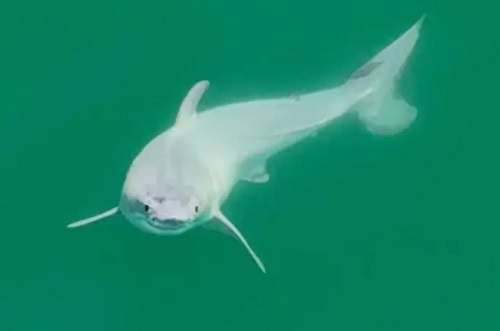
Baby Shark! This is a newborn Great White Shark
from the California coast near Santa Barbara.
It is about 5 feet long.
Birdwatching
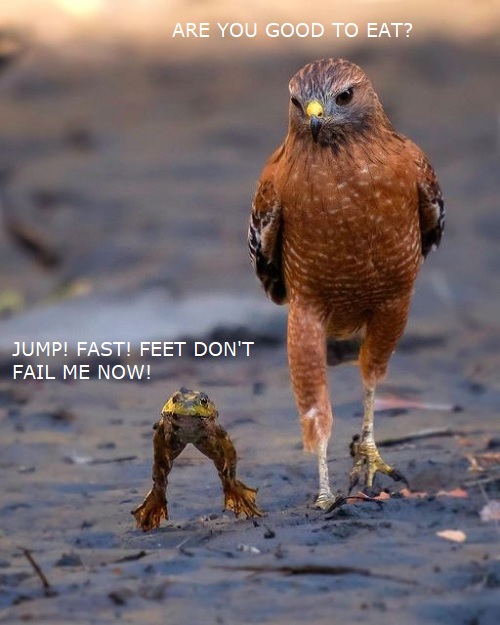
Red-shouldered Hawk (Buteo lineatus) with frog by Randy Wei.
https://www.instagram.com/randy_simplelife/
Ryan Murphy Antman's Hill ®
PUBLIC SERVICE ANNOUNCEMENT:
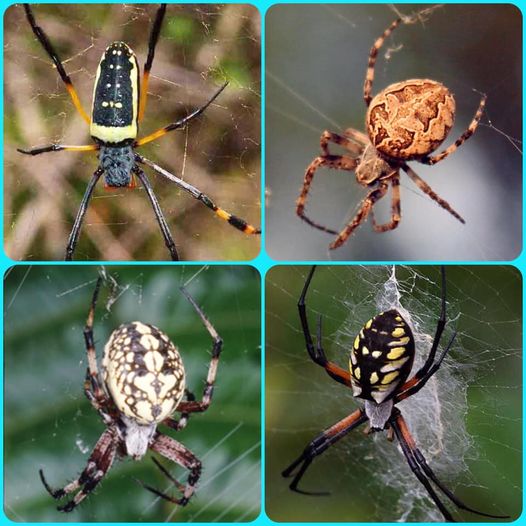
These are “Orb Weaver” spiders. They are large (about 1/2” to 3/4” body length),
and they usually appear in late summer and early fall. Right about now,
in other words. This is their time of year to build webs and find mates.
They are 99% HARMLESS TO HUMANS. THEIR VENOM IS NON-TOXIC TO US.
THEY ARE DOCILE AND NON-AGGRESSIVE.
THEY ALMOST NEVER, EVER EVEN BITE!!!!
I know they’re scary looking, but they are our allies, not enemies.
They devour insect pests that plague us. Also, they're mostly active at night
- they rest in their webs during the day.
For some reason, the paranoia about these beautiful creatures has reached
a fever pitch on social media this year. If you see one, CHILL OUT.
It’s not interested in you. If you walk into its web accidentally, don’t panic.
Apologize and move on. So be kind. Be informed. Let them do their thing.
10
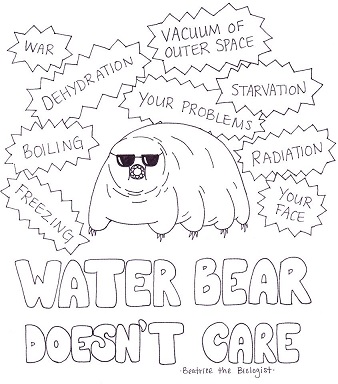
Near indestructible creatures from ScienceDump.
2:56 video showcases
10 very tough, very long-lived animals. Everything from water bears and rotifers
to 15,000 year old sponges made of glass, and an immortal cnidarian.
 AKC
for Kids Mostly about how to care for dogs and puppies, some reproducibles.
The American Kennel Club is the most reputable dog organization in the US.
The AKC list
of recognized breeds has much information about different dog breeds, would
be useful for reports.
AKC
for Kids Mostly about how to care for dogs and puppies, some reproducibles.
The American Kennel Club is the most reputable dog organization in the US.
The AKC list
of recognized breeds has much information about different dog breeds, would
be useful for reports.
All
About Owls is part of Zoom
Birds from
Enchanted Learning
(one of the best kid sites evah).
It has lots of elementary school level basic information
about owls, as well as a quiz, printouts, crafts, and
coloring. (They also include The Owl Pages
in the
bibliography!)
All
About Owls for Kids: Backyard Bird Series - FreeSchool
"Mysterious and nocturnal, owls hold a special place in our
hearts and our minds. Learn more about this special family
of birds and different types of owls, see owl pellets, and
listen to a variety of calls (hear the sounds owls make)
from multiple species of owls in this educational video.
See cute fluffy owlets (baby owls) and great horned owls,
eastern screech owls, barred owls, scops owls and more!
Learn interesting facts about owls like where owls live,
how owls hunt, & what different types of owls there are.
A traffic camera in Montreal captured this image.
Hover to read owl facts text, Click to go to NatGeo.
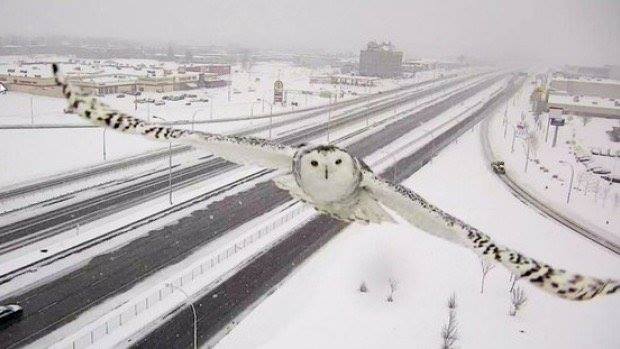
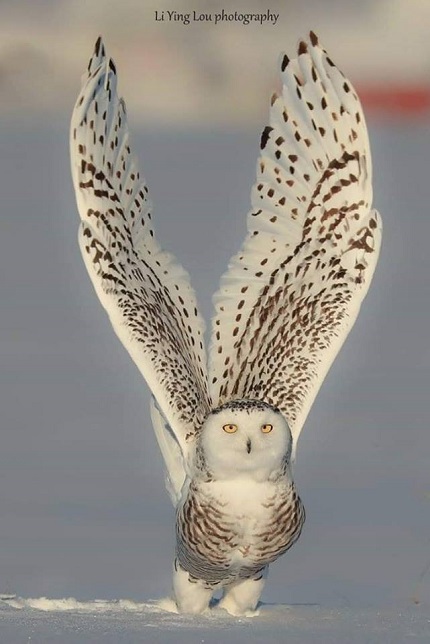
Absolutely fabulous photo of a Great Snowy Owl.
A work of art by Li Ying Lou. Found on IFLS on FB.
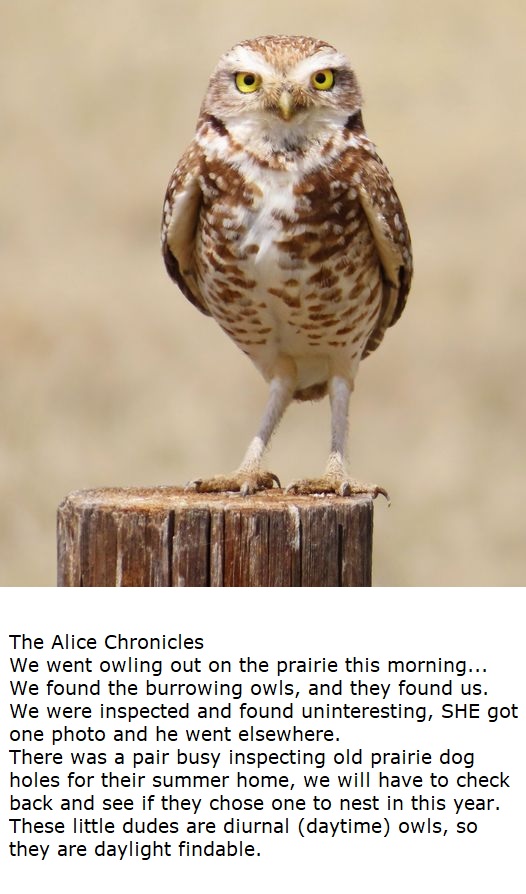
Credit = Caroline Booth Stafford
 Alligators and
Crocodiles at Enchanted Learning
Alligators and
Crocodiles at Enchanted Learning
Giving crocodilians their usual epic treatment - Poems, art with
facts to color, report worksheets, graphic organizers, report wheels,
and more.
If you don't already subscribe to Enchanted Learning, you really should.
Alligator
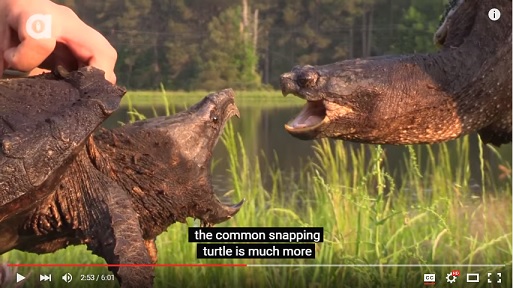
Snapping Turtle vs Common Snapping Turtle
One is a roamer: fast, aggressive, with major attitude.
The other is an ambush predator: slow, patient, with one of
the strongest bites on Earth.
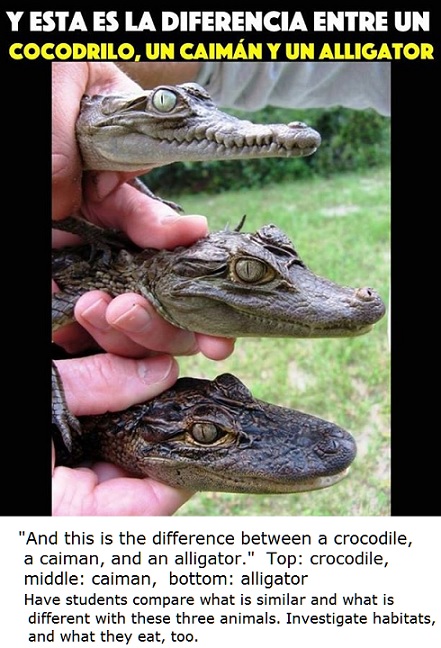
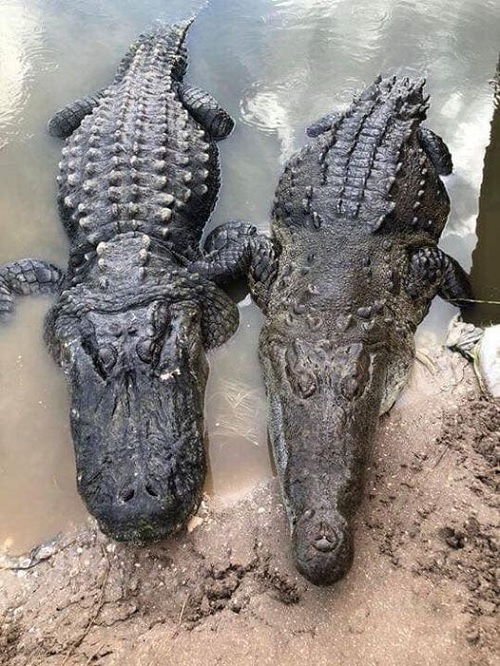
Side by side image of an alligator and a crocodile. Alligators
have short fat snouts and crocodiles have long slender snouts.
Posted by The Reptile Zoo
We are gharials
from the Indian subcontinent! We are
the fish eating crocodiles. Our long and narrow snouts
are designed to catch and hold fish.

Animal Bytes
from the San Diego Zoo. Animals from
all over the world are indexed geographically by continents,
by order, and by habitats and ecosystems. Scroll over to
the right on their menu bar and there's a whole big section
on plants, including a list of all the species at the zoo!
Animal
Diversity Web from University of Michigan. All
about animals, from insects to humans. This site is at a
junior high/grade 7 and up level.
Animal Fact Guide
is a site for Kindergarten through middle
school. It has Animal Facts with photos for 39 popular animals.
"Each animal facts article is printer-friendly and covers a range
of topics, such as the animal’s physical characteristics, habitat
(with a distribution map), diet, breeding patterns, unique traits
and behavior, and when applicable, conservation and tips on
what you can do to help." The blog is full of animals in the
news, discussions, cool links, and animal videos. The Fun Stuff
section has nice printable: mazes, coloring pages, and word
searches. "Did you know that elephants hold grudges or that
cougars can't roar? (Cougars scream, a truly scary noise.)
Learn interesting animal facts and download free coloring
pages at Animal Fact Guide." Links to a Great White Shark
tracker and a Giant Squid video! Very worthwhile and entertaining!
Thanks Abi Cushman, for the email about your site.
 Animal Facts
from Canadian Geographic Everything a
Animal Facts
from Canadian Geographic Everything a
kid would need to do a report on any of 56 Canadian animals
(& birds & fish)! Printable pages for each animal, or just open the
.pdf files
Animal Jam Kids LOVE Animal Jam! They'll play it to the
exclusion of other games. From NatGeo Kids.
Parents
there's a page for you explaining the activities and safety
measures. "Animal Jam is an online playground for kids
where they can learn about the natural world while playing
with friends." Animals facts, printables, more.
Animal
Kingdom from Extreme Science.
The animal section of the larger site. The most extreme animals.
Animal
Kingdom from KidPort. Good, basic elementary level
information about the members of the animal kingdom, with
basic taxonomy (no big words).
Animal
Planet is a place that's loaded with animal information
and games! Their Petsource section has guides to cats, dogs,
and other pets, cat and dog breed info, dog horoscopes (Whaaa?),
games, and more! The Wild Animals section has an A to Z listing
of animals, bird guides, mammal guides, butterfly guides, an
endangered species guide, and a lot more! The Games section
is stupendous fun for kids of all ages. All these things can be
reached from the golden menu bar near the top of the screen.
Thanks to Jessica the Opsmart Lady for this one.
Animals
Size Comparison From a water bear (or tardigrade) to a Blue Whale
this 2 minute Youtube video demonstrates size differences. Great art and music.

Animals from National Geographic. This is Nat Geo's animal site map page, with photos and facts about animals from aardvark to zebra. Includes amphibians, birds, bugs, fish, invertebrates, mammals, prehistoric, and reptiles.
Animals
at the Smithsonian's National Zoo
Oh yeah! You have GOT to see this site to believe it!
Huge amounts of highly organized information presented
so wonderfully! You come away with the same feelings
you have after watching a good movie.
 Animals that you didn't know existed
Learn about 26 animals from all over the world.
Animals that you didn't know existed
Learn about 26 animals from all over the world.
This imgur album has good photos and enough information to make you want to
find out more!
 AntsCanada
Arguably the best non-academic ant site in the world. They are the most experienced
ant keepers around and make the most sophisticated high tech ant farms ever
made. Museums and insect labs use their ant farms, because they're the best.
You can learn a lot about ants from their site, even if you never buy an ant
farm or even keep ants! This site features many educational pages and videos.
AntsCanada
Arguably the best non-academic ant site in the world. They are the most experienced
ant keepers around and make the most sophisticated high tech ant farms ever
made. Museums and insect labs use their ant farms, because they're the best.
You can learn a lot about ants from their site, even if you never buy an ant
farm or even keep ants! This site features many educational pages and videos.
 AntManUK
(includes AntkeepingUK) by Kevin Davies This site is similar to other
AntManUK
(includes AntkeepingUK) by Kevin Davies This site is similar to other
ant-keeping sites, but it's a bit more understated, not so dramatic, not
a "continuing soap opera."
The science is as good as AntsCanada, and the tutorials possibly are better.
Mr. Davies has 10 tutorials and 11
ant general update videos - follow the uphill struggle of establishing an
ant colony: Coping with a dead queen.
Mail order queens. Raising the first generation. There's a lot of information
about ants of the genus Lasius,
UK natives. 11 Lasius flavus videos. 28 Lasius niger videos - must be his
favorite ant (joke).
Also some videos that feature Messor barbarus, a non-UK species with various
sized workers. He will have to
research this species. New videos coming out all the time. It's a well-done
endeavour.
Archosaurs is about dinosaurs, crocodiles, birds, and all their diapsid relatives, both living and extinct. It's part of UC Berkeley's gigantic tree of life web site complex (more on that below.) This is for older students.
 "The Earth - our beautiful blue orb circling the sun is home to so many
diverse species of animals. The Ark In Space serves as a compendium of these
species in all their glory, drawing on the finest Creative Commons photographs
available on the internet. So, enjoy your time on this website and revel in
the beauty and diversity of our animal life. The Earth truly is an Ark
In Space." Amazing and beautiful photography accompanies fact-filled
short articles.
"The Earth - our beautiful blue orb circling the sun is home to so many
diverse species of animals. The Ark In Space serves as a compendium of these
species in all their glory, drawing on the finest Creative Commons photographs
available on the internet. So, enjoy your time on this website and revel in
the beauty and diversity of our animal life. The Earth truly is an Ark
In Space." Amazing and beautiful photography accompanies fact-filled
short articles.
Armadillos Fun facts about the 21 different species.
Armadillo Species
video. From the Pink Fairy Armadillo
to the Giant Armadillo to the Screaming Hairy Armadillo
(really its name) and 18 more. Enjoy!

Armadillo roll-up is a defense these animals use.
Armadillo
page of the San Diego Zoo!
It's pretty good, too!
Arthropod
Story "This interactive investigation delves
into the
amazing world of the arthropods..." Simple language and lots
of pictures. From UC Berkeley.
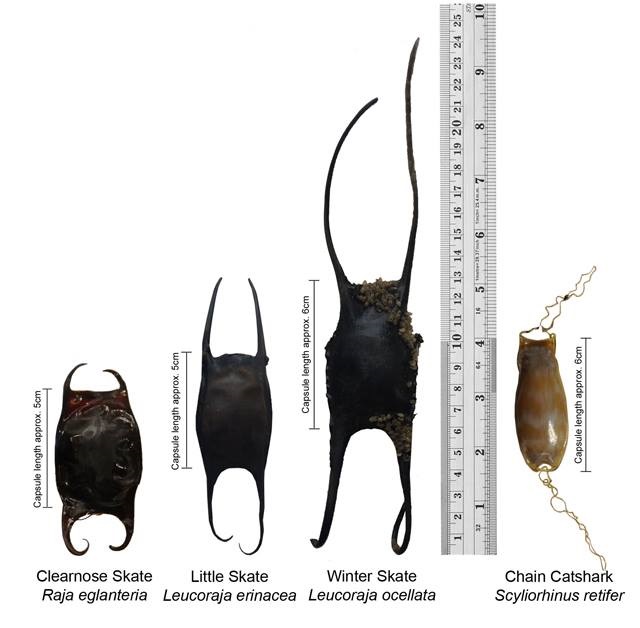
Assateague
Island National Seashore
"Did you know that by just finding a mermaid's purse on the beach you
can contribute to science?
Citizen science has always been an important part of collecting environmental
data,
and when it comes to sharks, skates, and rays, scientists at The Shark Trust
are asking for your help!
In order to study the distribution of different oceanic shark and skate species,
they are asking that you report your egg case finds online.
The first step if you are going to report an egg case is to
identify it. Since the egg cases we find are usually dried out,
the first step in identifying one is to soak it in fresh water for a couple
of hours.
(Don’t worry- if the egg case has already hatched, it won’t smell!)
When soaking the egg case, you should make sure
to remove all the air from it so it sinks in the water. Once you have rehydrated
your find, it’s time to identify it!
Head over to The Shark Trust’s website (www.sharktrust.org/en/usa_eggcases)
for a guide to the different types
of egg cases you can find on the Eastern Shore of MD & VA. The next step
is to report your findings.
Be sure to get a picture, so they can confirm your report and add your report
to their records!
(Text: Mark Bochner) (Photo: Shark Trust)
1) Look up the 4 fish named above and check them out!
2) Credit - Bevin Rose O'Grady
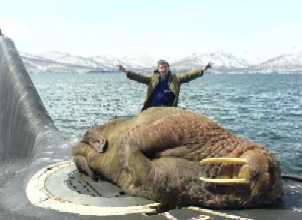
In Russia, walrus haul out on old submarine!
Atlantic
Walrus from NatGeo. Venture into the world of the walrus, with two
intrepid divers and cameramen. Read about these tusked giants, relatives of
seals. See a map of where they live now. See a photo
gallery of walruses
hunting clams, hauling out, hanging out, and walrus babies.
Watch Dangerous
Dives, a video of the divers going after up-close photos.
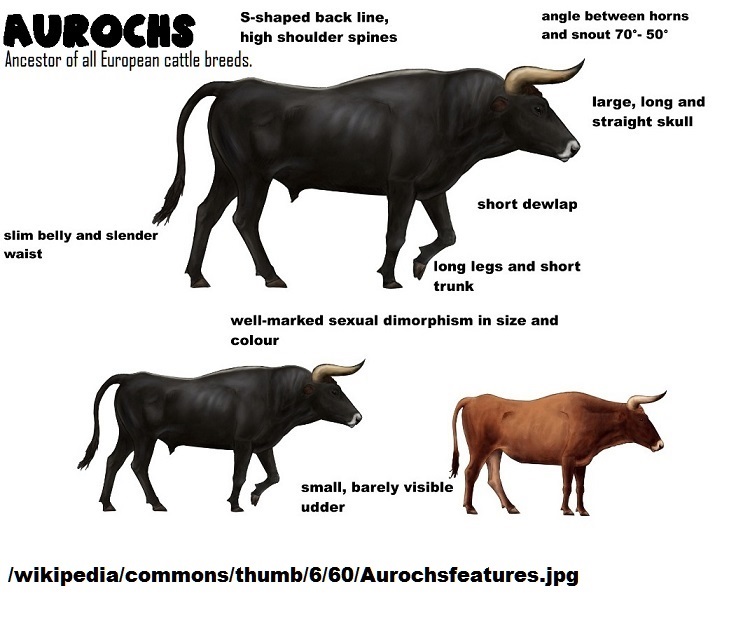
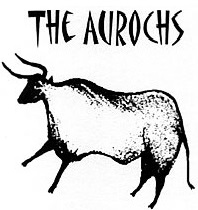
Aurochs are the ancestors
of modern cattle. Big as an American bison,
aurochs had distinctive curved horns. Bulls were black, and cows were brown.
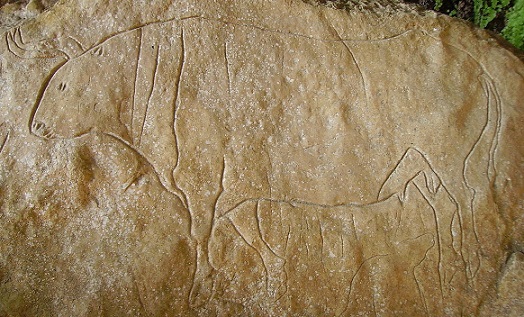
Yes, we know this carving isn't quite correct, BUT it conveys the POWER
of this beast. Perhaps the artist was an impressionist.
Stone carving of a bull aurochs from Grotta
del Romito, southern Italy.
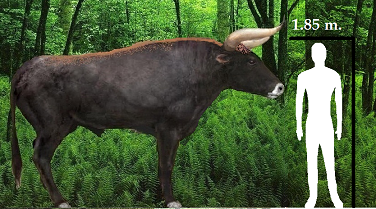
Julius Caesar described aurochs herds he saw in Gaul (ancient France).

Australian Animals Nice, easy
to use site with lots of photos,
and descriptions of how the animals interact with humans.
Many links to related animal sites.

Australian Fauna "No
rubbish, just fair dinkum Aussie animal info. "
"A magnificent site loaded with free information, a true asset to the
Internet in Australia, and researchers Worldwide." This really
is a good
site for research, as it has a lot of information.
Easy to use, with animals listed in alphabetical order.

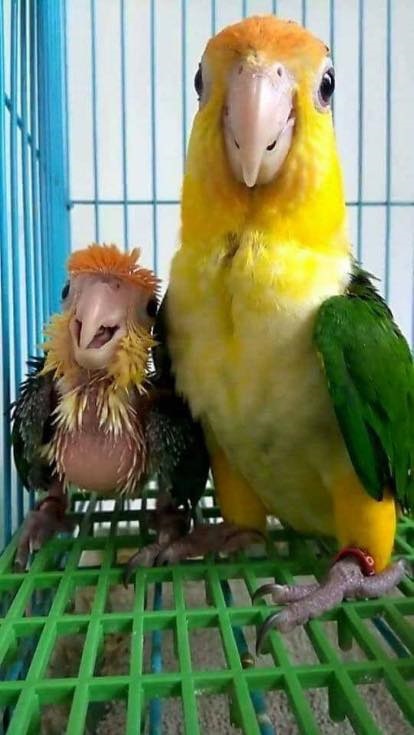
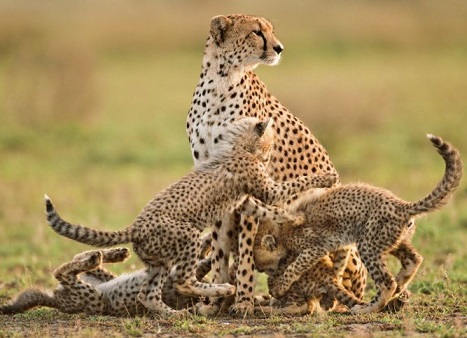
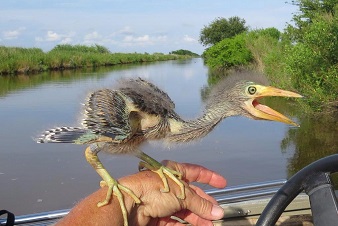
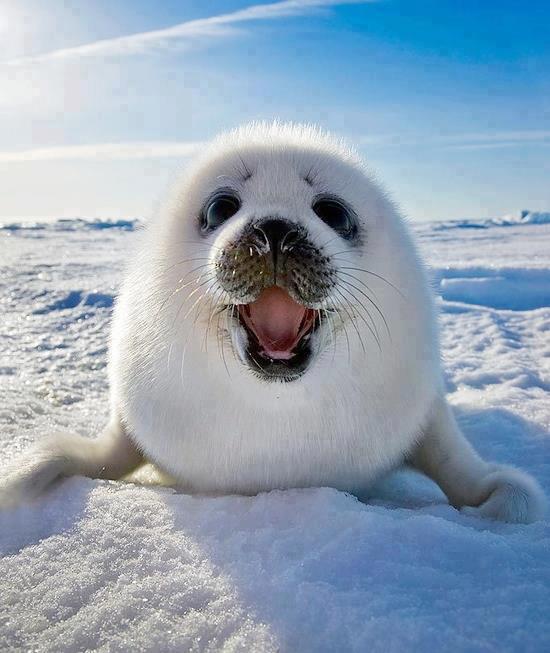
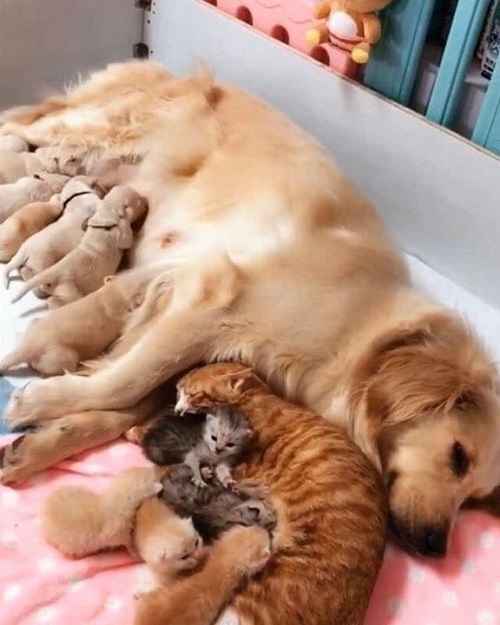
Baby animals and their mothers!
Mama and three cubs. From a trail cam photo near Deadwood,
South Dakota, November 2021.
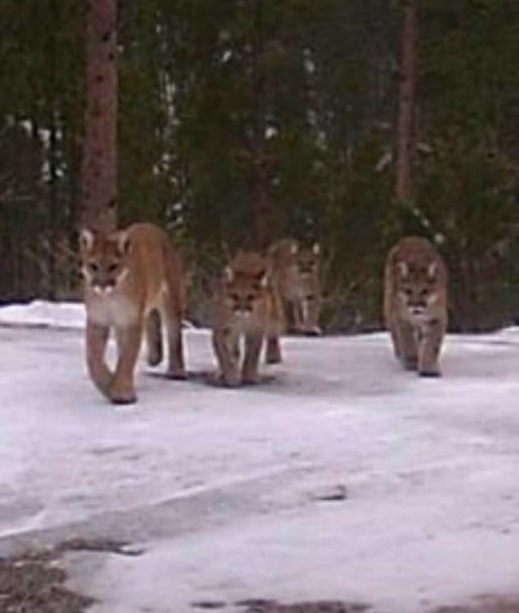
Maybe they're heading into Deadwood to play the slots.
Amazon yellow-headed parrot.
Mama and hatchling. Beautiful.
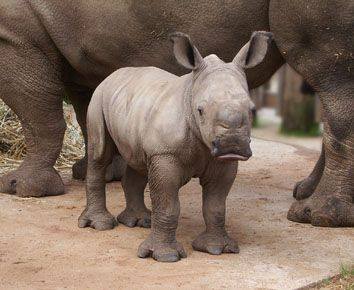
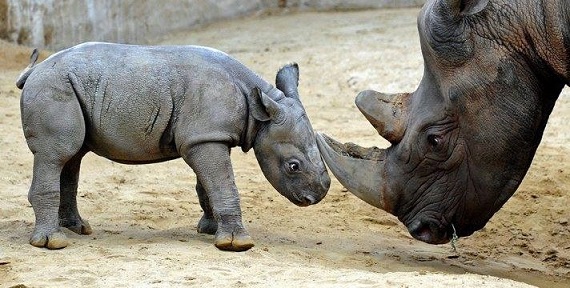
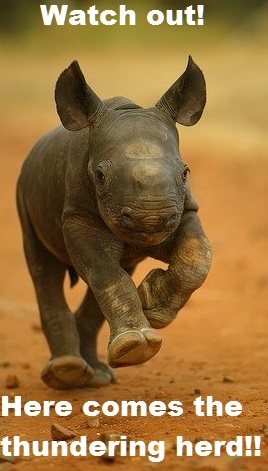
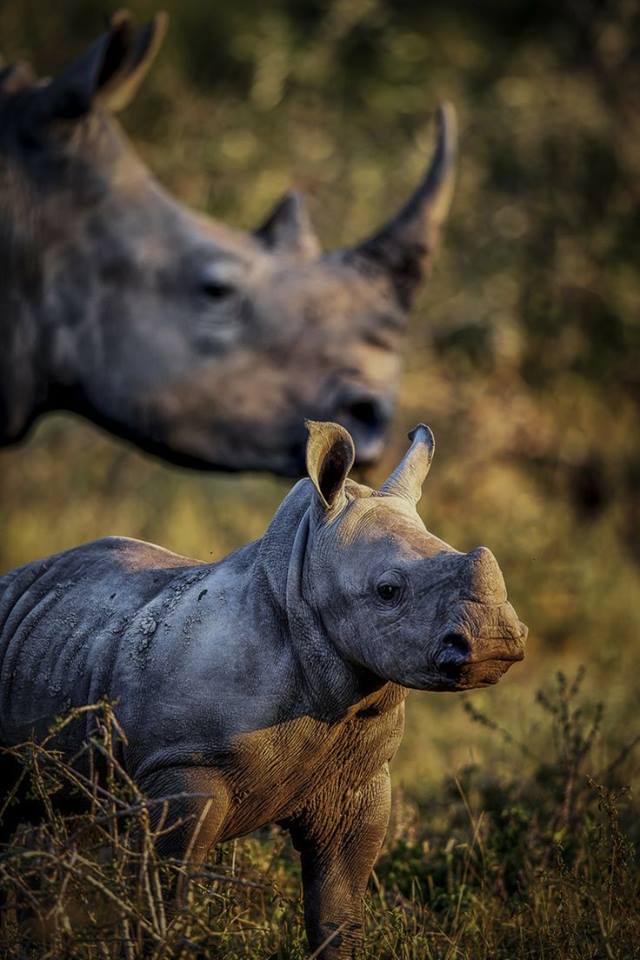
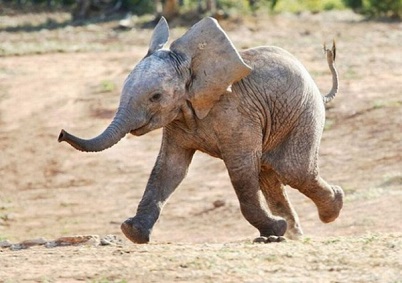
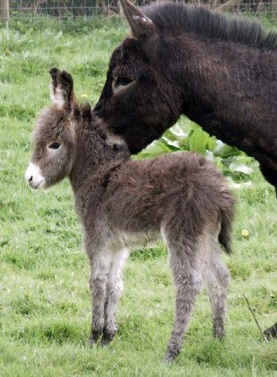
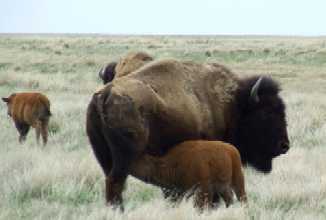
No rollerskating! A South Dakota bison herd.
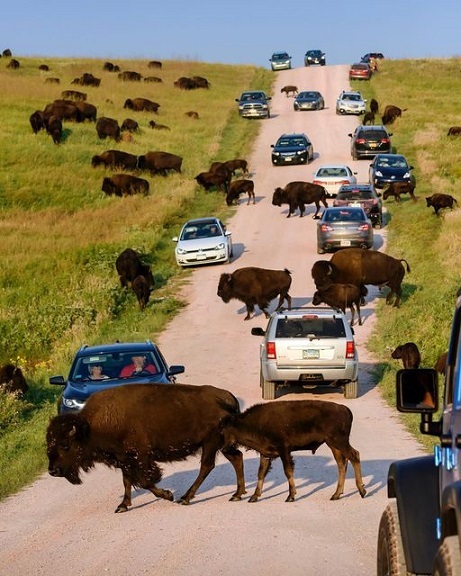
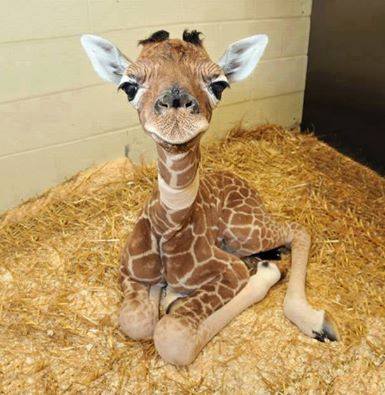

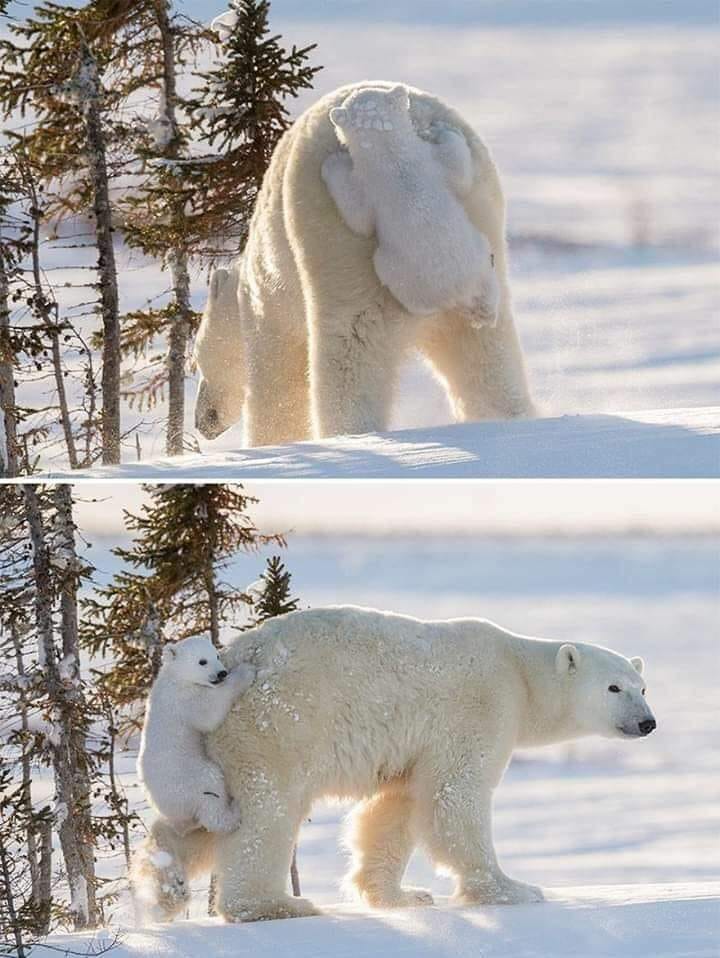
two mammal mamas feeding their babies.
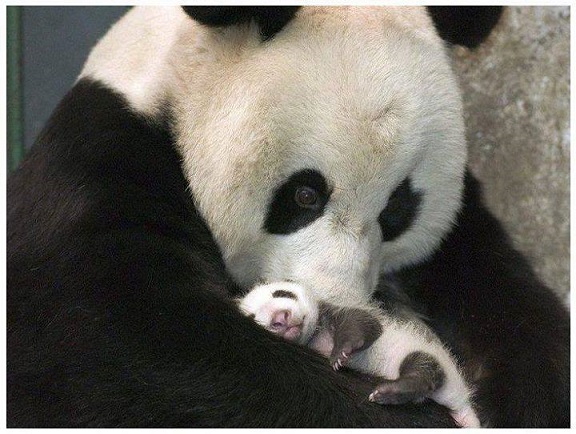

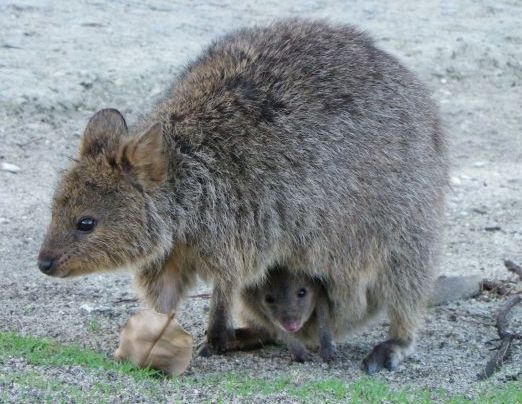
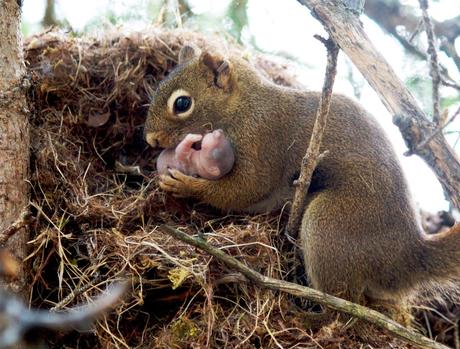
Hey, Mama Bear! There's a lump on your behind!
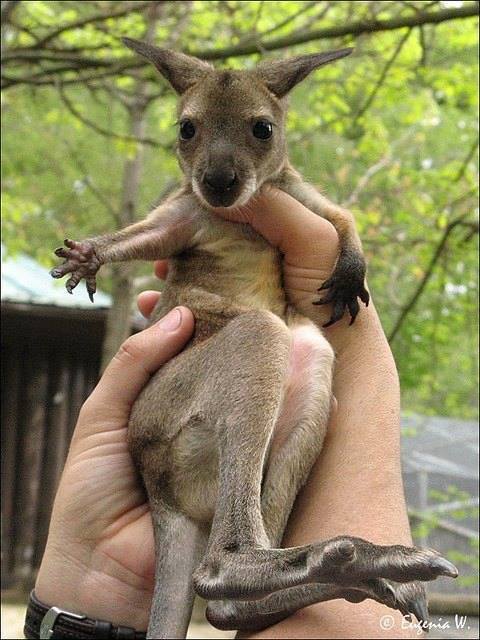
Just a joey, a baby kangaroo. Cuuuuute!
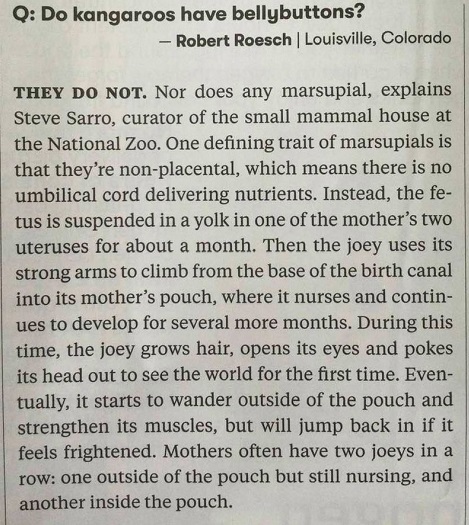
Do
kangaroos have belly buttons?
Not one possum in this photo has a belly button!
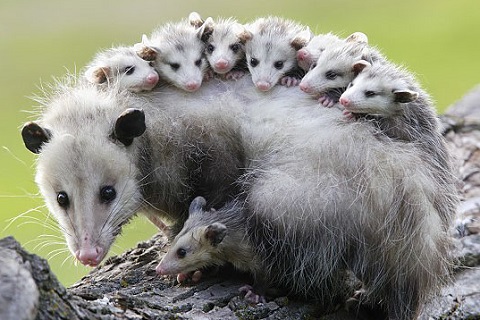
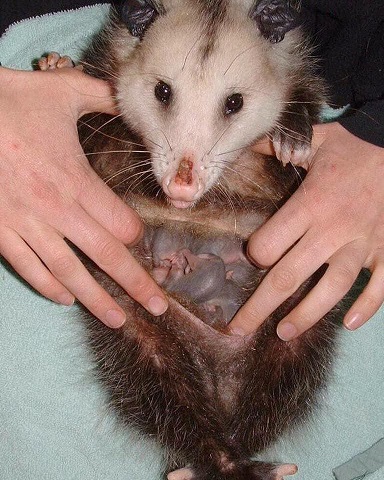
Check out my pouch, it's full of babies! But no belly buttons.
Sheep have belly buttons!
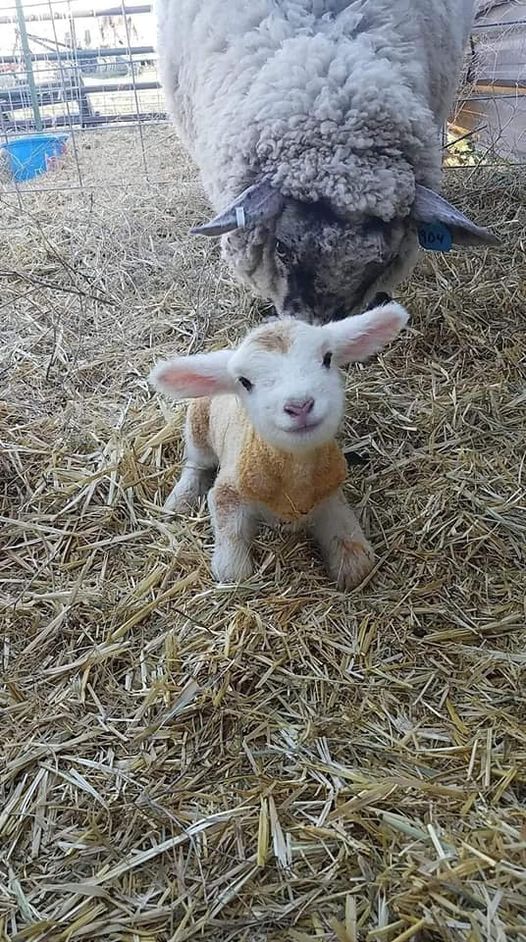
Because the world needs to see what a
15 minute old baby lamb looks like!
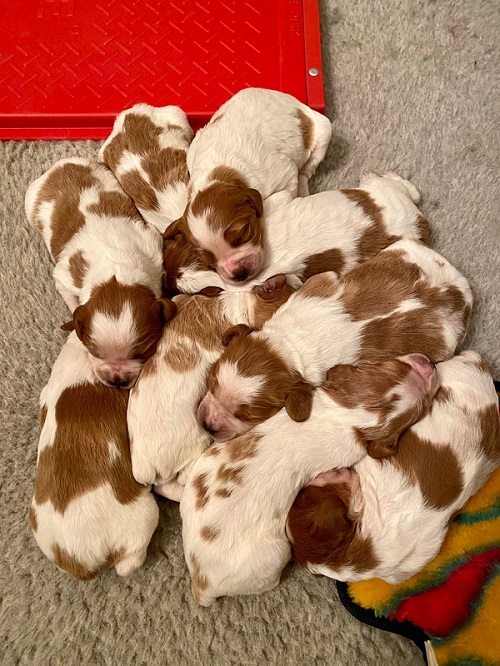
This little dude is five days old! He is an American Brittany.
His little tummy is full of mama's milk, so he is sleepy!
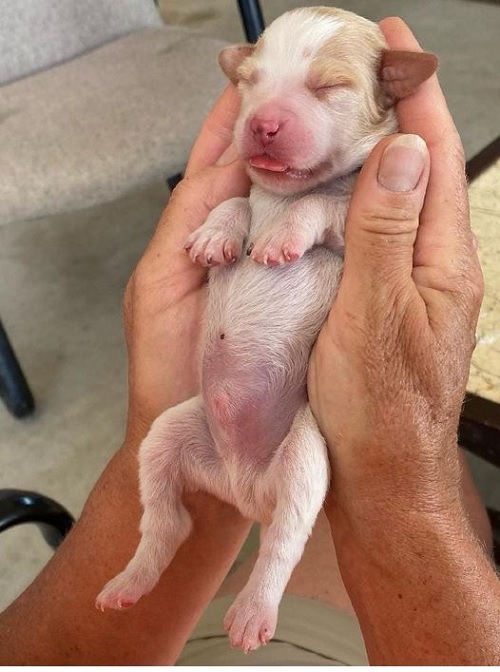
Puppies have belly buttons!
An albino doe and her very leggy fawn

Both have belly buttons!
Cicadas! - The Great Emergence of 2024

Cicadas:
The Loudest Bugs in the World! |
Biology for Kids | SciShow Kids 4:17 video
Smithsonian
3 min video
BBC 5:17 video
Cicadas:
The dormant army beneath
TED 2:45 video
Counting for pre-K - 1st grade.
Count the puppies! How many puppies?
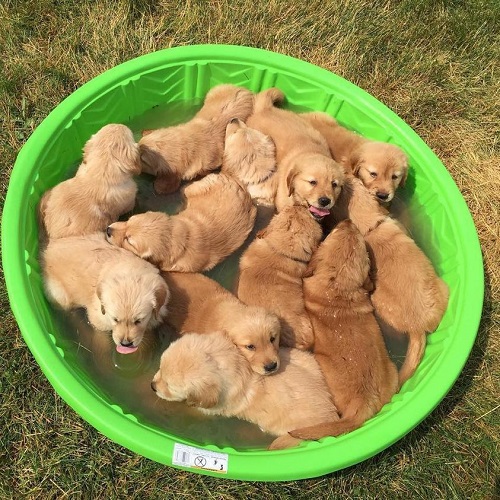
credit = Woof Woof page on Facebook
Count MORE puppies!
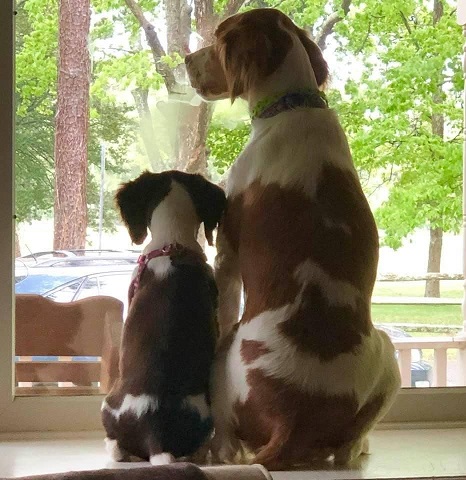
Someday, son, this will all be yours.
The yard, the trails, the rabbits, the squirrels,
the humans. Everything.
Bagheera
Named after Mowgli's panther friend. One of the
oldest endangered species sites, still a very good resource.
I am ... Dracula!
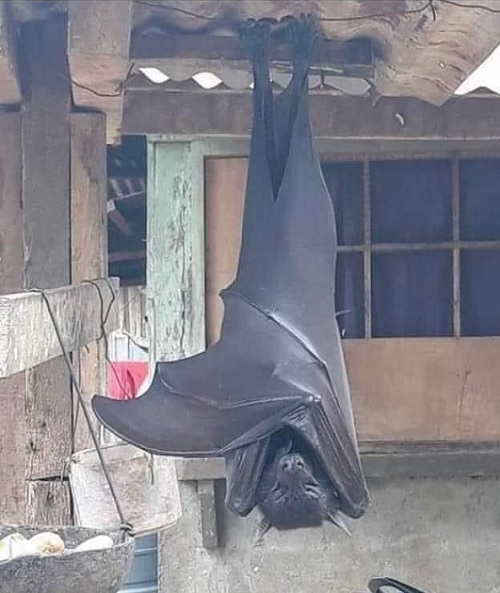
Five-foot wing spread fruit bat from the Philippines.
It is an herbivore. It only eats fruits (figs, mostly),
some leaves, fruit flowers, and a few insects.
Bats of Jewel Cave Very good information on bats! Jewel Cave is in the southern Black Hills of South Dakota, near Wyoming. It is one of the longest caves in the world.
Bears Of The World "Bears are one of the most widely distributed terrestrial mammals on earth. Bears have at one time or another lived in the wild on all continents but Australia... Below are the eight living species of bears, six of which are listed as either endangered or vulnerable by the IUCN" (The Red List people). Lots of information on the four bears of genus Ursus, and their four relatives who also qualify as bears.
 Biology
Corner "Biology lesson plans, worksheets, tutorials,
Biology
Corner "Biology lesson plans, worksheets, tutorials,
and resources for teachers and students." Understatement of the
year! Everything you need to teach biology and related subjects to
high school students, except the teacher. Very complex but easy to
navigate.
Biology
Corner Archives
"Note: This is an archive page for biologycorner.com,
it is no longer maintained. Go to the main site at
biologycorner.com to find worksheets and resources
for teaching biology, anatomy, and physics."
That said, this is a big long page with well over 100
valuable links, organized into topic sections like "Phyla"
and "Genetics". There are even study guides and activity
sheets for a couple of biology textbooks
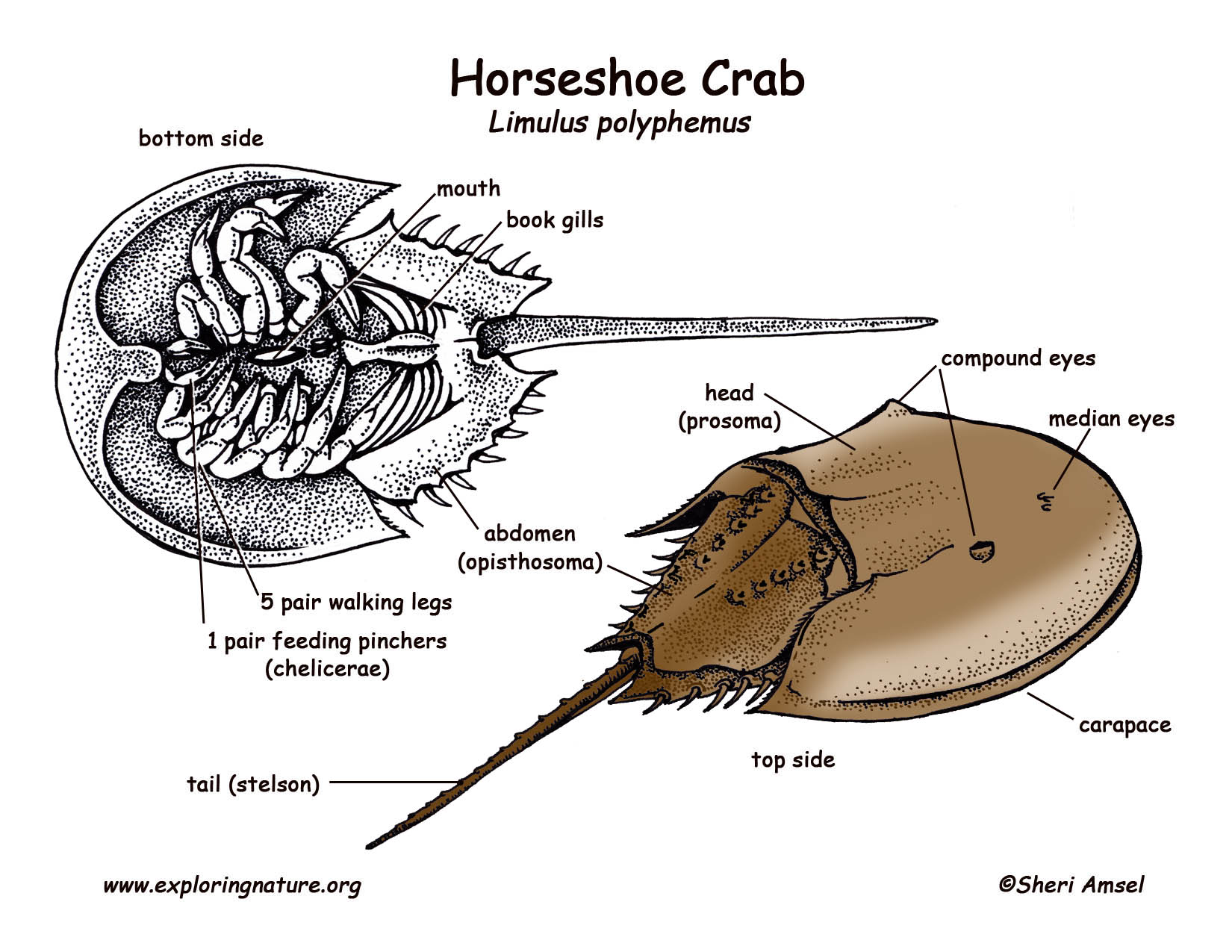
Horseshoe Crabs - Our Blue-blood friends

The Atlantic horseshoe crab (Limulus polyphemus)
Wikipedia
article
Horseshoe Crabs from activewild

Good
crab pic with dorsal & ventral views
one of many from Exploring Nature
And now for something completely different:
Intimate
lives of wild honeybees Images show how
bees cook invaders alive, stay warm or cool, and socialize.
From NatGeo.
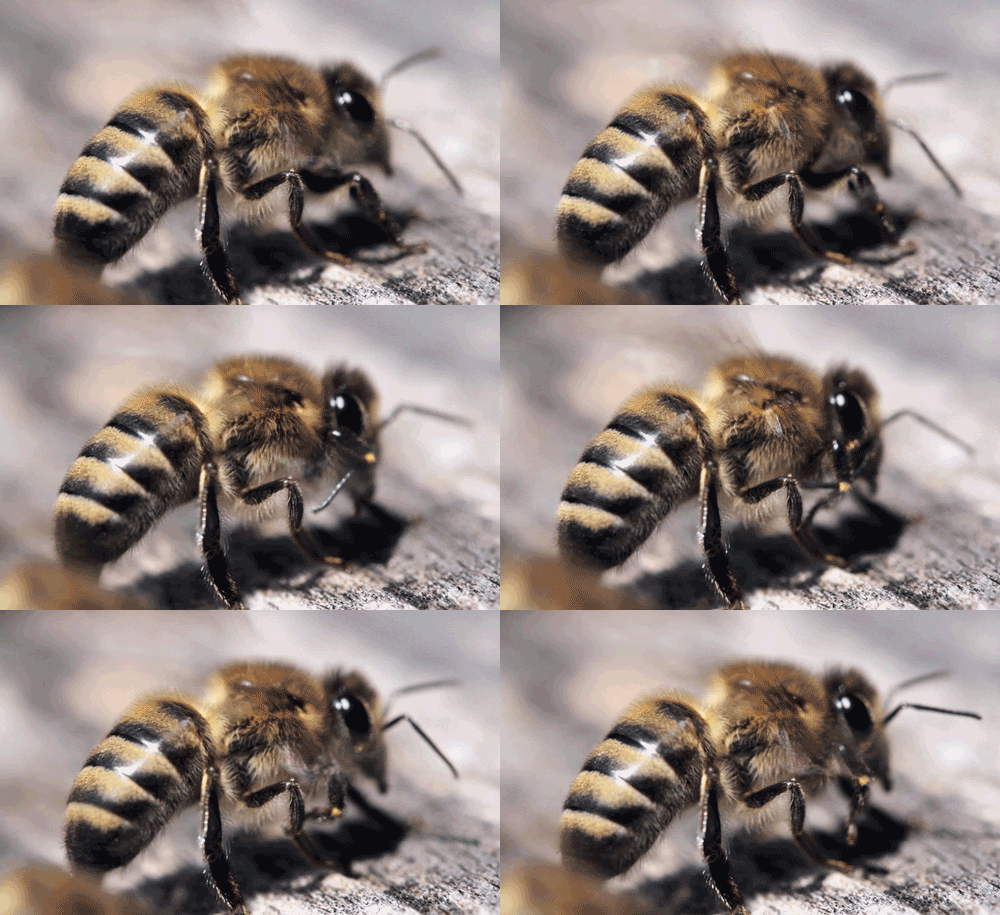
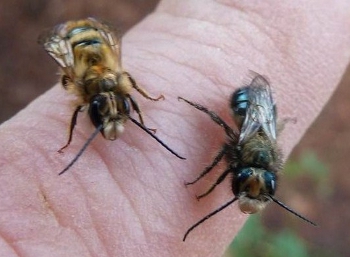 Mason
Bees All about mason bees. A single mason bee can pollinate as much as
100 honey bees can. How to care for them, so they can pollinate your flowers
and veggies! Includes a seven minute video.
Mason
Bees All about mason bees. A single mason bee can pollinate as much as
100 honey bees can. How to care for them, so they can pollinate your flowers
and veggies! Includes a seven minute video.
Attract Mason Bees – No Protective Gear Needed "Few strategies for keeping our environment healthy are as interesting, simple and fun as raising mason bees, tiny insects that are gaining popularity with gardeners and farmers alike."
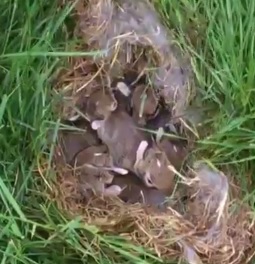
Before
you cut the grass, check for baby rabbits
1:12 video from CBC Hamilton (Ontario, Canada)
"If you see a rabbit's nest, let it be; they grow up quick,
in a couple of weeks, they'll be gone."
See baby rabbits up close. Squeak!
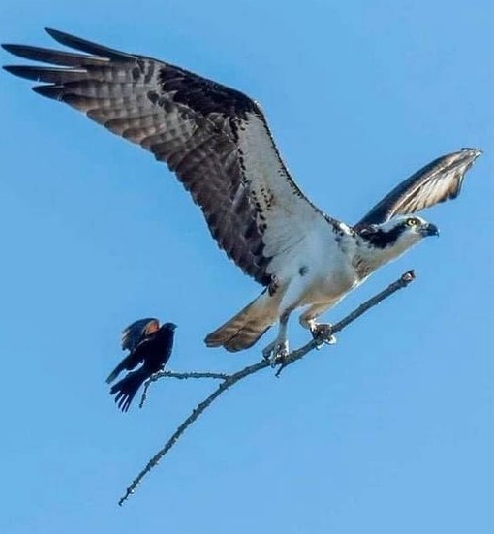
An Osprey and a very territorial Redwing Blackbird.
The osprey is collecting sticks from a marsh for its nest.
Mr. Red-winged Blackbird doesn't like anyone taking
sticks from his marsh.
Steven Lee The
Official Crow, Raven & Other Corvids Fan Page
More
about red-winged blackbirds and their relatives.
Bowfins vs. Snakeheads
Comparing the invasive Snakehead to the native
Bowfin:
- Snakeheads come from East Asia.
- Latin name = Channa argus
- Snakeheads are spreading out in the eastern US and Canada.
- They are tough and fight hard when hooked.
- Asians say they are good to eat, and there is a market for them.
- They spawn (lay eggs) several times a year.
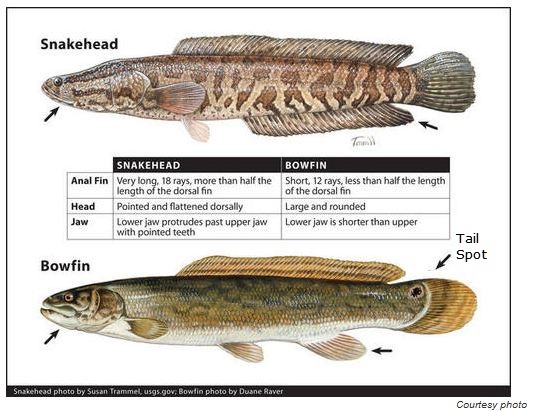
- Bowfins are Native to eastern North America.
- They are not good to eat, unless you are starving.
- They are not teleosts
like Snakeheads and most other fish.
- They are the only survivors of another, very old group of fishes.
They have been around since the Triassic Period so they are older
than dinosaurs. Bowfins are more primitive than most other fish.
Their fins are mounted on hips, like the first fishes that crawled
up onto land. They are tough and fight hard when hooked.
The males have a tail spot. Bowfins spawn once a year, laying
thousands of eggs. The father watches over the nest and herds
the fry around like a sheepdog until they are 2 - 3 months old.
They are not bad for the environment, they are a natural part of
it.
Latin name = Amia calva
(PS Bowfins and Snakeheads do not do well in an aquarium with
other fish. They will eat them all.)
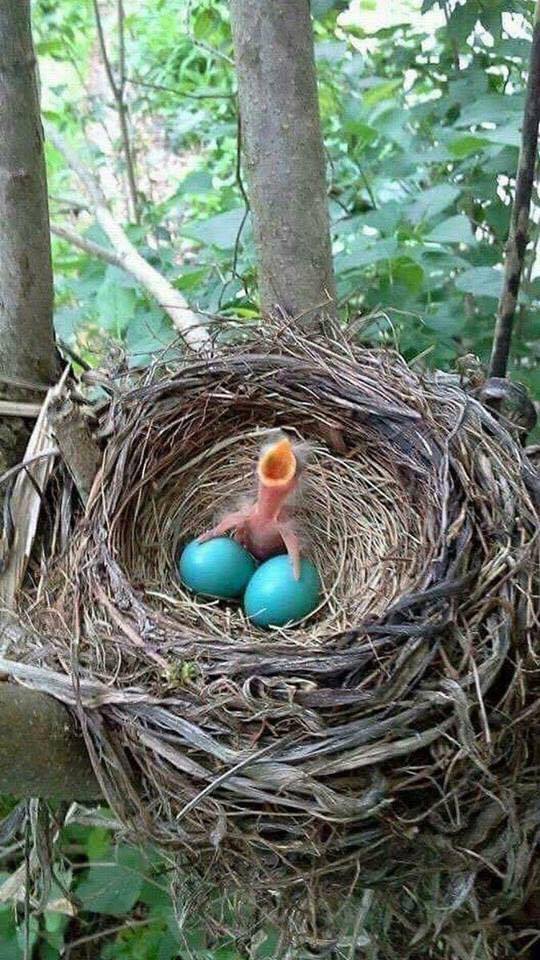
"Feed me! Feed me!" Look at the complicated, intricate
nest construction!
The parents are programmed to build nests exactly like that - strong outer
layer, soft inner "cup". Expertly woven. Ancient humans probably
got the
idea for willow fencing and wattle construction by examining bird nests.
Perhaps ideas about weaving, also.
Bird watching: Here is an easy-to-use site
that helps you find
out what bird you just saw! What Bird
is its name.
Zoom
Birds Like the rest of Enchanted Learning, this is a fine kid
learning site, with a lot of good information about birds. If you
find yourself using Enchanted Learning sites a lot, please subscribe.
Birds in the Classroom
from the Fernbank Ornithology Center in Atlanta.
The frame on the left side of the page (pull it down to see it all)
has links to pages on bird adaptations, anatomy, physiology, and
bird behavior. Excellent site.
Birds
of America
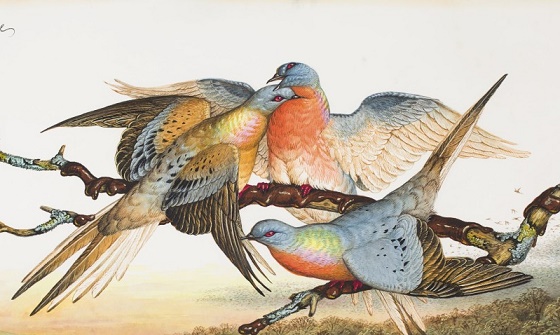
This is J. J. Audubon's legendary art folio from the 19th century!
See fine art paintings of every bird in North America! Some have
gone extinct since the 1800s - like the Passenger
Pigeon shown below:
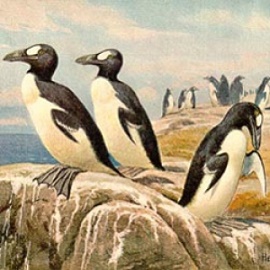
Some other extinct native birds include the Carolina
parakeet
(below left), the Labrador duck, the great
auk (below right),
Eskimo curlew, and pinnated grouse.

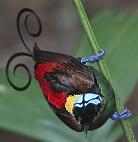
Birds
of Paradise This slideshow from NatGeo has amazing photos of 14 of
the 38 - 41 known species of these incredibly beautiful birds. Scroll through
the slideshow and discover them. If you are interested, explore further in
this
NatGeo article or in this
Wikipedia entry, which links to a separate
page for each of 41 species, plus a discussion of hybrids, which are common!
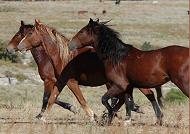
Black Hills Wild
Horse Sanctuary
"See hundreds of wild American, Spanish, and Sulphur mustangs
roaming free across wind swept prairies. Imagine a place where,
as far as the eye can see, miles and miles to the horizon, you
can view America as it was 300 years ago. Imagine a place, long
revered by the American Indians, where the Cheyenne River flows
in all four directions, and eagles’ shadows sweep the rocky canyon
walls, a place where wild horses run free across endless prairies,
hooves striking thunder, manes and tails flying in the wind."
Fourteen miles south of Hot Springs (home of the Mammoth Site).
Visit if you're anyplace close and see this wonderful place yourself!
See their Slide Show
and explore the rest of the site, too
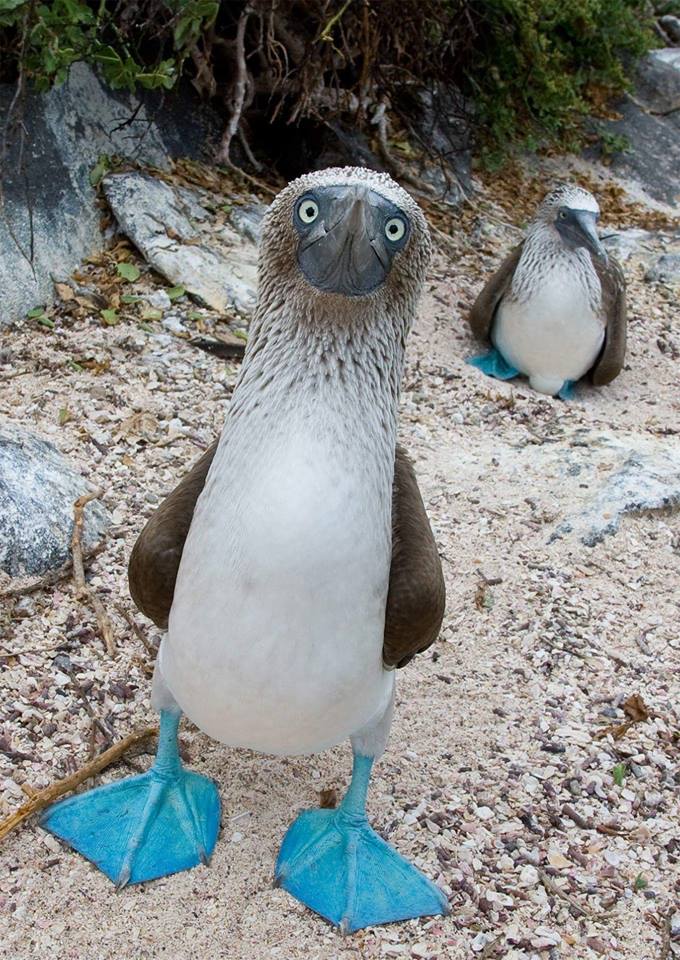
Blue-Footed
Booby
"If you have never heard of the blue-footed booby.. here it is. You're
welcome."
Breeds
of Livestock: Horses This site will tell you everything you want to know
about breeds of livestock, from cattle
to pigs, from camels to yaks! Has links to poultry, too. Our link goes to
horses because girls like them best.
 Buffalo (Bison) Education
from the InterTribal Bison Cooperative.
From the original people of the bison
Buffalo (Bison) Education
from the InterTribal Bison Cooperative.
From the original people of the bison
comes this excellent educational resource. Learn the Traditional
Uses of the Buffalo with a comprehensive
printable .pdf chart. Learn why Buffalo
Are Sacred. Learn the Historical
and Cultural Connection to the Buffalo and the awful Slaughter
of the Buffalo. Find out about buffalo Meat
& Nutrition, and recipes.
Play the Buffalo Brain Busters
game. Color in the fact-filled Coloring
Pages for Kids
Difference Between Buffalo and Bison
Explains differences and similaritities: size,
aprearance,
habitats, biomes, habits, species...

We wonder why they left out the Gaurs?
Bugs
That Live on You from PBS/NOVA.
"From your head to your toes, your body is a
veritable jungle of flora and fauna.
Like it or not, our bodies are perfect
environments for the creepy and crawly.
For hundreds of thousands of years, these
animals have called our bodies home—or
at least food." Watch the slideshow or scroll
though the printable version. But it itches, Mom!
Butser Ancient
Farm Living Iron Age farm animals.
Lots of photos and info about ancient farm animals from
all over Europe that are kept at Butser. Many are
endangered. These are the same breeds that ancient
farmers kept thousands of years ago.
To see the animals, go to the right-hand side of the
page, go down to the button that says Animals, and click it.
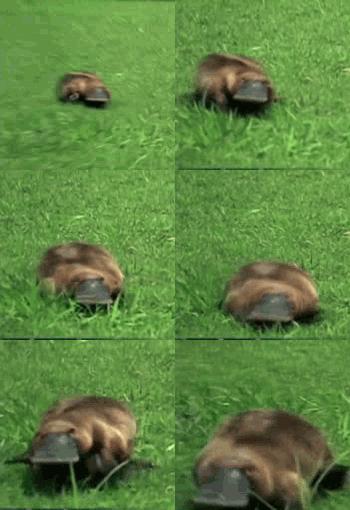
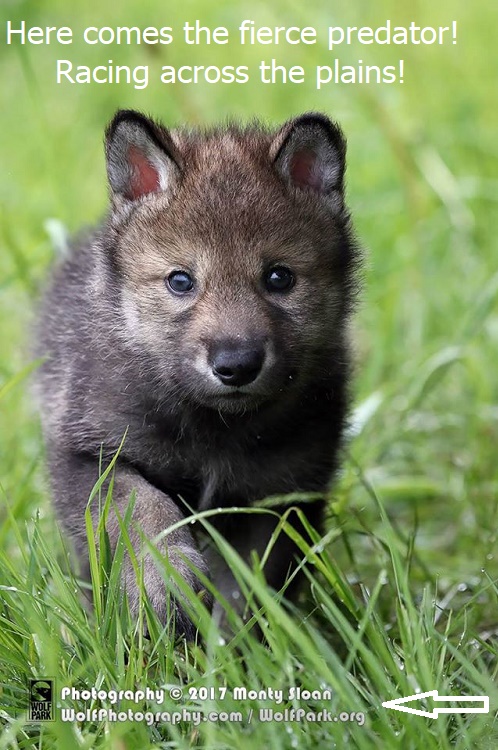
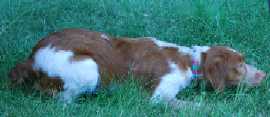
Here I am sneaking up on
my prey, just like my ancient ancestors.
My clever camouflage of brown and white helps me blend into this green grass!
Butterfly Guide Captain's European Butterfly Guide
" A Photographic Guide to Europe's Butterflies"
has photos and info
on butterflies of the UK, rest of Europe, and North Africa.
Great resource, many photos.
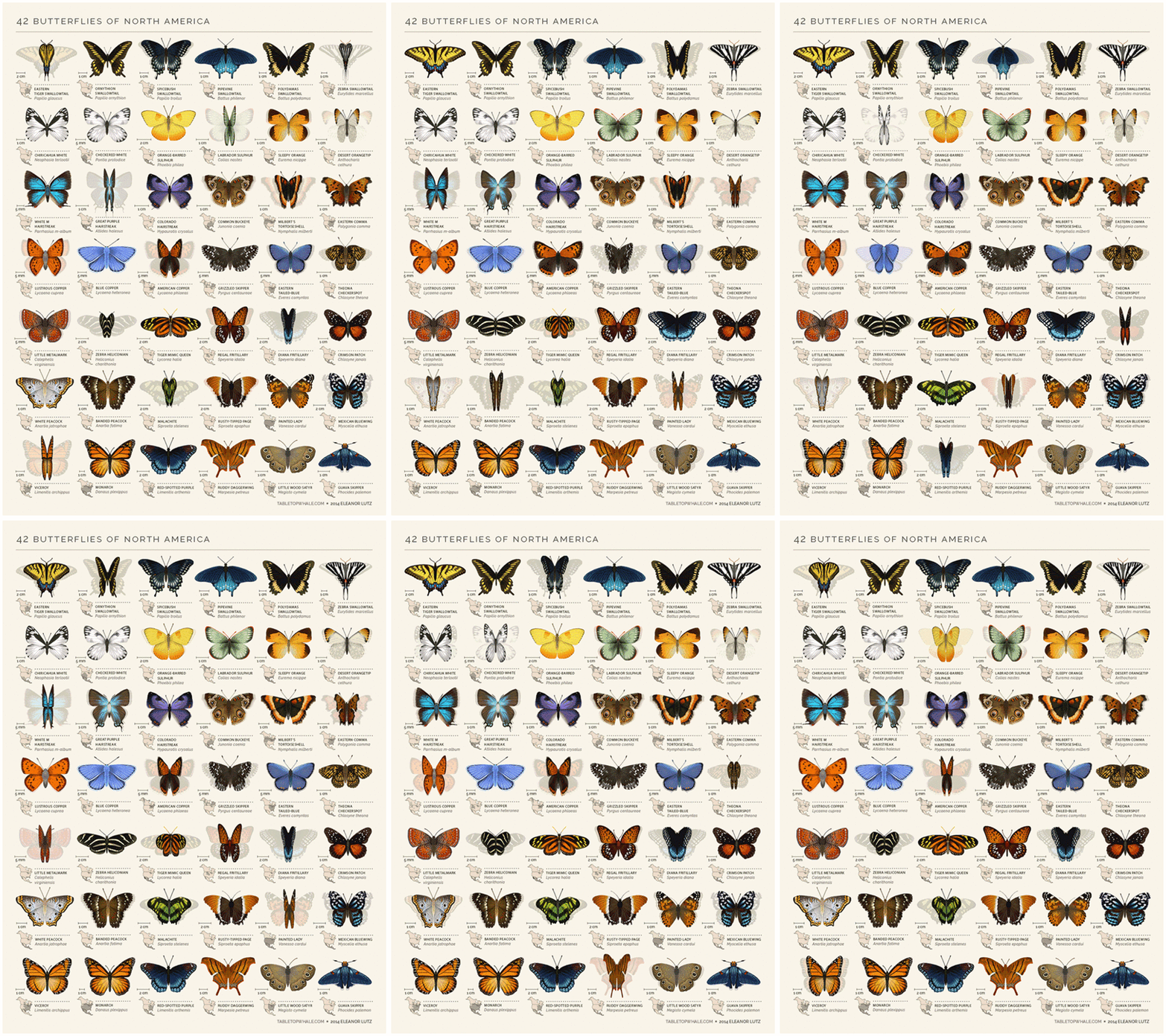
Butterfly
Utopia is a commercial site offering mounted butterflies.
Obviously not in their natural state, but the photos are beautiful!
Twelve pages with 21 different butterflies per page. Has some info
about each one. Excellent source for photos and species names.
The Butterfly
Website "is the world's oldest and largest website dedicated
to butterflies and moths. Here you'll find hundreds of articles about
butterflies and moths, an extensive clipart collection, many photographs,
videos, butterfly gardening tips, links to purchase butterflies for your
wedding or special event, and a lot more." Also an FAQ page with 25
general questions and answers about butterflies, moths, and caterpillars;
and page of links to butterfly curricula.
Monarch
Butterfly photos from fohn.net. Good natural photos of monarch
butterflies with more info on each page.
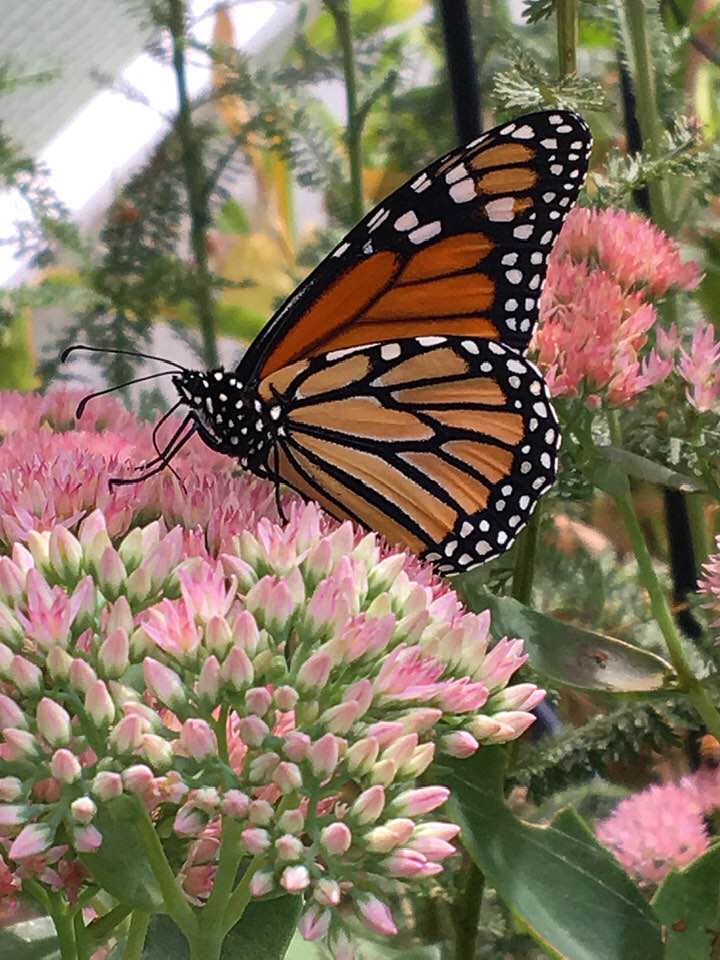
Zoom
Butterflies is all about butterflies and moths, species, pictures,
a dictionary, lots of printables and activities for kids.
Camel
Spiders are not true spiders. Related to spiders and scorpions,
900 known species of wind scorpions, sun spiders, and camel spiders
live in deserts worldwide; with some really hairy
scary
photos
of camel spiders in places from Arizona to Iraq.
Canine Corner
from the San Diego Natural History Museum. Woof! "Discover domestic dogs
and their
wild cousins. Bite-sized facts about dogs and wild dogs!" Also has a
glossary and links.
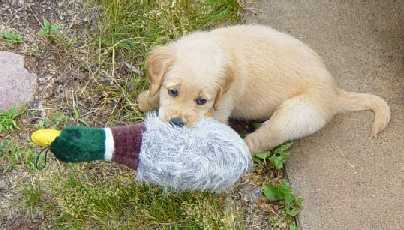
Here's the fierce dog and her duck!
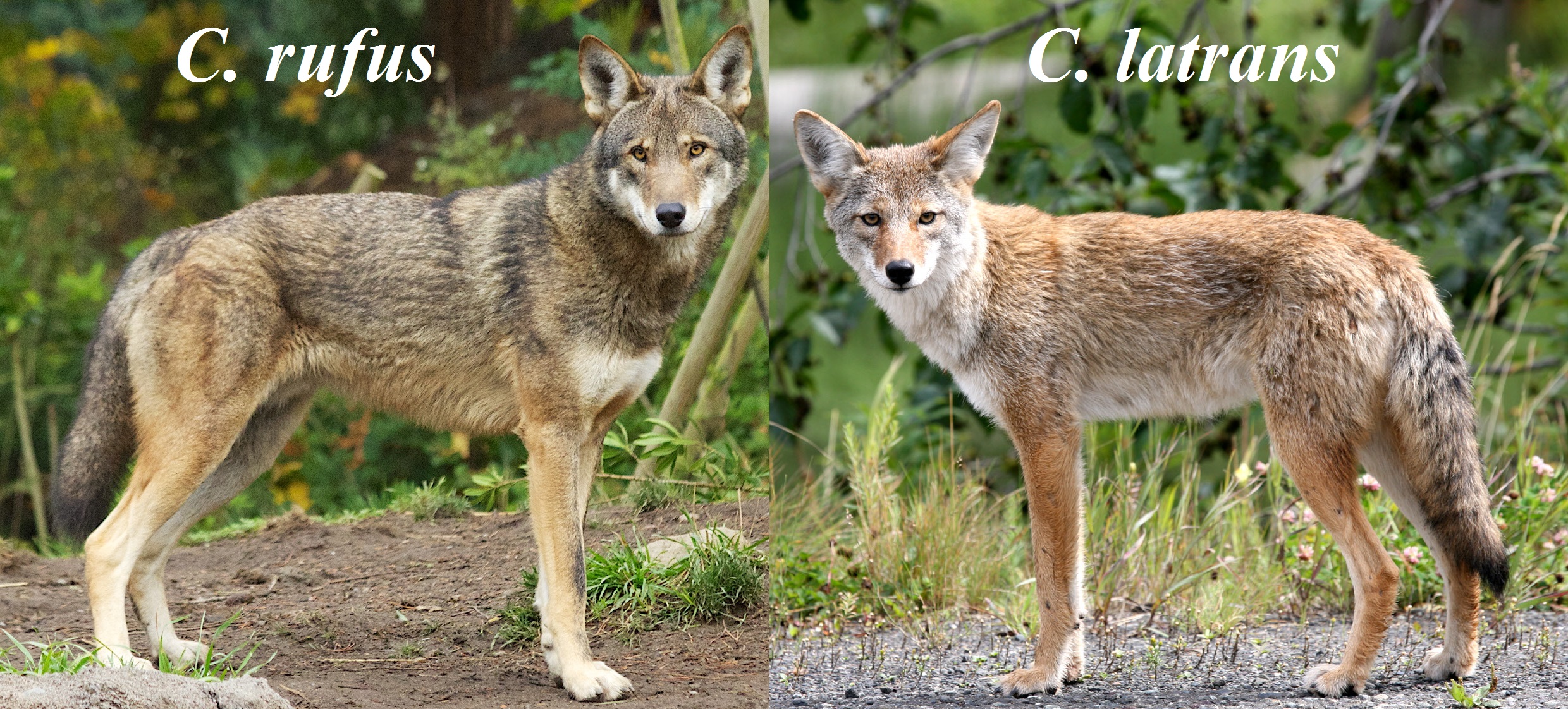
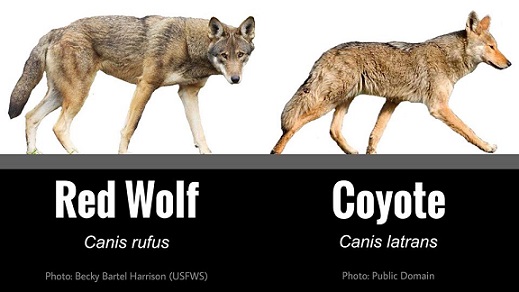
Canis
rufus (the endangered Red Wolf of southeastern North America) next to
C. latrans
(the coyote, found all over North and part of South America). Click on this
photo see its online
humonguous version. The Red Wolf is just your average working-class wolf.
They have a typical wolf-y body shape.
The coyote is more jackal-looking. It fills the jackals' niche in the New
World.
Carolina
Wild Dogs are North America's original native dogs!
These tough, shy survivors look like Dingos. They can still be found in wild
places in the southeast US. There are other primitive "yellow dogs"
and "pariah dogs" still hanging around villages worldwide. They
are
"basal" dogs from the base of the doggy family tree.
Fall
in Love with America’s Only Wild Dog: All About the Carolina Dog
and American
dingo: America's only native wild dog
Cassowary.
One of the deadliest birds alive.
They are now endangered in Australia. Do Not Feed.
Southern
Cassowary Links to an article at Ark
in Space.
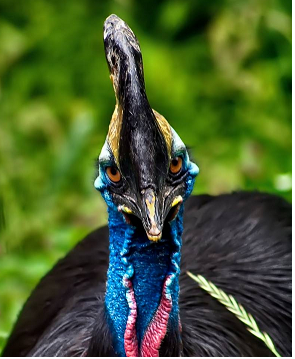
Awesome Theropoda - Northern Cassowary (Casuarius unappendiculatus),
Photograph by @Irawan Subingar.
From Prehistoric
Life in the Phanerozoic Eon
There are plenty of photos and facts in this one page article about the
"Most Dangerous Bird on Earth".
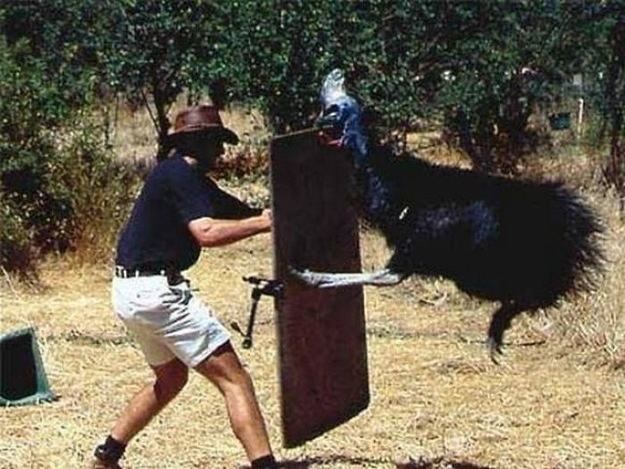
Mr. Cassowary is attacking this bloke in an insane rage.
Nobody, the cassowary included, knows exactly why,
but the man's grabbed a table for a shield.
The cassowary aims to use its foot claws to rip open the man's belly.
Notice that big thick claw pointed right at the man. Cassowaries have
extra big feet. They look like they are wearing big boots!
Cat Breed Profiles
from CatChannel.
Information and photos of many breeds of house cats.

The best cat videos come from the wild "These gorgeous cat videos come from camera traps -- the motion-sensing cameras that researchers are using to monitor endangered and elusive animals." This 4:07 video from Vox is well narrated. It spends a lot of time explaining why cat species become endangered. 80% of cat species are endangered now. Watching this short will definitely raise students' awareness of shrinking environments, poaching, and extinction.
Big Cats Medium
and small wild cats, too. Get the facts on all of them here.
Norwegian
Forest Cat
27
Amazing Photos Of Norwegian Forest Cats
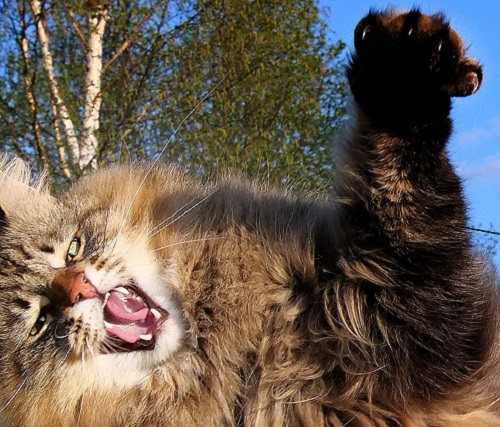
Cat Species Photos and information about 36 wild cat species (around 50 or so exist). Everything from lions and tigers to Borneo Bay Cats and Kodkods. Also has links to sites that work to save endangered wild cats. From CatChannel.
 Cheetahs
- Have You Ever Wondered How Cheetahs Can Run So Fast? "Cheetahs
are the fastest mammals on the planet — they can outrun most sports
cars! But it’s not just about speed. Cheetahs also have an incredible
rate of acceleration, and can reach 60 miles per hour (97 km per hour) in
just three seconds, and only three strides. Find out how cheetahs can achieve
these unbelievable speeds" by clicking on the link above. A Smithsonian
Channel video from The Rainforest
Site.
Cheetahs
- Have You Ever Wondered How Cheetahs Can Run So Fast? "Cheetahs
are the fastest mammals on the planet — they can outrun most sports
cars! But it’s not just about speed. Cheetahs also have an incredible
rate of acceleration, and can reach 60 miles per hour (97 km per hour) in
just three seconds, and only three strides. Find out how cheetahs can achieve
these unbelievable speeds" by clicking on the link above. A Smithsonian
Channel video from The Rainforest
Site.
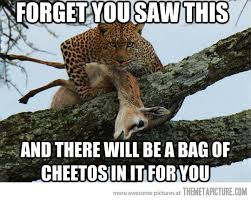
Ummmm...that's a leopard...
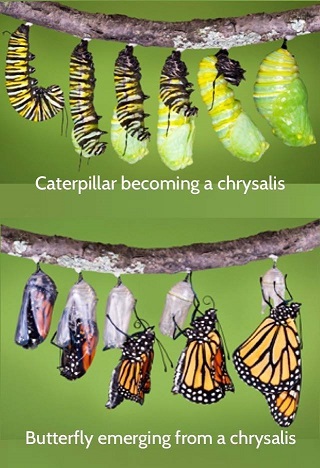
A chick has been hatched outside its shell "In an awesome experiment performed by a group of Japanese high schoolers, a chick was successfully hatched outside of its egg shell. The chicken egg was placed in plastic wrap suspended over a plastic cup. Afterwards, the cup was covered and placed inside the incubator. According to Professor Tanaka, the biology professor in charge of the students, placing the egg in a clear plastic cup allows proper observation of the chicken embryo’s development. - See more at: http://www.viralvo.com/science-experiment/#sthash.mYReaSdZ.dpuf "
Cicada molting video actually a short animated gif of a cicada climbing out of its shell and sprouting wings. Neat. Watch how the wings expand and harden.
Classifying Animals (and plants, and all other living things). Find out how scientists have organized living things on the this page, and see an example (lions). Also see Taxonomy , for older students.
Clouded
Leopard
Two extant species. "Extant" is the opposite of
"extinct."
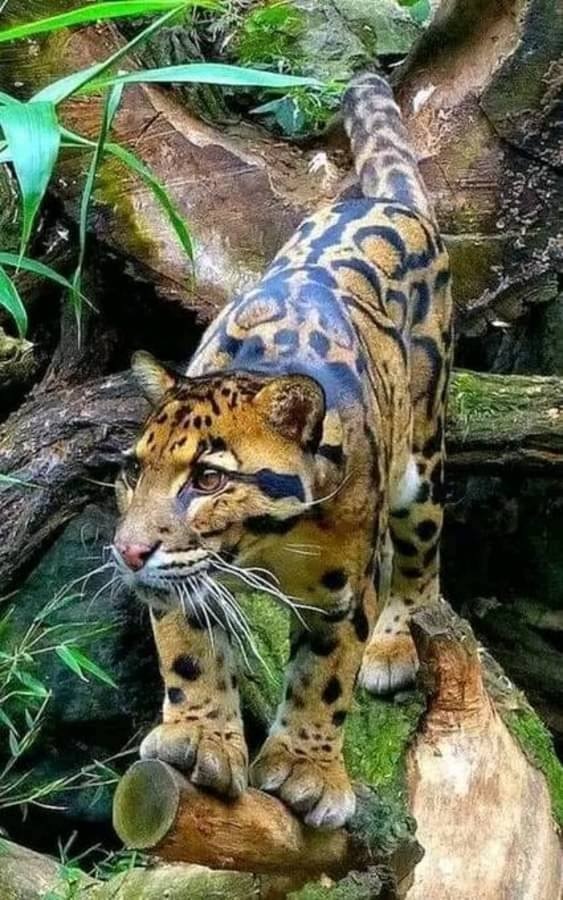
About the Neofelis
genus, the oldest group of cats.
Like snow leopards, clouded leopards are not "real" leopards.
Cnidarians: Simple Animals with a Sting! Good, easy to read information about jellyfish, coral, sea anemones, and hydroids. Now part of a larger site, Wonders of the Sea.
Cnidarians from UMich's Animal Diversity Web. Higher-level information on the two types of cnidarians. (pronounced "nai-dair-ee-yans", the "c" is silent)
Meet the Coconut Crab! They are the largest species of land dwelling arthropods on Earth, and are found on islands across the Pacific and in parts of the Indian Ocean.
 Click on the pic to see two more photos.
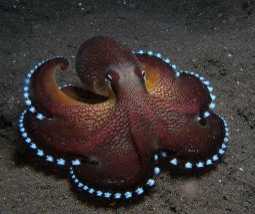 Coconut
Octopus (also called Veined Octopus). "Good morning! Amphioctopus
marginatus, also known as the coconut octopus and veined octopus, is a medium-sized
cephalopod belonging to the genus Amphioctopus. It is found in tropical waters
of the western Pacific Ocean. It commonly preys upon shrimp, crabs, and clams,
and displays unusual behavior including bipedal walking and tool use (gathering
coconut shells and seashells and using these for shelter). Don't miss this!
It's amazing! Good morning!" - OCEAN
DEFENDER - Hawaii Here's one Hiding
in a Giant Clam shell.
Coconut
Octopus (also called Veined Octopus). "Good morning! Amphioctopus
marginatus, also known as the coconut octopus and veined octopus, is a medium-sized
cephalopod belonging to the genus Amphioctopus. It is found in tropical waters
of the western Pacific Ocean. It commonly preys upon shrimp, crabs, and clams,
and displays unusual behavior including bipedal walking and tool use (gathering
coconut shells and seashells and using these for shelter). Don't miss this!
It's amazing! Good morning!" - OCEAN
DEFENDER - Hawaii Here's one Hiding
in a Giant Clam shell.
The
Coelacanth: Five Fast Facts Read up on these two endangered species,
descended from a very ancient lineage. Find out more facts at Smithsonian.
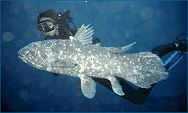
Here's another member of the coelacanth clan:
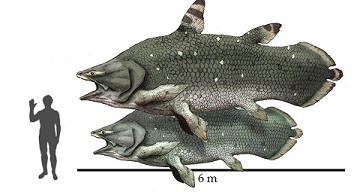
Mawsonia,
prehistoric coelacanths of the Cretaceous Period.
Differences? Six times larger, for a start.
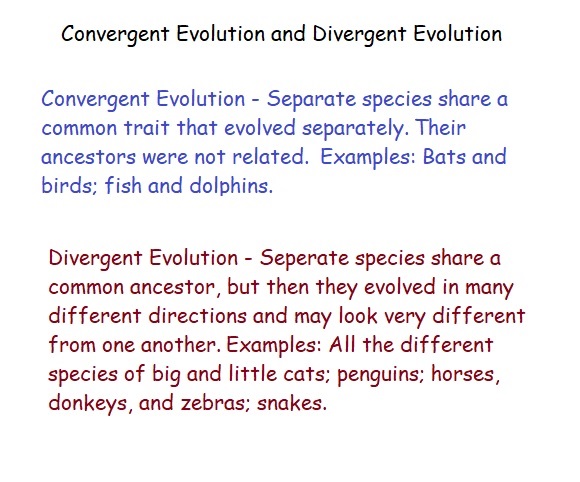
Convergent
Evolution vs Divergent Evolution YouTube video from the
2 Minute Classroom.
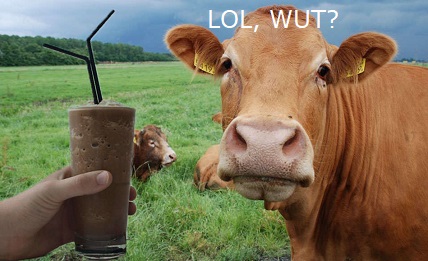
Millions
Of Americans Think Chocolate Milk Comes From Brown Cows
"Actually, chocolate milk – or any flavored milk for that matter
– is white cow’s milk with added flavoring and sweeteners".
Creature Features from National Geographic Kids > Animals. Find out all about 128 animals by browsing, by taxo order, or by habitat. Clicking on thumbnails reveals photos and facts, videos, distribution maps, and printable fact sheets with a photo!
Creepy Desert Creatures! a Brave Wilderness episode, one of a series. Coyote Bob Peterson, his cute, hyper, eight year old daughter Pup, and the crew visit Tucson, Arizona to discover some Creepy Desert Creatures! And find them they do, in this 22:30 Youtube offering! Watch the team as they examine: a giant desert centipede, a tarantula, an anthill of red ants, a solpugid (camel spider), finishing with a giant desert hairy scorpion under a black light which appears quite scary. Next the team checks out a Western Banded Gecko who's out hunting, (like everybody else in this video)! Next. they find a Spadefoot Toad. Then, at last, a Western Diamondback Rattlesnake! Hyper Miss Pup is not allowed to approach, but takes it in good grace. There are dozens of these videos for kids to watch!
CROCODILIANS - Natural History & Conservation "Crocodilians: Natural History and Conservation is the Internet's largest crocodile site, established in 1995. Written by a crocodile specialist, it's an ever-growing database of everything you need to know about crocodiles, including all the different species, their biology, conservation, how they talk, and even their captive care. When you can't trust Wikipedia, come straight to the source." (1) Species List with pix and data on all 23 living species. (2) Biology Database has several sections including Conservation, General Biology (how they move, act, and live), and Crocodile Lore: "Bow down and worship Sobek, mortal!" (3) An FAQ: "Go on, admit it! There are some questions you just have to know the answers to, right? Learn the truth, from a real croc researcher!" (4) Communications has recordings of various calls. (5) Captive Care is an online manual with 10 sections, offering very good specific advice on keeping a caiman, if you must. "Who would want (a croc) as a pet? This is a creature that cannot fetch your slippers, has no desire to curl up on your lap, and would just as soon as bite the hand that feeds it... This document is a serious attempt to make useful and accurate information available on the captive care of crocodilians."
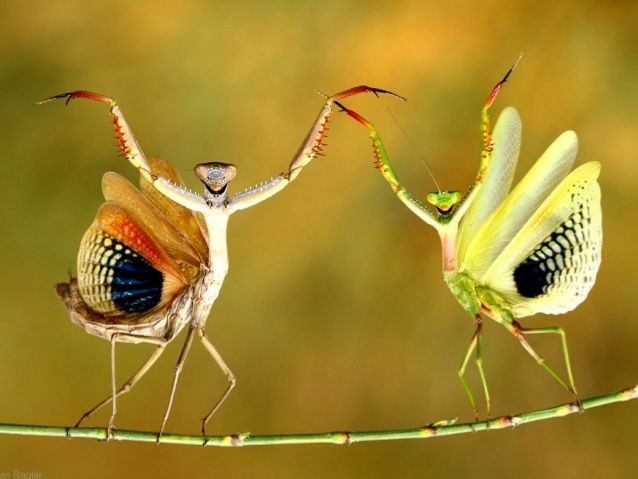
Ballerinas! Actually
mantises doing their "startle display" to scare away predators.
Click on this photo to go to SlideShare and see a 53 photo slide show of various
mantids.
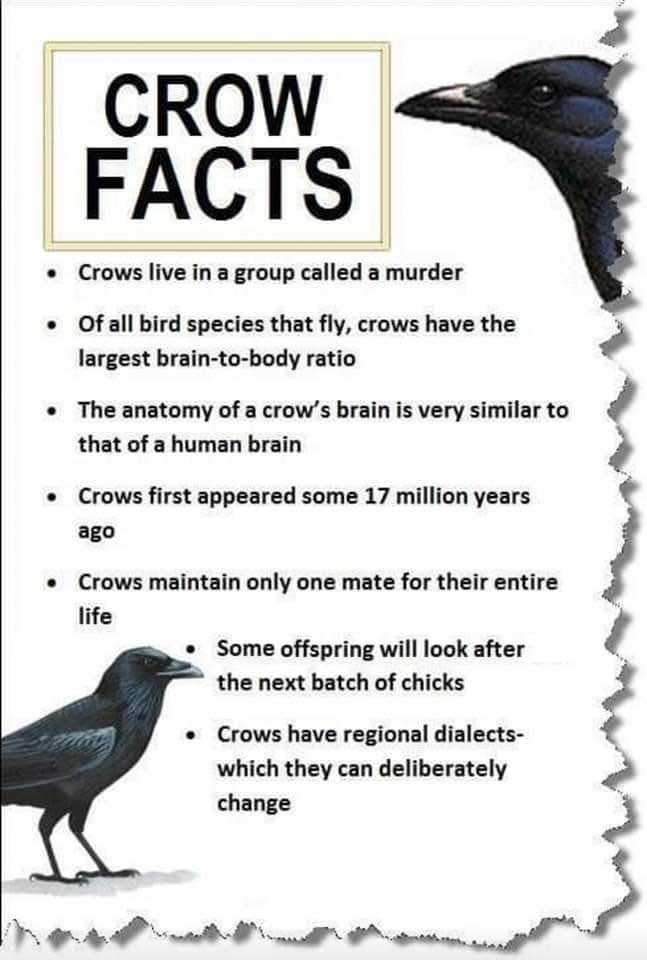

Go to this site. Look at their categories.
Birds, animals, dinosaurs, and plants.
Subdivided by continents and animal types.
Kid friendly. About 44 categories of goodies
(see them all at the bottoms of the pages).
"Biggest flightless birds ever!" (below)
is an example.
Biggest flightless birds ever!
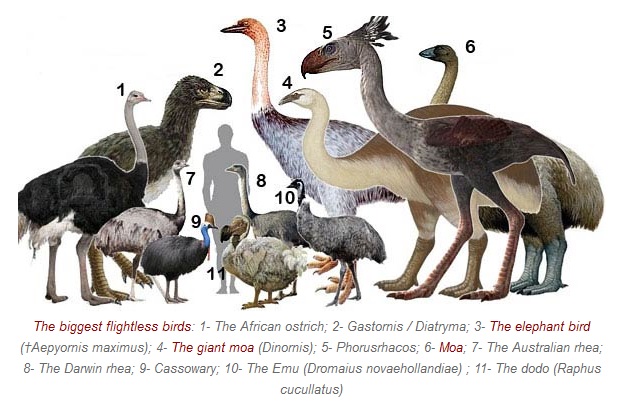
Comment: "Australian rhea" is a typo, it should say
(South) "American rhea".
Extant birds on this list: #1, #7 - #10
Extinct birds on this list: #2 - #6, #11
Dog
drinking water in ultra slow motion (Secret Life of Dogs: Alsatian dog
drinking water in ultra slow motion) Ever really watch dogs lapping up water?
It's more complicated than you might think! This 40 second video shows a big
dog lapping up water by using its tongue as a bucket! Cats also drink this
way.
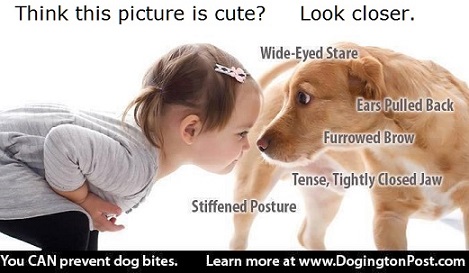
This is an EXCELLENT graphic! Pay attention to what a dog is
telling you.
Teach children to respect a dog's space! Too many dogs end up in shelters
(or worse, put down) because the adults in charge were not monitoring the
child/dog situation. Many times when a dog bites a kid parents say,
"There were no warnings. He just bit him for no reason." The unfortunate
truth is that there are almost always warning signs, but humans miss them.
This photo shows a few warning signs that the dog is uncomfortable and may
bite!
from FB Birdwatching group
Southern
Ground Hornbill (Bucorvus leadbeateri)
by Tim Allen-Rowlandson
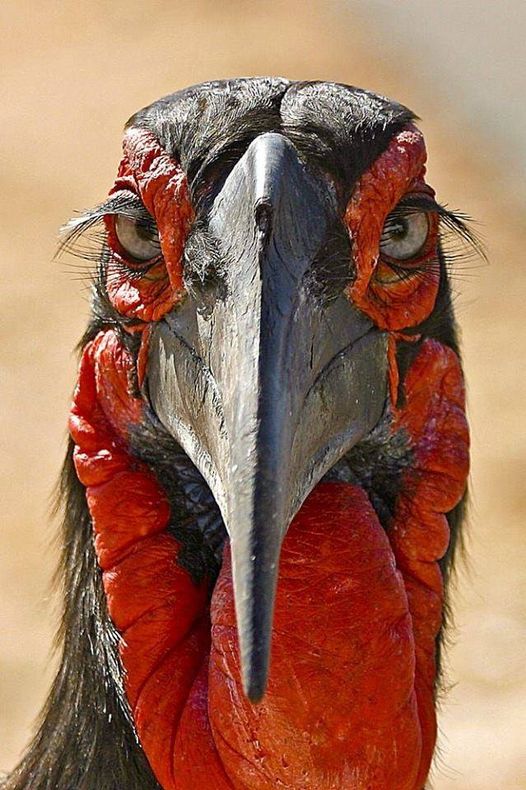
Click on this photo to see the giant-size original!

Donald
Trump Caterpillar Youtube title = "We Found A Rainforest Caterpillar
That Looks Like Donald Trump - Nature's Disguises Part 1" This great
5:20 video
is full of facts about mimicry in nature - such as the toxic caterpillar that
mimics
the ex-President's, ummm... famous hair! Toxic (poison) animals often wear
bright
and loud colors to warn predators away. Non-poisonous and harmless caterpillars,
butterflies, and snakes can benefit by imitating their toxic relatives.
Flying
Dragons!
"Karen Bredesen-Maury wrote:
It was found in Southeast Asia and it's a flying lizard.
Yes, gentlemen, a dragon."
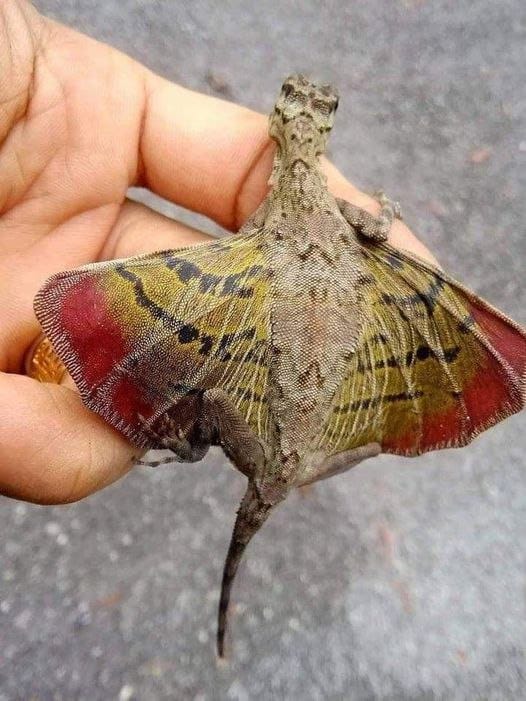
There are 40 species of these little gliders, all in genus Draco.
They are are native to the tropical forests of southeast Asia,
south China, and India; Indonesia and Malaysia, as
well as Singapore and the Philippine Islands. Some are
scattered over large areas in several countries.
Others live on only one island like Palawan or Timor.
Dragonfly Sites!
Amazing insects, incredible aerial acrobats.
Wings like no others, fierce predators above and beneath
the water. Enemy of mosquitos! 300 million years old!
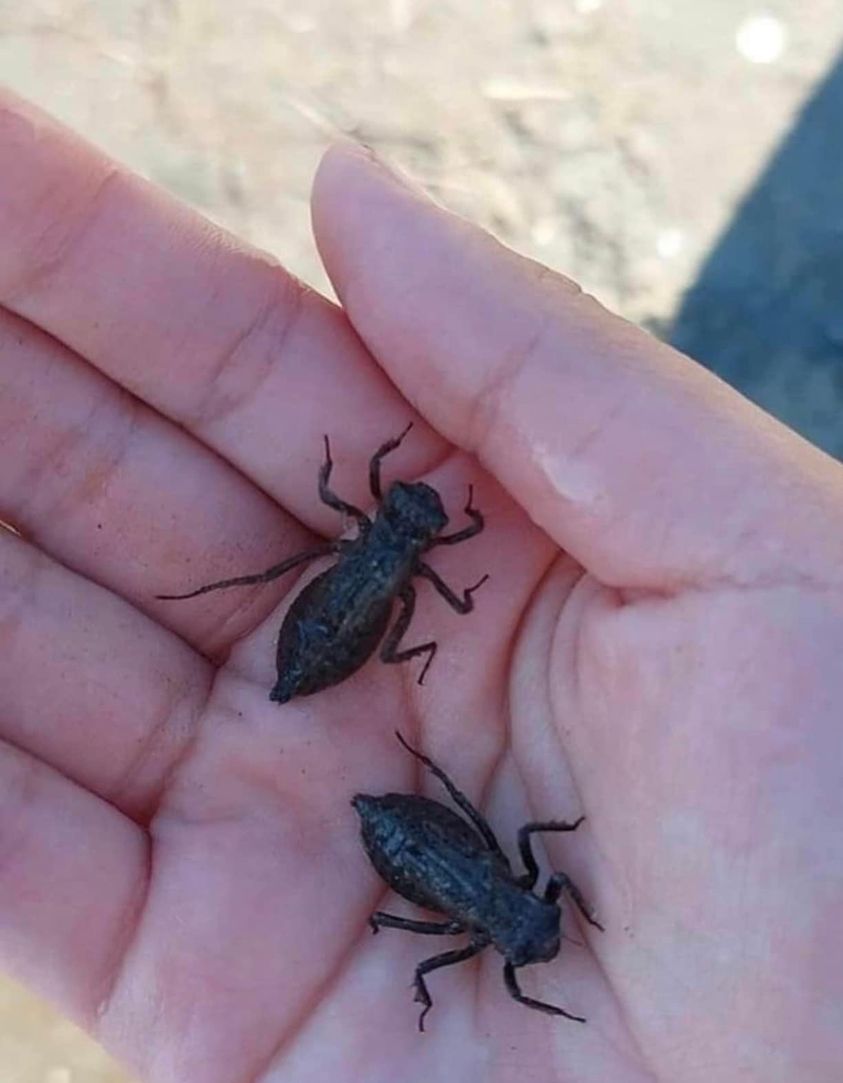
In case you didn’t know - these are dragonfly babies.
Don’t kill them they eat thousands of mosquitoes when they
mature. They don’t stay creepy black bugs for long.
Dragonflies!
Incredible dragonfly photos!
Fantastic close ups of these
colorful prehistoric survivors.
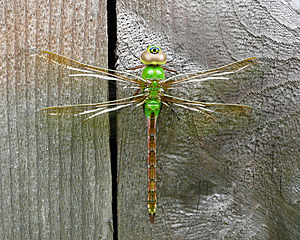
* DRAGONFLY * | Animals
For Kids | All Things Animal TV
only 2:00 long but still pretty good
Dragonfly wiping out rain drops from face
The insane
biology of the dragonfly for older learners,
18:36 long, and fact-filled.
Are You a Dragonfly?
| Read Aloud for Kids! | Backyard Books
4:44 video, read aloud by a nice lady, for 3rd grade and up
Insects Life Cycle Dragonfly
Read Aloud Science Story
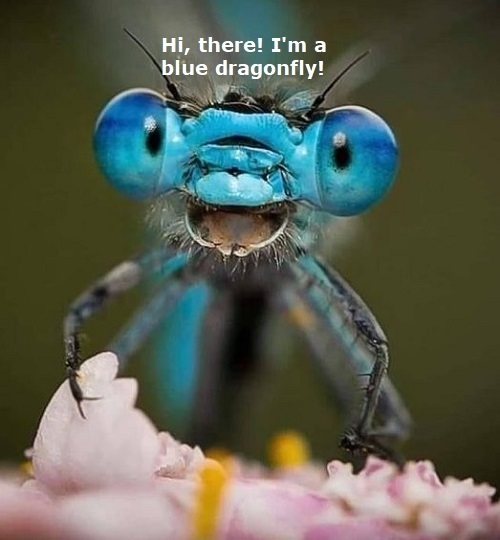
The Dipping Dragonfly - Read Aloud
Kids Book -
A Bedtime Story with Dessi! - Story time
A 5:45 video for younger kids
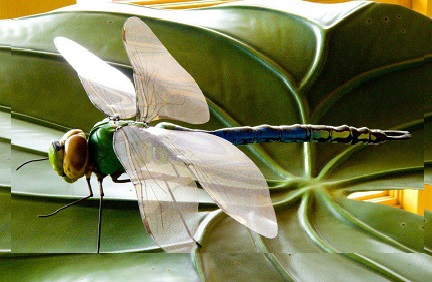
Dragonflies - Amazing
Creatures! a 2 minute
educational cartoon.
Dragonfly life cycle Two minutes
How To Draw A Realistic
Dragonfly
Early Cats Traveled with Vikings and Farmers
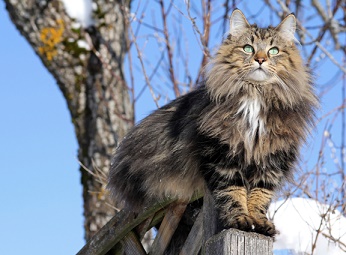
Norwegian Forest Cat
"According to Nature,
the new research finds that the second wave of cat population
expansion took place thousands of years after the first, from the fourth century
B.C.
to the fourth century A.D. Mitochondrial DNA from Egyptian cats was found
as far away
as northern Gemany, at a Viking site dating to between A.D. 700 and A.D. 1000.
The sailors probably kept cats on their ships to discourage mice and rats."
Eclectus Parrots from the Frans-de-Waal-Public-Page
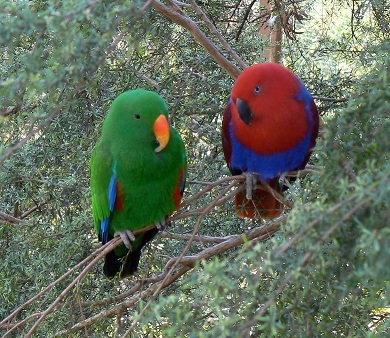
Hover on the photo to learn about these birds.
Click on the photo learn even more!
EEK! Environmental
Education for Kids. This electronic magazine is for kids in grades 4-8. Surf
around and learn more about the great outdoors. Every animal of any kind that
lives in Wisconsin has a page in here someplace. The Creepy
Critter Feature, Alien
Invaders, Tracks
Quiz for Beginners are all part of the wonderful Critter
Corner, as is the Habitats
section. Find out about woodland, lake, marsh, and prairie habitats and the
animals that live there! Has a page for Teacher Resource section with
lesson plans, too. From Wisconsin
DNR.
Ecology Asia This fine Singapore site has photos and data for 300 different animals from Singapore and New Guinea. Perfect for those school animal reports.
 Educational
games from Digipuzzle.net. Puzzles! "On
this page you can find the overview of the educational games from Digipuzzle.net.
All games can be played full screen on a PC, a tablet (Android Tablets, iPad,
etc) or mobile phone (Android, iOS)." Here's a diverse group of kids'
games, from numeracy to multiplication, with some early language arts, some
geography, time, hieroglyphics, and some money math. Most puzzles are of animals!
Educational
games from Digipuzzle.net. Puzzles! "On
this page you can find the overview of the educational games from Digipuzzle.net.
All games can be played full screen on a PC, a tablet (Android Tablets, iPad,
etc) or mobile phone (Android, iOS)." Here's a diverse group of kids'
games, from numeracy to multiplication, with some early language arts, some
geography, time, hieroglyphics, and some money math. Most puzzles are of animals!
Elephant Odyssey Be a baby mammoth! "On this journey through time, you'll learn the ways of mammoths and their modern day descendants, the elephants. - So let's go back 200,000 years and test your skills." Mother Mammoth trains you in the basic skills, including keyboard commands. You get three lives. Good luck! From the San Diego Zoo's new Elephant Odyssey exhibit.
How Elephants
Listen ... With Their Feet From PBS & DeepLook "African elephants
may have magnificent ears, but on the savanna, they communicate over vast
distances
by picking up underground signals with their sensitive, fatty feet."
An excellent 4:32
video.
Emperor
penguin chicks defend against a giant petrel
See what happens when a giant petrel attacks the young penguins in this
clip from BBC Spy in the Snow. David Tennant ("Dr. Who") narrates
these
shows, which use cameras disguised as animals.
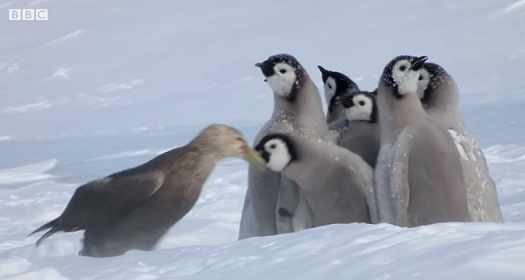
Learn more about the animals in the video:
Adélie penguins to the rescue
Giant Petrel, which is one of the...
...Tube-nosed seabirds The tubes filter out salt so the birds can drink seawater.
eNature Field Guides "Search more than 5,500 species." Guides for animals and plants, too. Good information. This site is rich in ads as well as in information, so don't let kids be too "quick to click."
 Encyclopedia of Life "Imagine an electronic
page for each species of organism on Earth..." STUNNING new project from
a group including the likes of Harvard University, the Field Museum, and the
Smithsonian! Students and seekers of any age can type in the name of any living
thing and (usually) see pictures and information! We had fun putting in names
of plants, animals, and bacteria. Still a work in progress - had velociraptor
pix and data, but nothing on Tyrannosaurus rex. Also has groups to join and
ways you can help.
Encyclopedia of Life "Imagine an electronic
page for each species of organism on Earth..." STUNNING new project from
a group including the likes of Harvard University, the Field Museum, and the
Smithsonian! Students and seekers of any age can type in the name of any living
thing and (usually) see pictures and information! We had fun putting in names
of plants, animals, and bacteria. Still a work in progress - had velociraptor
pix and data, but nothing on Tyrannosaurus rex. Also has groups to join and
ways you can help.
Endangered Species - World Wildlife Fund Part of larger site. Links to endangered animals on the left side of the page.
Endangered species Excellent endangered species site with a lot of information. Links to similar sites and a map to click on to see endangered species in your (US) state.
Exmoor Pony Learn about this Ice Age survivor,
the oldest breed of horse in the UK, which lived
wild for 60,000 years - and is still going strong!
exZOOberance
- Celebrating the Animal Kingdom!
A good site for learning about plants and animals, with backyard tours.
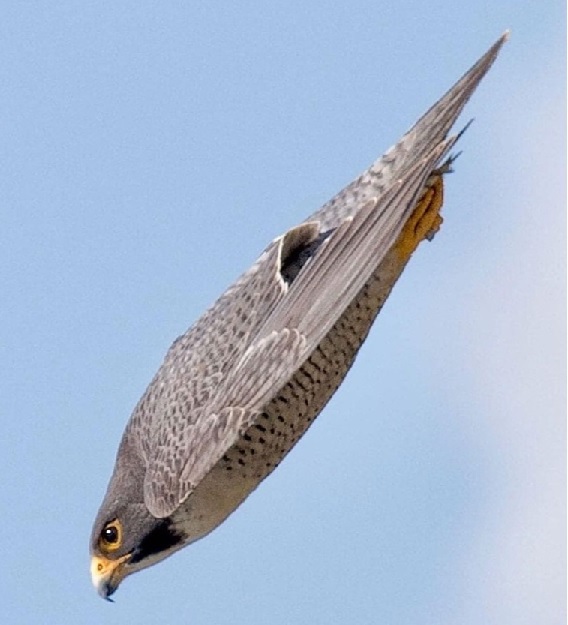
"The peregrine falcon is the fastest diving bird in the
world & the fastest animal
on the planet. According to Guinness World Records, in 2005 one was recorded
diving at speeds of more than 380 km/h."
Photo: Tom Kaestner Photography
Facebook: Tom Kaestner Photography
from Beauty and Sky
on Facebook. Flying with three kinds of European geese:
Barnacle Geese, Red Breasted Geese, and White Fronted Geese.
There is a clip of a Whooper Swan (or Tundra Swan) flying along.
The music is haunting. Beauty and Sky is a French site run by airline pilots.
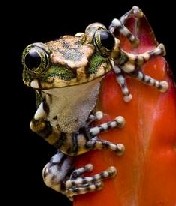
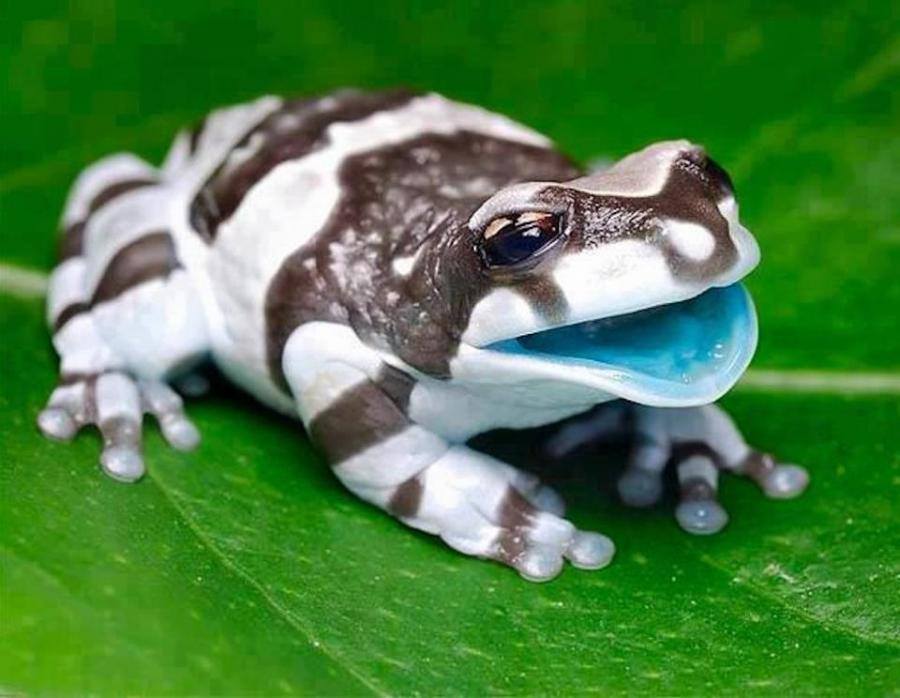
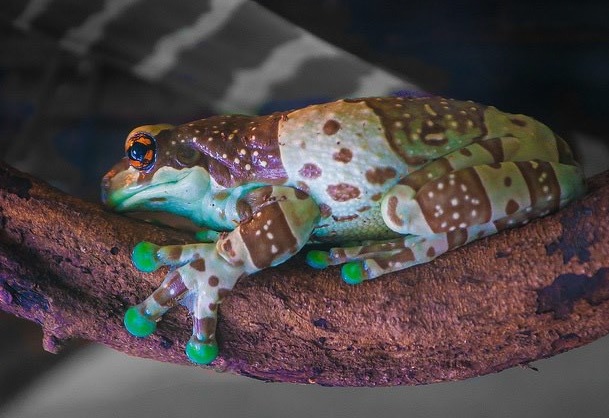
Frogland (AllAboutFrogs.org) Name says it all! Fun site with real facts about, and pix of, all sorts of frogs & toads. This very busy site will keep your kids very busy! Games, coloring, pix, facts and more facts, printables, stories, myths, more fun than a barrel of bullfrogs! Teachers' Corner has suggestions, links, and lesson plan outlines for class projects!
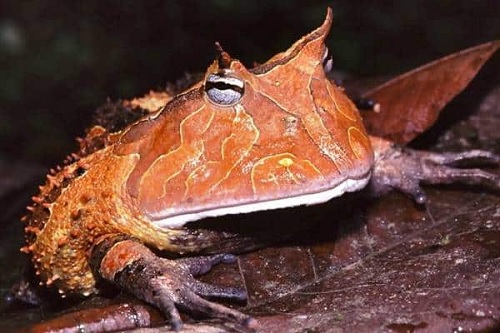
Here I am in orange!
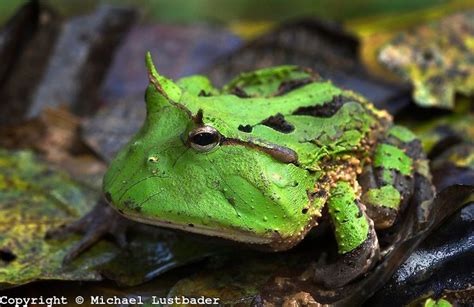
Here I am, in green!
Here I am, in tan with stripes!
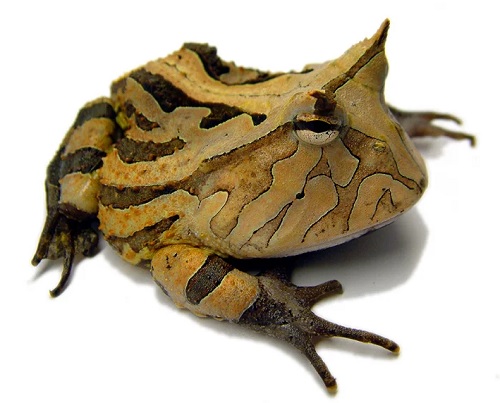
Credits: top- AnimalFacts
middle: Copyright @ Michael Lustbader
bottom: Reptile Forums UK
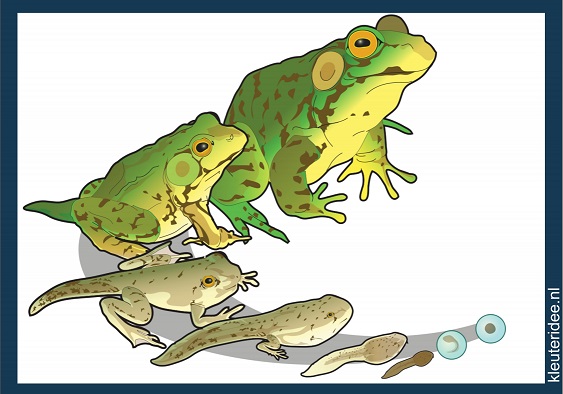
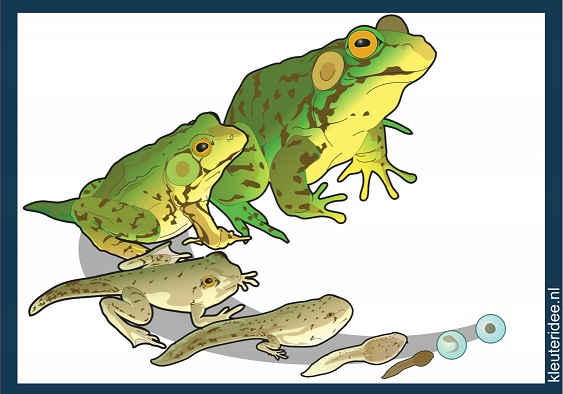
Frog
Life Cycle, from an original Dutch pdf file graphic.
Click on it to see a larger size.
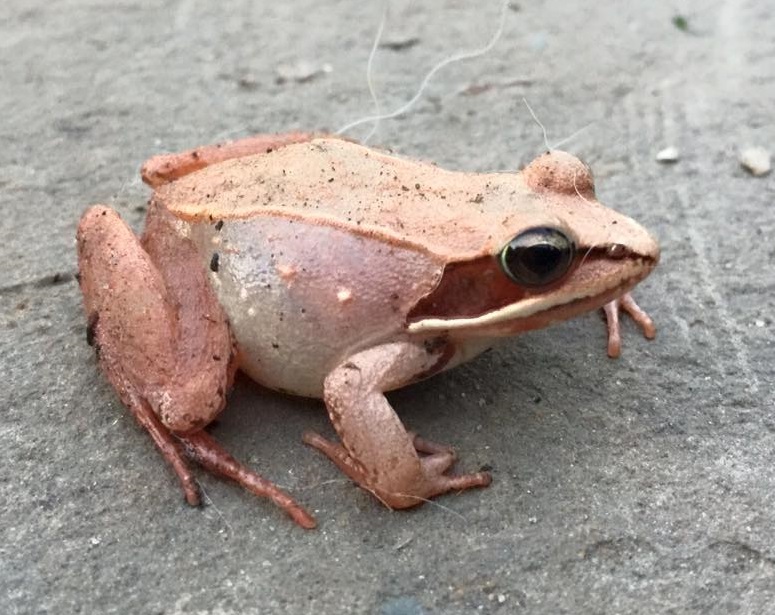
Yard visitor. Pink variant of the Wood Frog, Rana sylvatica. New Jersey, 2015.
Thanks to Bevin Rose O'Grady.
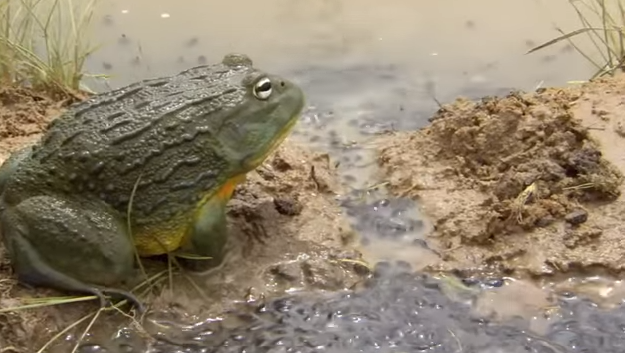
Bullfrog
Dad Protects His Tadpoles
Bullfrog Dad Protects His Tadpoles by tearing out a mud dam.
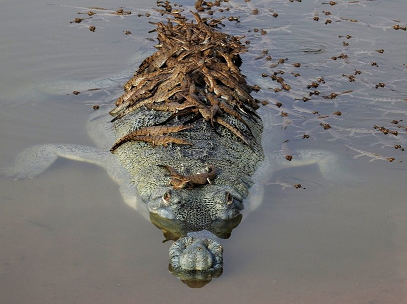
Gharial
Daddy
by Rupak De
Original photo was for Facebook.
Gharials are crocodile relatives, so they are cousins of all the crocodiles,
the caimans, and the alligators of the world.
The award winning picture of the male gahrial with scores of recently hatched
young ones
either on its back or hovering closeby in the river Chambal in Etawah, India.
This type of caregiving by male parent is indeed an exceedingly rare sight.
A baby giraffe born without spots!
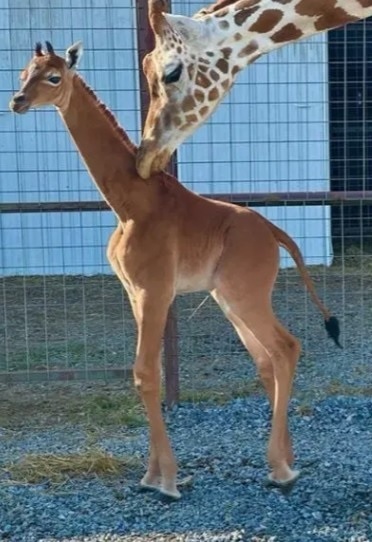
A reticulated giraffe baby boy and his mama.
Giant,
Tubular Creature Caught On Camera Under The Sea from IFLS via Facebook.
It's a Giant
Fire Salp (Pyrostremma spinosum), a tiny animal that forms colonies over
60 feet (20 meters) long! Here's a short
video of a humongous one near Australia!
Salps are one of the tunicates
(aka sea squirts). Tunicates are chordates
which means they start out with a simple spinal chord; so they are very
primitive relatives of fish, frogs, lizards, birds, bats, buffalo, and
us.
Some tunicates are sessile
(animals who can't move around anymore when they grow up). Others, like the
salps, are free roaming their whole lives.
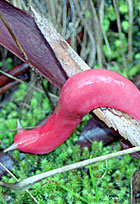 Click on the pic to see more photos from the NSW
National Parks and Wildlife Service.
Click on the pic to see more photos from the NSW
National Parks and Wildlife Service.
Giant
pink slugs of Australia, and
The Most Amazing Slug You’ll Ever See These articles
have photos and information about these unusual molluscs. Find out why they're
pink!
Glass
frogs are group of South and Central American frogs with translucent*
skin.
* = look up these words, to find out what they mean!
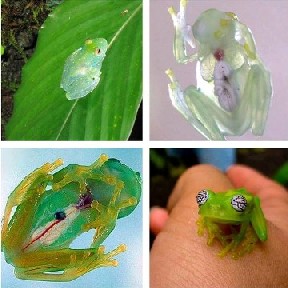
Their internal viscera*,
including the heart, liver, and
gastrointestinal tract, are all completely visible. More pix here
.
Jaime Culebras offers a spectacular photograph of a gravid*
female Reticulated
Glass Frog.
The belly is completely transparent, so all the internal
organs are visible.
The liver, heart and digestive organs are covered by a
white lining.
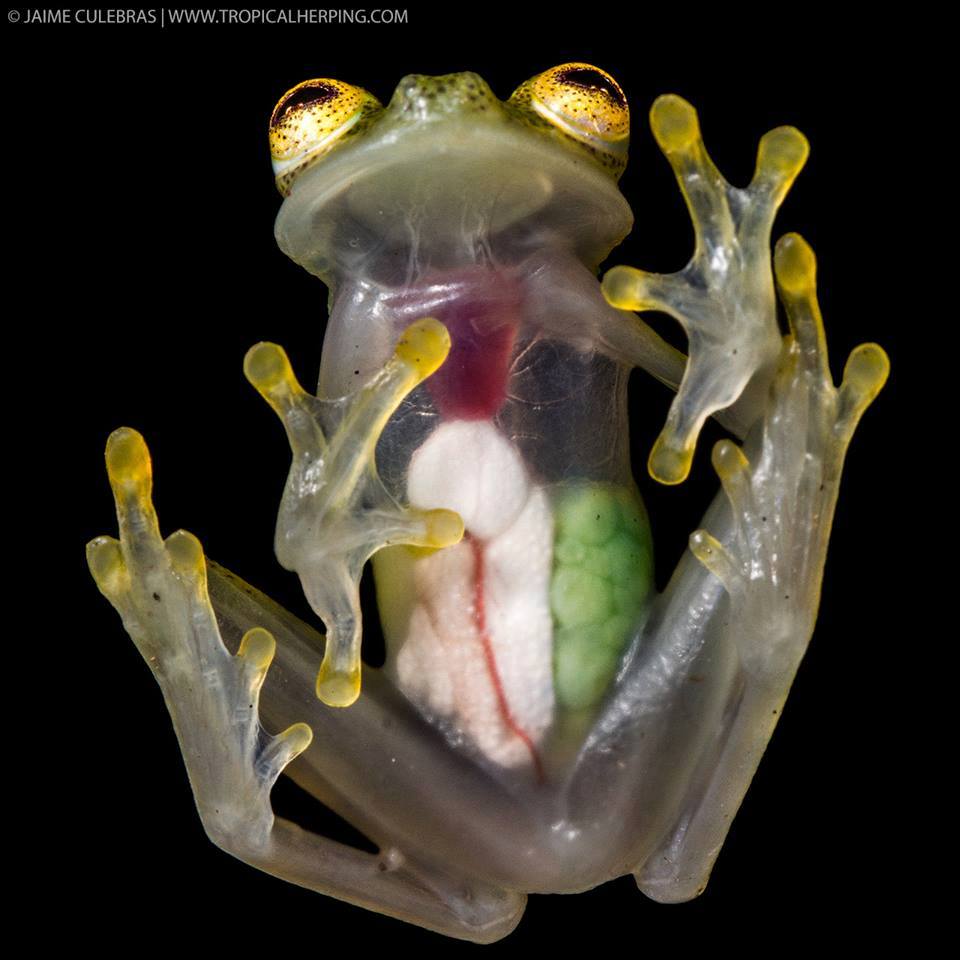 Click to see a bigger pic!
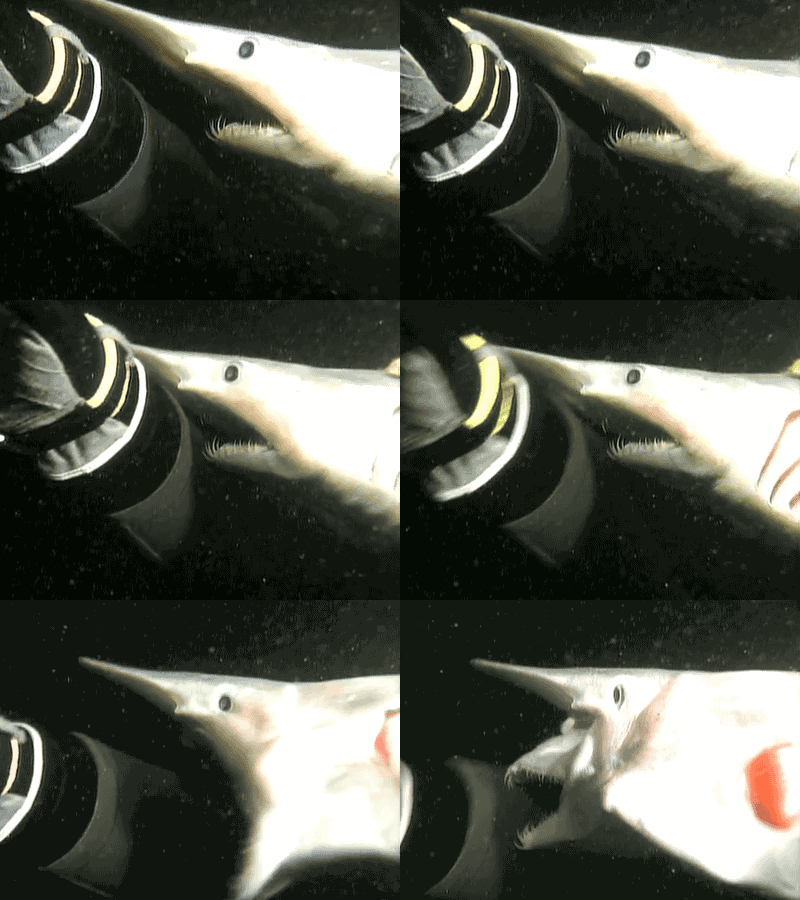 Goblin
Sharks from Enchanted
Learning (One of the best kid sites evah!) Learn all about these VERY
unusual sharks!
Goblin
Sharks from Enchanted
Learning (One of the best kid sites evah!) Learn all about these VERY
unusual sharks!
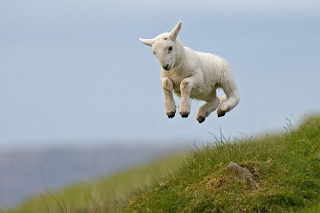 Google
Sheep View "google sheep view - searching for sheep on google street
view"
Google
Sheep View "google sheep view - searching for sheep on google street
view"
Pictures of sheep from all over the world, a Tumbler
exclusive. Why? Why not?
You can't make this stuff up - so go enjoy it! Baaaaaaaaaaa.
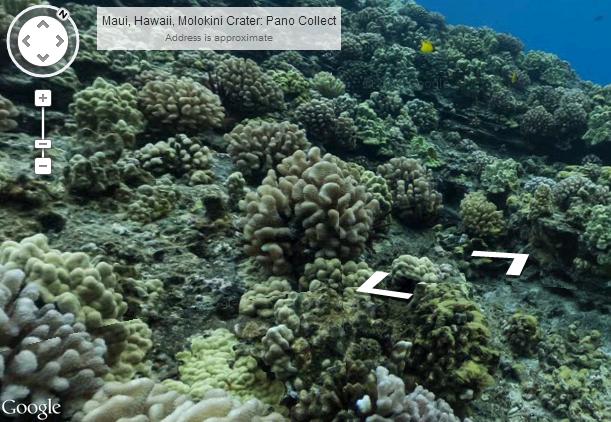 Google
Streets in the Deep The Instructify
site wrote: "The good people at Google Street View have recently
partnered with The Catlin
Seaview Survey to provide underwater street
views (italics ours) of several breathtaking reefs around the
world. You can take your students on a fieldtrip to swim with sea turtles
and manta rays without having to be scuba-certified. From identifying the
variety of aquatic life forms depicted in and around the reefs to writing
short stories set in the reefs; the possibilities for classroom use are
as wide as the ocean and as deep as the sea. You can explore the complete
collection here."
Google
Streets in the Deep The Instructify
site wrote: "The good people at Google Street View have recently
partnered with The Catlin
Seaview Survey to provide underwater street
views (italics ours) of several breathtaking reefs around the
world. You can take your students on a fieldtrip to swim with sea turtles
and manta rays without having to be scuba-certified. From identifying the
variety of aquatic life forms depicted in and around the reefs to writing
short stories set in the reefs; the possibilities for classroom use are
as wide as the ocean and as deep as the sea. You can explore the complete
collection here."
Great Plains Nature Center Website Index The Great Plains Nature Center in Wichita, Kansas is a wonderful place that lets all ages learn about the Great Plains' habitats: The prairie, woodlands, lakes, rivers, streams and wetlands, and the plants and animals who live there. Scroll down through their index. Make sure to look at the "INTERNET VERSIONS OF THE GPNC POCKET GUIDES". There are extensive! Guides for Raptors, Mammals, Snakes, Great Plains Shorebirds, (Where else could you find that?), Freshwater Mussels, Kansas Threatened and Endangered Species, Great Plains Waterbirds, and Wildflowers and Grasses. You will find information on every native animal, bird, fish, and plant in Kansas, most of which are native to all of the Great Plains of North America. Their Prairies of the World page is also worth a visit. So glad we found this site and are able to share it with you!
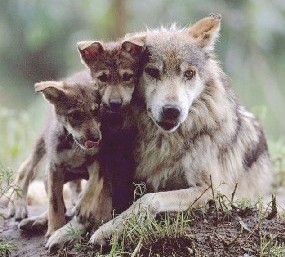 Grey
Wolf Facts for Kids These quotes are from an article
by Howard Meyerson
of The Grand Rapids Press for MLive.com. "Schoolchildren put lessons
about wolves to good use by building a website... a website about wolves “put
together for kids by kids,” is highlighted. It’s called “Grey
Wolf Facts for Kids.” The elegant and informative website was written
and developed by the children at Reeths-Puffer Elementary, one of Michigan’s
official Green Schools." The 3rd and 4th graders “... wanted kids
to know that wolves are not scary creatures but are powerful creatures.”
Please go read the rest of Mr. Meyerson's article for more, it's great! The
website is full of good wolf information.
Grey
Wolf Facts for Kids These quotes are from an article
by Howard Meyerson
of The Grand Rapids Press for MLive.com. "Schoolchildren put lessons
about wolves to good use by building a website... a website about wolves “put
together for kids by kids,” is highlighted. It’s called “Grey
Wolf Facts for Kids.” The elegant and informative website was written
and developed by the children at Reeths-Puffer Elementary, one of Michigan’s
official Green Schools." The 3rd and 4th graders “... wanted kids
to know that wolves are not scary creatures but are powerful creatures.”
Please go read the rest of Mr. Meyerson's article for more, it's great! The
website is full of good wolf information.
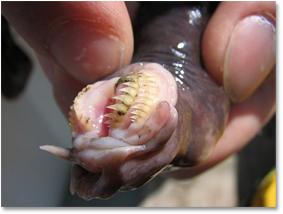
Hagfish are a very primitive fish-like animal that have teeth but no jaws!
These jawless fishy animals (hagfish and lampreys) are called agnatha
which is ancient Greek for "no jaws". Their teeth sit outside their
mouths
and gouge, tear, and scrape their victims' flesh! All agnatha except lampreys
and hagfish went extinct a very long time ago.
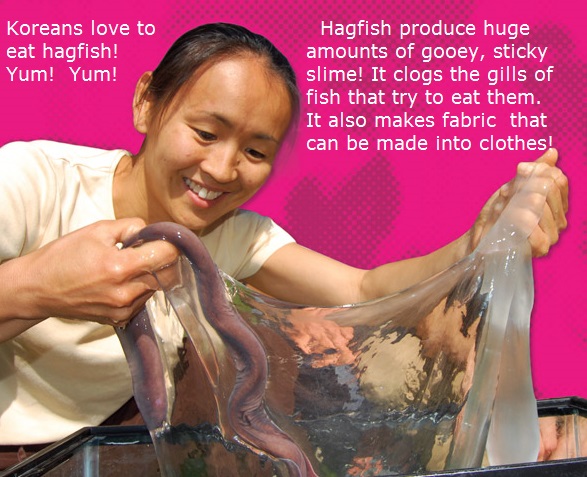
Hagfish are delicious! Many cultures have recipes that include them.
 from UCMP Berkeley. "Those hairy, milk-producing,
warm-blooded animals that you have seen all of your life are mammals."
The site
features comprehensive information on the four groups of mammals:
You can read more about "multis" here.
Read about the Paleocene
mammals
of 65 - 55 million years ago, too.
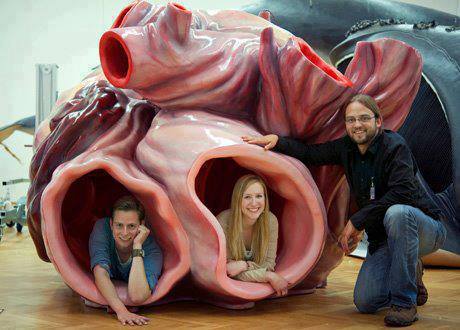
The heart of a Blue Whale is so big that
people could fit inside!
Don't worry, this is just a full sized model of the real heart.
The Horse
From the American Museum of Natural History. We hope they keep
this site up past its expiration date! Anything you want to know about horses,
ancient and modern, it's likely to be here. Beautiful pictures, too.
WE ARE A HORSE NATION
“This Film will tell the world our stories, and show
the world our visuals, from our own perspectives... as the Oceti Sakowin.
To present a quality Documentary Film that will tell the story of why we
(Oceti Sakowin) are a “Sunka Wakan Oyate” (Horse Nation). This
film will
present that story through the voices of the Oceti Sakowin (Lakota, Dakota
& Nakota).
This project will be a working example of the philosophy of the Oceti Sakowin,
and as
“relatives” we will bring together Traditional & Contemporary
Lakota/Dakota/Nakota songs,
stories, teachings, experiences, knowledge, thoughts & beliefs, to be
compiled for a
one-of-a-kind film resource; to be utilized by the intended audience of the
future
generations of the Oceti Sakowin." This is a seven minute preview.
How Animals
See the World (4:11 Youtube video)
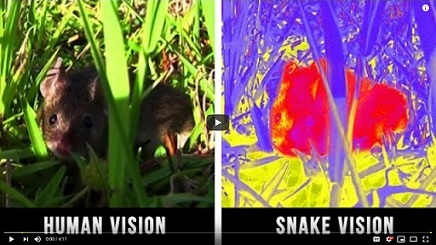
"Did you know that pigeons have better vision than us?
Have you ever wondered how animals and birds actually
see the world? What do fish see when they look at us?
This video will explain all these to the smallest details!"
From the Bright
Side channel.
How
bobcats, coyotes, and foxes help my farm
from In Light of Nature "With
an orchard of approximately
250 apple, apricot, and cherry trees gophers were having a
field day eating the roots and killing the trees."
"After so many years of stressing and fighting the gophers,
I now leave it up to the coyotes, bobcats, foxes, and owls."
with lots of photos of foxes, coyotes, and bobcats helping
themselves to gophers!
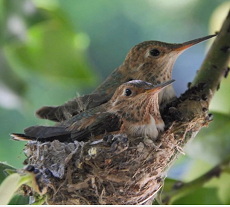 Hummingbird
Babies Birth to Fledging the Nest A beautiful documentary which follows
mama and two baby Allen's hummingbirds from birth to fledging the nest. The
lady who made this site has recently updated it as follows:
Hummingbird
Babies Birth to Fledging the Nest A beautiful documentary which follows
mama and two baby Allen's hummingbirds from birth to fledging the nest. The
lady who made this site has recently updated it as follows:
"PLEASE READ FURTHER TO LEARN CORRECTED INFORMATION ABOUT THE BIRDS AND PLEASE NOTE: Hummingbirds are federally protected wildlife. Do not attempt to rescue or interfere with a hummingbird without first contacting your local Hummingbird Rescue for information. Please take what I have been advised and do not film birds close up unless you have a very long lens or a web cam. ADDITIONAL NOTE: I inadvertently passed on incorrect information in this video. The 'squirt' from the beak of the babies is actually their tongue. Also, the woman I spoke to from the hummingbird rescue referred to the baby's 'hair' and I say that several times in the video. I have been otherwise informed that the 'hair' should be called 'feathers.' I also failed to mention that the nests are often secured using spider webs. And, it turns out the first bird to leave the nest is the male, not the female. I have a newly edited and more informative version of this same video, available for schools or educational purposes. sheri@sheriwatson.com "
Hummingbird Pictures Guide Scroll down to see photos and information on 38 species of hummingbirds.
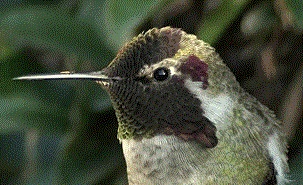
Click on this hummingbird to see the much larger animated gif
it comes from.
Iridescent hummingbird, the feather colors appear to change as its head moves.
Hunt for the Giant Leech from PBS/NOVA. "Imagine you're about to join leech expert Mark Siddall on a field search for the giant Amazonian leech. As he leads you knee-deep into the leech's swampy tropical habitat, you consider what you'd urgently like to know about the near-mythic creature he's seeking. For starters, how big? Well, it's the world's largest bloodsucking leech, growing up to a foot and a half/ half a meter long. Any other questions?" Watch the slideshow or scroll though the printable version. It vants to trink your blood; blaaah, blah, blah. And it will, too.
Hyaenas/Hyenas
Just for Kids from the Hyaena Specialist Group. "People in the United
States spell the word "hyena" with only one "a " (at the
end of the word). However, English-speaking people in the rest of the world
spell the name of these animals with an "a" after the "y"
as well as another "a" at the end." Hyena in the USA, Hyaena
everywhere else. Learn about all four living species. How they live, where
they live, what they eat, social behaviour, babies, where they fit in their
ecosystems, conservation status. Also has a photo gallery for each species.
PS The Cave Hyenas of prehistoric times were Spotted Hyenas, same species
as today.
PPS Hyaenas are part of the cat family
(Feliformians), which includes a lot of animals
besides cats, including Hyaenidae
(hyenas), Viverridae
(civets), and Felidae (cats). Hyaenas' next closest relatives are
the mongoose/meerkat/fossa
family. Learn about them here.
Yawning Hyena, photo by Einat Zobel
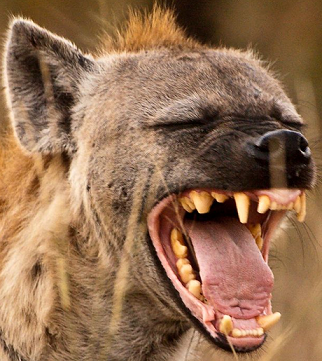
A Spotted
Hyena displays its massive bonecrushing molars!
Predators crush bones to get at the nutritious marrow
inside.
Ancient humans used tools, like a big rock, to get at marrow.
"Junior! Did you brush your teeth?!"
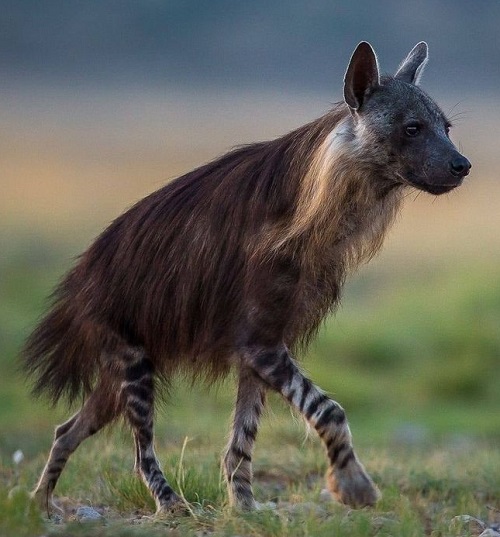
A Brown Hyena
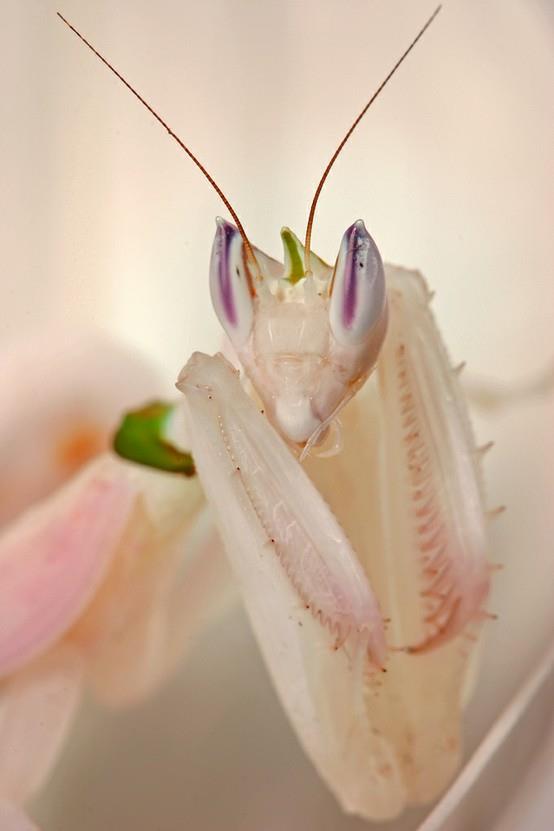
Insect
Image Gallery from Iowa State University's Dept. of Entomology.
They have photos of most kinds of insects, with information on them.
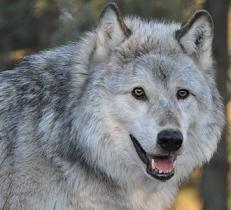
International Wolf Center The International Wolf Center advances the survival of wolf populations by teaching about wolves, their relationship to wild lands and the human role in their future. The Learn page has areas for children (Wild Kids - activities and reading), educators, and wolf facts. Ambassador Wolves has bios of the wolves, updated regularly. Each update includes a short video. Click "Video Link" under each entry to watch the videos.

Source:LiveScience
Invertebrate Notes is a good intro to the major invertebrate phyla (but no water bears!) with a lot of clear and readable information.
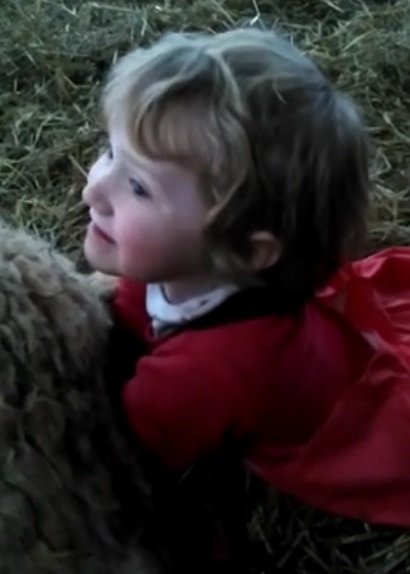
"It's
a Bit Slippery" A short video from Wales of a three year old girl
delivering a lamb (under Mum's supervision).
The hallmark exclamation is heard at 1:35. The little girl is quite proud
of herself and very happy that the new
lamb is a girl! There was a time when most people lived on farms, and nearly
everyone got mentored in birthing.
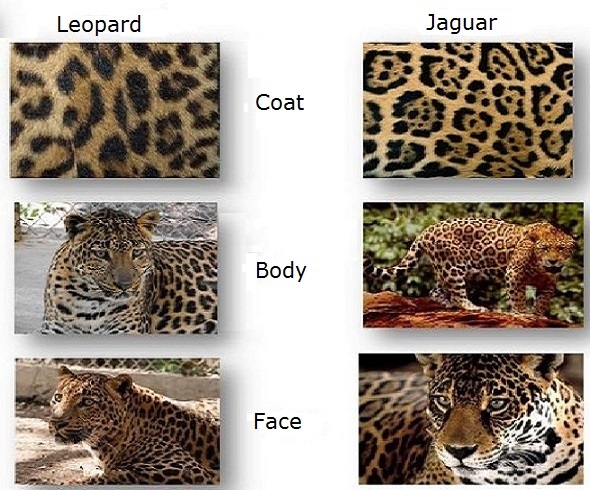
Leopards and Jaguars are not the same!
They are related, but not closely.
This is probably a case of convergent evolution.
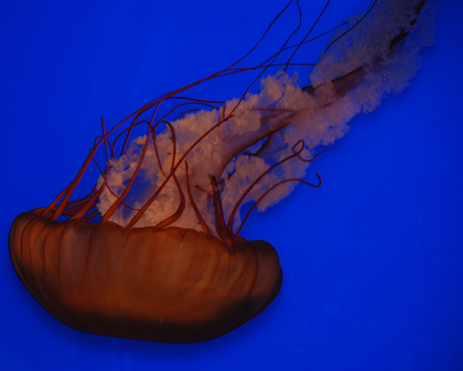
Jellyfish Facts
(Now called "jellies") "Jellyfish
Facts aims to provide information about jellyfish,
helping people to understand these beautiful and interesting creatures. We
have 6 sections,
including Jellyfish Species List, Photo Gallery, and Jellyfish as Pets. Check
us out!" So, we did.
"Jellyfish Nate" is obviously fascinated by jellyfish, or jellies,
as some now call them. Anything you
want or need to know about them is on this well organized site. Even recipes,
which is good because
they're taking over the oceans :(
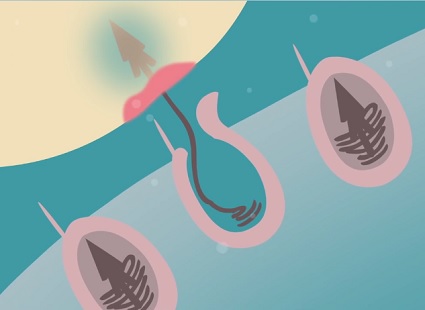
Jellyfish
stings A very informative video animation on jellyfish stings.
Includes advice on how to treat stings.

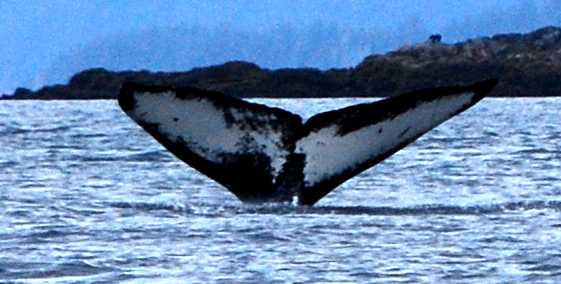 This is "Smudge", whale #1538
Juneau Humpback Whale Fluke Catalog Learn about humpback whales: what they are, their habits, their migrations, watching them, much more - including why tracking them by cataloging their flukes is important! Learn what flukes are, how they are different between individual whales, and look at a fluke catalog of 126 whale tails! Oodles of other photos, too! Look at the bottom of the Whale Watching page for other fluke catalogs: Humpback Whales of Southeastern Alaska is another good site with humpback information and its own well-indexed fluke catalog. Clayoquot Whales covers both humpbacks and gray whales in Clayoquot Sound, Vancouver Island, British Columbia. Humpback Whales of Lower Cook Inlet and and Kachemak Bay, Alaska has their own unique humpback fluke catalog, and photo galleries of whales, orcas, seals, birds, etc. Good close-up "action" photos.
Junior Wolfwatcher - A Place for Kids to Educate, Advocate and Participate for Wolves! Facts about the three kinds of North American wolves. By the way, the gray wolves are also found across Europe, North Africa, and Asia. This site has wolf conservation for kids, too.
KidWings "This site was designed to teach young and old about the wonders of birds. The most exciting part of the site is the Virtual Owl Pellet Dissection. Many interactive activities await you." Also features section on bird skulls, nests, feathers, beaks, feet, and "topography" for birders. Fun!
Killer
Whale/Orca distribution, habitat, and diet.
Click on the thumbnail to see all of this 2592 x 1758 fact-filled monster!

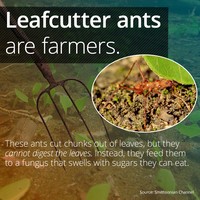 "Leafcutter
ants live in the soil, but they crawl up into the canopies of trees. They
cut chunks out of the leaves to bring back down to the soil and feed a fungus
that produces proteins and sugars. The ants cannot digest the leaves, but
can feed on what the fungus produces, essentially making the ants farmers."
Six short videos on this page explain all about these hard working creatures.
Credit = Curiosity.
"Leafcutter
ants live in the soil, but they crawl up into the canopies of trees. They
cut chunks out of the leaves to bring back down to the soil and feed a fungus
that produces proteins and sugars. The ants cannot digest the leaves, but
can feed on what the fungus produces, essentially making the ants farmers."
Six short videos on this page explain all about these hard working creatures.
Credit = Curiosity.
Let's Talk About Insects from U of I's Urban Extension explains facts about insects to elementary school students. Body sections, exoskeletons, respiration, legs, wings, metamorphysis, food, and insects' places in ecosystems are explained. Learn to tell the difference between insects and other arthropods. What's the difference between ants and termites? What's a larva? These and many other questions are answered with narration and animation.
Life Cycle of a Cricket This simple illustration from inforvisual shows a cricket, egg to adult, over a year.
 Life
Cycle of a Frog All sorts of froggie facts and pictures. A few of the
sections are: life cycle, anatomy, frogs vs. toads, frogs in the food chain,
myths, different frogs, printable coloring pages, frog art, and animations!
Life
Cycle of a Frog All sorts of froggie facts and pictures. A few of the
sections are: life cycle, anatomy, frogs vs. toads, frogs in the food chain,
myths, different frogs, printable coloring pages, frog art, and animations!
The Livestock
Conservancy "Ensuring the future of agriculture through the genetic
conservation and promotion of endangered breeds of livestock and poultry."
A fine resource for teaching learners about breeds, crossbreeding, bio-diversity.
Ancient breeds of livestock and crops are sort of emergency backup systems.
If crops or livestock get too inbred (genetically similar) then harmful diseases
(think Irish Potato Famine) might destroy them all. Maintaining pure varieties
of ancient, non-hybrid breeds is like having insurance that can be put into
the gene pool to correct problems. However, some of
the individual ancient animals and plants must be kept unmixed in case we
need them again. Ancient strains of rice, potatoes, maize, beans, heirloom
tomatoes, etc., have saved crops many times.
Livestock such as Ancient
White Park Cattle are also examples. "They were bred and used for
ceremonial purposes during the pre- Christian era. (Think Druids, Bronze Age,
Celts, etc.) Bloodtyping has demonstrated the importance of conserving Ancient
White Parks, since a remarkable genetic distance exists
between this breed and all other breeds of domestic cattle."
This means they have ancient genes unchanged by human breeders for thousands
of years. Also they are kinda cool to look at. There is a complete breed list
of endangered ancient breeds. It lists cattle (lots), donkeys, goats, horses
(lots), pigs, rabbits, sheep (lots), chickens (lots & lots), ducks, turkeys,
and geese. Pictures of every breed, breed history, and how they got on the
list.
How
Mosquitoes Use Six Needles to Suck Your Blood From PBS & DeepLook
"Seen up close, the anatomy of a mosquito bite is terrifying. The most
dangerous animal
in the world uses six needle-like mouthparts to saw into our skin, tap a blood
vessel
and sometimes leave a dangerous parting gift." An excellent 3:17 video
The World's Deadliest Animal: The Mosquitoes
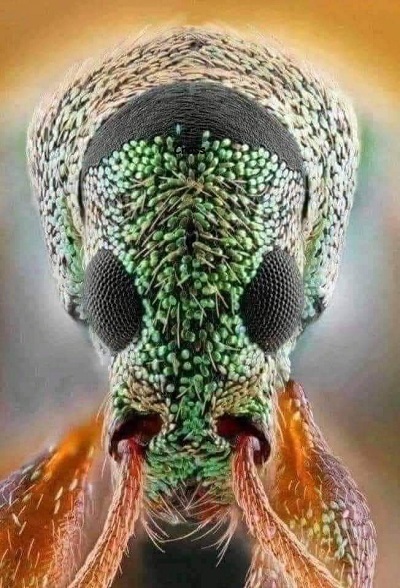
credit: Clifford Cross II
"The animal you see in the photo is a mosquito.
It looks basic and yet it's built like a perfect machine.
Upon examination with an electron microscope and other
modern devices, the mosquito forms as follows:
On her little head there are exactly 100 eyes.
In her mouth,
which can hardly be seen even under a microscope, 48 teeth.
In the chest, one for the center and two for the wings,
there are 3 hearts and in each heart 2 auricles and 2 ventricles.
This little mosquito has a heat receptor to find living things
with heat. The heat sensitivity of this device is one thousandth
of a degree Celsius. A very advanced blood analyzer, and also
an anesthetic device to easily absorb the blood, so that its
victim does not react to the sting. And also an anticoagulant
device to be able to absorb the blood. There are six tiny blades
on its suction pipe; with four of them he makes a square
incision and with the other two he forms a tube to absorb
the blood. They also have claws and hooks on their feet to
hold on to their food source."
Mechanism
of a Mosquito Bite
This 2:25 video describes the mechanisms a mosquito
uses when biting their prey. Probably more than you want
to know, but it's informative.
Mako Sharks:
The Speeding Bullets of the Ocean
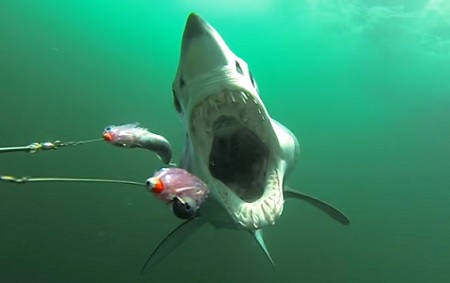
"Imagine if you set out to create the leanest, meanest,
fastest
shark the ocean ever saw. You might start out with a smooth,
thin, torpedo-shaped body and add in some super-strong muscles
attached to a powerful tail. To top it off, add a pointy snout that
cuts through the water like glass.
Congratulations, my friend, you’ve just designed a mako shark.
These crazy animals are the fastest known sharks in existence,
clocking in at a record-shattering 60 miles per hour. That’s not
the only cool thing about them, though—read on for more!"
Includes a 3 minute video:
Mako shark attacking a PelagicView
dredge
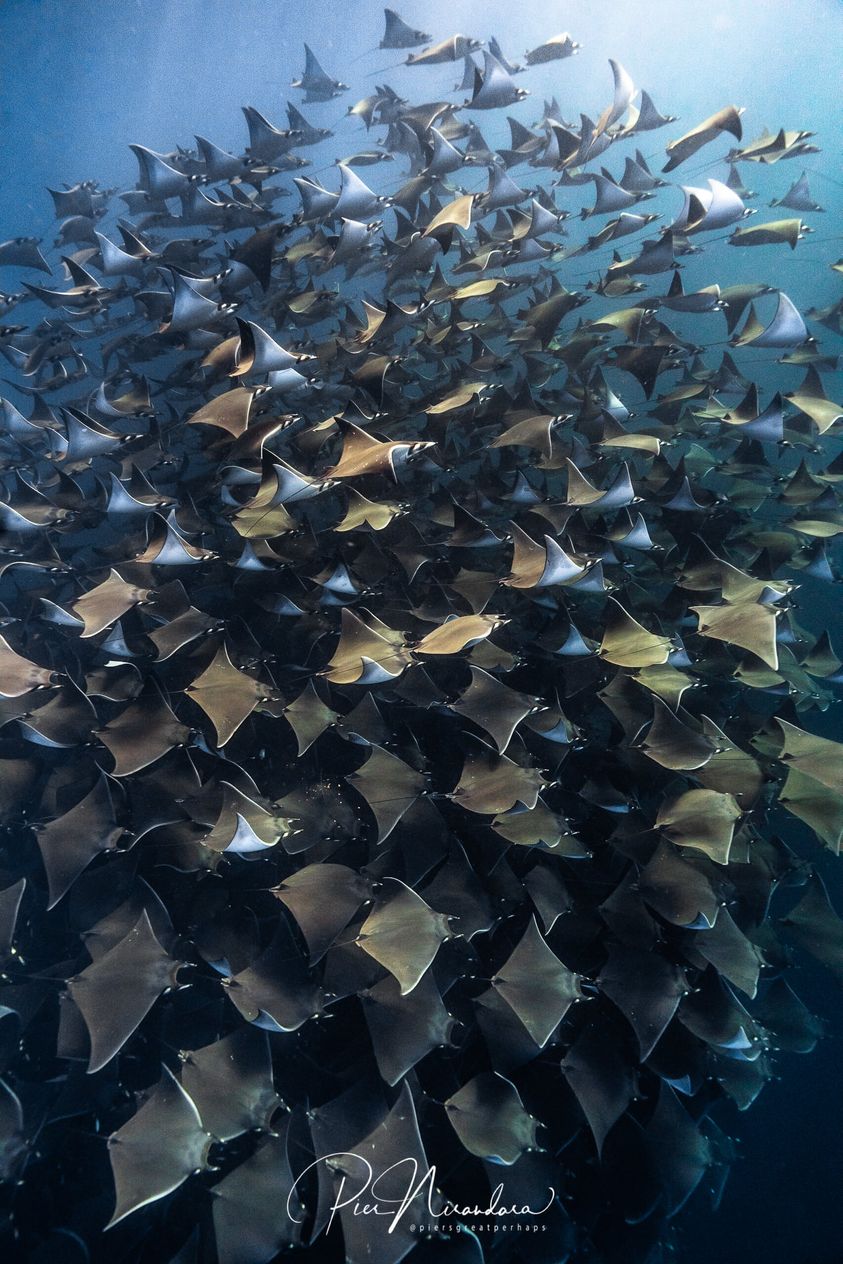
Mobular Rays off Cabo San Lucas, Baja Clifornia, Mexico
Moth Life Cycle AMAZING photo series of the life cycle of the giant cecropia moth from eggs to adults. It includes wonderful closeups of caterpillar stages, including photos of the moth developing inside the cocoon! Definitely educational!
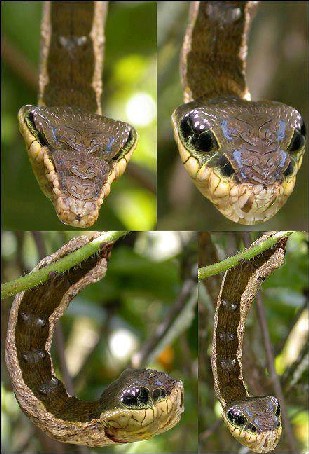 Moth
Snake - a caterpillar that looks like a snake, but is not a snake.
Moth
Snake - a caterpillar that looks like a snake, but is not a snake.
This is the larva of one of the Hawk Moths, Hemeroplanes triptolemus.
This species of Hawk Moth is found in Central and northern South America.
In its larval form it is capable of expanding its forward body segments so it looks like a snake, complete with fake eyes.
It will even pretend to strike like a nasty venomous snake.
No bird would ever take a chance that it wasn't a snake.
Younger, smaller caterpillars can't make such big scary fake
snake heads, they can only make
smaller and simpler ones. The older and bigger the caterpillar, the better
looking the snake head. (credit: IFLS)
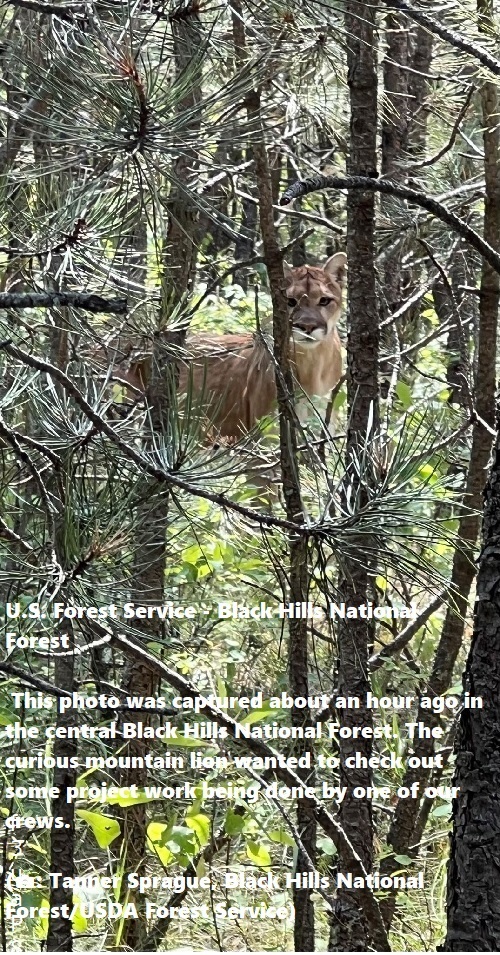
Mountain
Lion Facts Safety tips for what to do to discourage attacks by
mountain lions. Sound advice from the Mountain Lion Foundation.
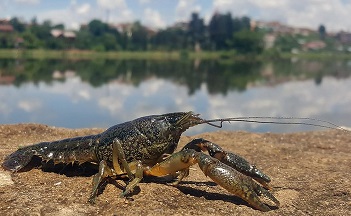
Mutant
Crayfish Clones Itself, and It’s Taking Over Europe
"Crayfish, also known as crawfish, crawdads, freshwater lobsters, mountain
lobsters, mudbugs
or yabbies, are freshwater crustaceans resembling small lobsters, to which
they are related.
They breathe through feather-like gills." - Wikipedia.
A big crayfish from a little creek on the Florida-Georgia border has hit the
big time:
"The marbled crayfish is a mutant species that clones itself, scientists
report. The population is
exploding in Europe, but the species appears to have originated only about
25 years ago.
The mutation made it possible for the creature to clone itself, and now it
has spread across
much of Europe and gained a toehold on other continents. In Madagascar, where
it arrived about
2007, it now numbers in the millions and threatens native crayfish."
They make eggs without a daddy,
each one is a copy of every other one. (There are some fish and a few lizards
that can also do this.)
Someone dumped a few of them in a pond in Europe. Now they are taking over.
They eat smaller, native crawfish. They also outbreed them. They are a giant
among crawfish
and tougher than other species. But are they good to eat?
Names of Males, Females, Babies, and Groups of Animals Here's a list of the "official" names for Males, females, babies, and groups of individuals of a species. A parliament of owls? An obstinacy, a shrewdness, a piteousness, a coalition? Who is in charge of assigning these names? Animals, birds, and insects are listed. An "infestation" of roaches makes sense. This is just one little page out of 30,000 pages from the amazing Enchanted Learning.
National Geographic Kids "Features different people, animals, and places each month with facts, games, activities, and related links." Well, hey, it's National Geographic. Very educational, and the games are fun, too
National Geographic Kids Creature Feature lets you look up animals by order (reptiles, birds, mammals, et al.) OR by habitat (rainforest, desert...). You can use the grid to find desert mammals, for example.
Nature Adventures "Welcome to the home of the Emmy Nominated Television Series 'Nature Adventures With Terri And Todd', an educational and entertaining series created to showcase the beauty and wonder of the Midwest! Each season contains 13 fun, education-packed episodes. Terri Lawrenz and Todd Magnuson are your hosts!" They roam all over South Dakota and adjacent states, checking out ecology and wildlife. The Online Learning section has all episodes from Seasons 1 and 2 are online as Flash videos! There are also resource links, video modules, photo galleries, and a glossary!
Nature_Malaysia "Malaysia is located in the center of Southeast Asia, home to a vast range of tropical rainforest that teems with the wonders of nature. The amazing wildlife species found in this region have long been the fascination of researchers and explorers around the world." See all the amphibians and reptiles of this region by scrolling down the left-hand menu. Amazing photos and information on all sorts of snakes, lizards, turtles, frogs, salamanders, etc. Worth looking at!
Netfrog The original frog dissection online site from U of Virginia. Now with the old-time (1994) version AND a newer more multimedia version. It's like two for one good sites! Also see the Lawrence Berkeley National Lab's Virtual Frog Dissection Kit "This award-winning interactive program is part of the 'Whole Frog' project. You can interactively dissect a (digitized) frog named Fluffy, and play the Virtual Frog Builder Game." Your choice as to which site is better for your kids.
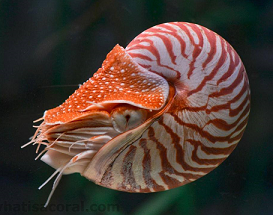 Nautilus
Fast Facts from American Museum of Natural
History. This is a short list of facts about this 250 million year old
group of octopus relatives. Adequate for most elementary school reports. For
a longer list of facts and more information about nautilids in general, try:
Chambered
Nautilus from Aquarium of the Pacific, What
We Don't Know About Nautilus from The
Cephalopod Page, or the Wikipedia
article (which is actually very good). Wikipedia lists all the known genera
(plural of genus), both extant and extinct. "Extant" means "still
alive".
Nautilus
Fast Facts from American Museum of Natural
History. This is a short list of facts about this 250 million year old
group of octopus relatives. Adequate for most elementary school reports. For
a longer list of facts and more information about nautilids in general, try:
Chambered
Nautilus from Aquarium of the Pacific, What
We Don't Know About Nautilus from The
Cephalopod Page, or the Wikipedia
article (which is actually very good). Wikipedia lists all the known genera
(plural of genus), both extant and extinct. "Extant" means "still
alive".
New Images From The Deep Ocean A 21-slide show of animals found in the abyss. NOAA scientists completed a three-week exploration of the ocean floor. Here's a glorious breakdown of what they saw. Fascinating. A transparent purple sea cucumber that swims where its kin grub up mud for food. A dumbo octopus. Bright yellow jellyfish. A community of oil-eating animals. Debris from a shipwreck. A nice little exploration of the deep sea.
New Size Estimates for Large Ocean Animals (Infographic) (This link goes to the original livescience article.)
Nicobar Pigeon
Closest Living Relative to the Dodo Bird
Dazzles with Vibrant Iridescent Plumage
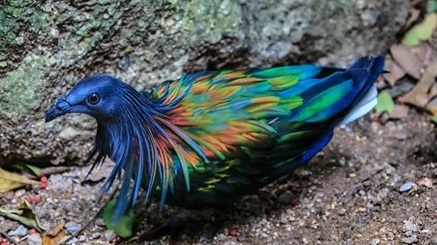
Also the closest living relative of the Dodo's closest
relative, the Rodrigues
solitaire ,which is also an
extinct flightless bird.
Nicobar Pigeons can fly. They are spead across many
small islands "from the Indian Nicobar Islands eastward
to places like Thailand and Papua New Guinea."
Click on this photo to see 12 more stunning photos of
this beautiful bird!
 Nocturnal
Animals Unit - a Pinterest board by Kristina
Abernathy.
Nocturnal
Animals Unit - a Pinterest board by Kristina
Abernathy.
Mainly aimed at younger kids pre-K - 2nd or 3rd. Over 50 activities
in all; plenty of crafts, also children's literature, grammar, KWL,
elementary science and vocabulary, counting mathematic,
printable sheets, items for bulletin boards, and miscellany.
Mostly covers bats and owls, but some sections discuss deer,
badgers etc.
North American
Bear Center features various black bears
studied by the good people in Ely, Minnesota. There are links
to several den cams. Check out the rest of the site, too.
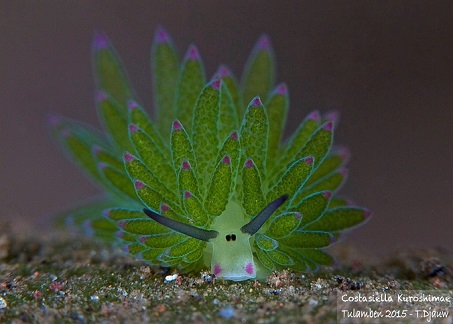
Nudibranch
means "naked gills" because they breath using
cerata, finger-like appendages that cover their back. The
cerata can be a variety of shapes - thread-like, club-shaped,
clustered, or branched. They have multiple functions,
including breathing, digestion and defense.
- OCEAN DEFENDER - Hawaii
This is a Coastasiella kuroshimae. More photos here.
 Nudibranchs:
Snails of the Sea "Nudibranchs are the colorful underwater relatives
of land snails. They crawl along the ocean floor eating sponges, crustaceans,
and jellyfish — amazingly, whenever nudibranchs eat a jellyfish, these
sea snails can actually use the jellyfish toxins as a defense against larger
predators. These incredible animals are extremely difficult to find, so it
is unsurprising that biologists are always discovering new species of Nudibranchs.
Watch the video to learn more about these brilliant creatures." - The
Rainforest Site. Video credit - California
Academy of Sciences, which has quite a few nudibranch videos.
Nudibranchs:
Snails of the Sea "Nudibranchs are the colorful underwater relatives
of land snails. They crawl along the ocean floor eating sponges, crustaceans,
and jellyfish — amazingly, whenever nudibranchs eat a jellyfish, these
sea snails can actually use the jellyfish toxins as a defense against larger
predators. These incredible animals are extremely difficult to find, so it
is unsurprising that biologists are always discovering new species of Nudibranchs.
Watch the video to learn more about these brilliant creatures." - The
Rainforest Site. Video credit - California
Academy of Sciences, which has quite a few nudibranch videos.
Nutrition from the Animals section of the Learning Zone of Oxford University Museum of Natural History. This page discusses ways to tell what an animal eats, emphasizing the three main tooth types: incisors, canines, and molars. Then animals are typed based on what they eat: Carnivores, herbivores, and omnivores. There's a whole page of skull and teeth comparisons for students to look at. Click "Look at more animal skulls and different types of teeth" right above the koala on Page One. The skull & teeth page is tricky: there is an anteater in there, a barbirusa is a type of pig, and a bearcat is also called a binturong. Also, be aware that some carnivores eat insects, and that they are called insectivores. What do you think their teeth look like?
Ocean Collection for Kids This is a group of ocean sites for kids put together by faculty from Cal State LA. They cover ocean habitats, ocean mammals, and ocean fish. This is for elementary kids and has good simple explanations.
Ocean Life from the Office of Naval Research, USN, covers marine mammals, sea turtles and California Sea Lions. Characteristics and adaptations are discussed. There's also a quiz for each section.
Why the
octopus brain is so extraordinary 4:16 Youtube video from TED-Ed. Listen,
watch, and learn!
The octopus' "brain" is spread out all over their body. You can
watch this video and find out why having
no skeleton and a lot of neurons is so cool!
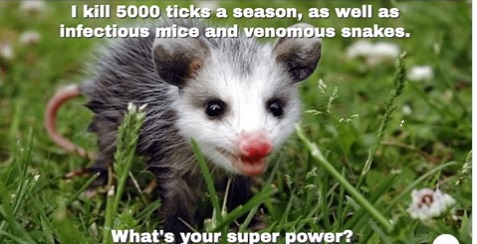
Opossums
are Our Best Defense Against Lyme Disease,
Killing 5000 Ticks Per Season Each
photo: returntonow.net
Read up on it! Opossums attract more ticks than any other small mammal, and
eat 95%
of them!
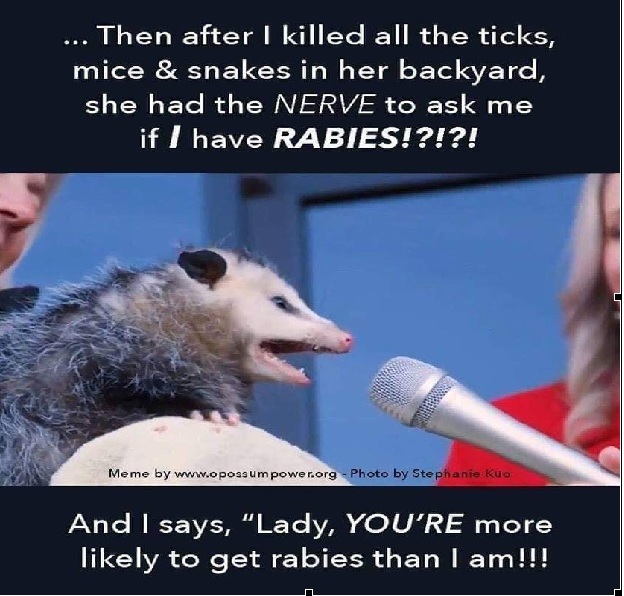
And stop asking about my belly button.
 .0
.0
Killer
Whale/Orca distribution, habitat, and diet.
Click on the thumbnail to see the 2592 x 1758 monster!
Orca and dolphin A photo
series of an orca chasing
a dolphin, notable because of the astounding 30+ foot
(9 - 10 meter) LEAPS the orca makes!

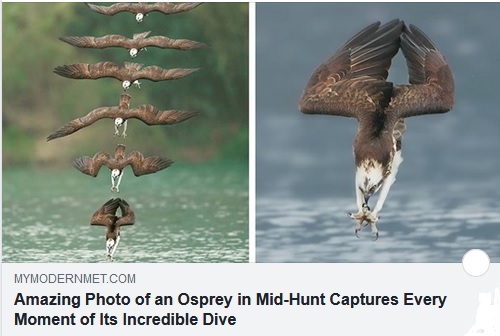
Owl Pages Will tell you all about the Eurasian Eagle Owl below. They also have tons of information about all the other owls in the world! Also information about anatomy and physiology, owl calls, photo gallery, art, plus owls in mythology and culture. Use their pull-down menu at the top of the page to see all the options. Owls of the USA is in this menu.
Credit = Caroline Booth Stafford
Snowy Owl
A traffic camera in Montreal captured this image.
Hover your mouse pointer on it!
Owl Pellet Dissection from KidWings features virtual own pellet dissection with Flash, also addition diisection activities with eight owls and three other birds.
Owl Research Institute at Charlo, Montana. Great Horned Owl and Long-eared Owl nest cams. There's more to this site than the cams. They have whole pages of information about owls in general, and another longer listing of facts for all the owls of North America!
Panda Videos from the Atlanta Zoo. These are archival videos and there are plenty of them, featuring cute pandas. Further down, there are more videos of other zoo animals. We have been running these in QuickTime. Parents and teachers: Remember to have the kids close each window as they finish watching that video. Otherwise you will have 10 or 20 videos still running in background, and a very slow computer. "Seen it."
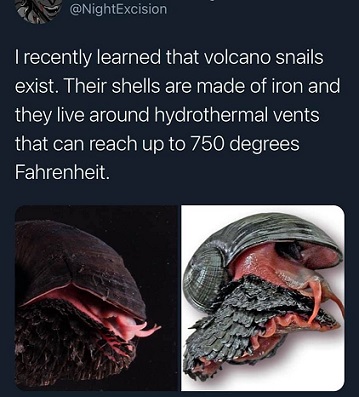
Quote from Scaly-foot snail:
"This is a very large (this kind of snail) compared to
(its relatives),
which are usually below 15 millimetres (3/5 in) in shell length.[2]
The width of the shell is 9.80–40.02 mm (0.39–1.58 in);[2]
the maximum width of the shell reaches 45.5 millimetres (1.79 in).
[2] The average width of the shell of adult snails is 32 mm.[2]"
1 - It's a giant compared to its kin.
2 - It uses iron compounds in its shell and foot
3 - It does not eat. It gets energy from special bacteria that
live in its body.
Adorable New Species Of Peacock Spider Discovered
A Wolf Spider crawing over the South Dakota plains with her
egg case.
After some research. we think it's a Trochosa species, maybe
Trochosa terricola. It might be a Hogna species? Thanks to
Spider ID for the info. Photo credit
= Kate Swallow Photography
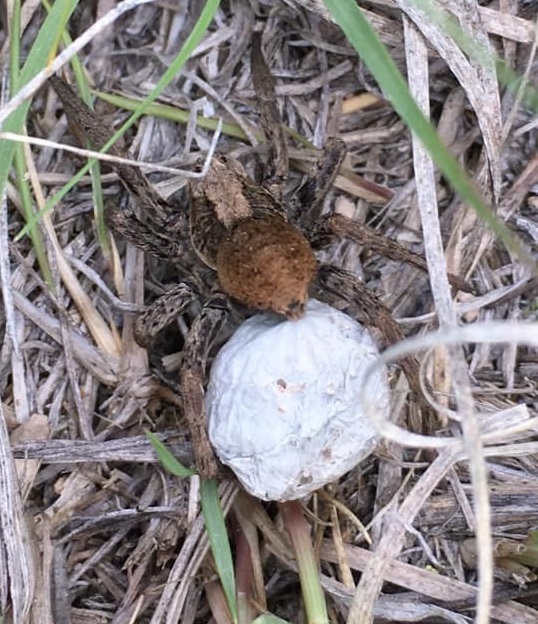
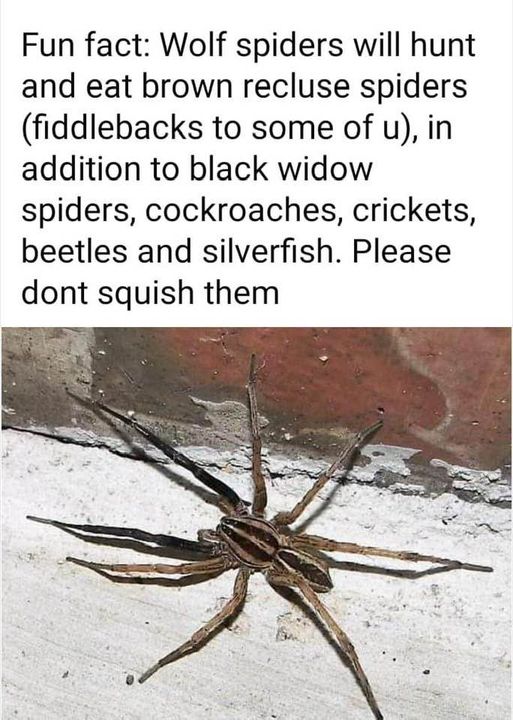
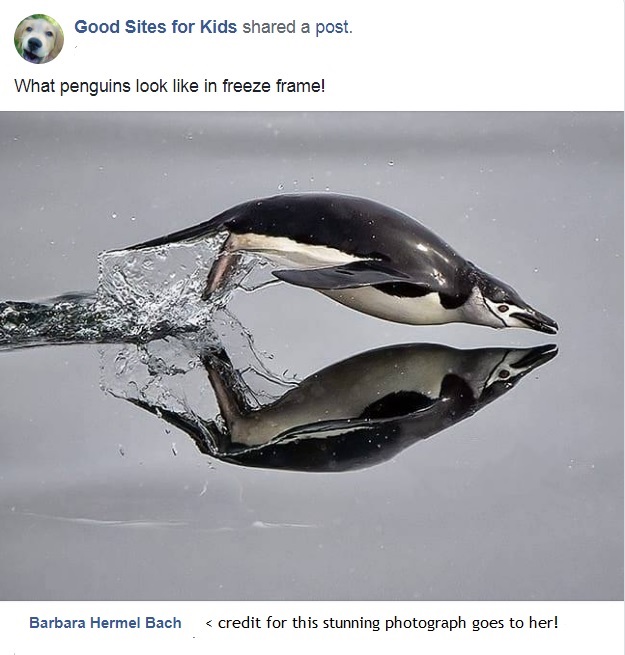
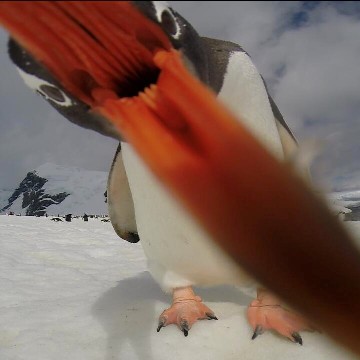 Penguin
tongue! Having no teeth, penguins use their bristly tongues to push fish
down their throats!
Penguin
tongue! Having no teeth, penguins use their bristly tongues to push fish
down their throats!
More penguin facts are available at Penguin
FAQ. You could also do an image search for "penguin tongue".
 Plankton Chronicles "Plankton
are any organisms that live in the water column and are incapable of swimming
against a current. They provide a crucial source of food to many large aquatic
organisms, such as fish and whales." (from
Wikipedia) Watch videos and see photos of various sorts of plankton. There
are 16 HD videos with more being added. Each narration explains the organism
it's about. Very good quality videos with good sound, too. Click and explore
the ocean and see different kinds of plankton emerge. This covers larval crustaceans,
larval fish, cnidarians, ctenophores, diatoms, mollusks, tunicates, larval
worms, various echinoderms, and more. All these can be plankton.
Plankton Chronicles "Plankton
are any organisms that live in the water column and are incapable of swimming
against a current. They provide a crucial source of food to many large aquatic
organisms, such as fish and whales." (from
Wikipedia) Watch videos and see photos of various sorts of plankton. There
are 16 HD videos with more being added. Each narration explains the organism
it's about. Very good quality videos with good sound, too. Click and explore
the ocean and see different kinds of plankton emerge. This covers larval crustaceans,
larval fish, cnidarians, ctenophores, diatoms, mollusks, tunicates, larval
worms, various echinoderms, and more. All these can be plankton.
Platypus, the mammal that lays eggs.
In the picture is a mama platypus with babies.
The lower baby is drinking milk. Mama has no nipples, so the babies have to
lick their
dinner off milk-seeping patches on her skin.
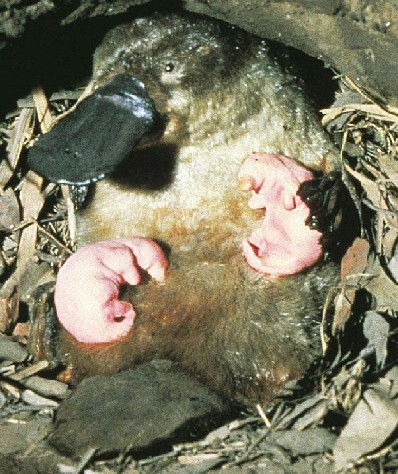
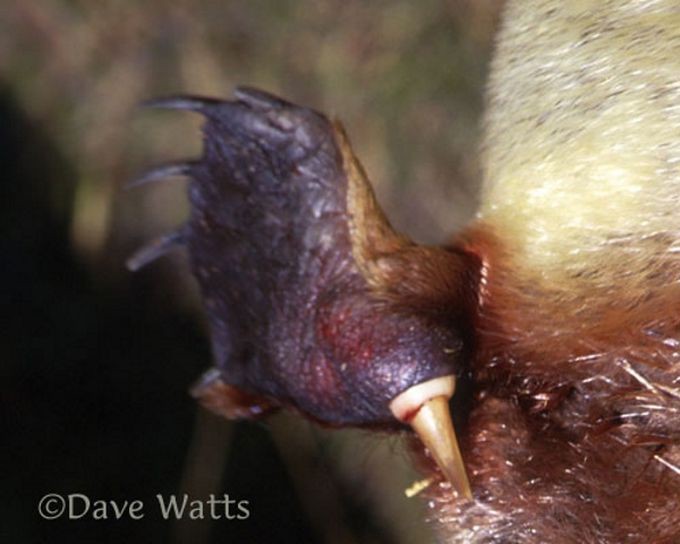
When it was discovered by Europeans 200 years ago, the platypus
confused scientists. With its beaver tail, duck beak, feet of an otter and
hair covering the body, it was considered so strange that at first many said
it was a fraud, not a real animal. Endemic to Australia, the platypus is one
of only two known mammals that lay eggs (the other being the echidna). It
has nocturnal habits. The males have poisonous spurs
on their hind feet.
Don't be afraid to look up words you do not know.
If you do not know the meanings of endemic or nocturnal, look them up and
find out :) More specific platypus information
here.
Opossums are Our Best Defense Against Lyme Disease, Killing 5000 Ticks Per Week Each
photo: returntonow.net
Read up on it! Opossums attract more ticks than any other small mammal, and
eat 95% of them!

Pronghorn All
about the pronghorn "antelope" of the North American Great Plains.
One page of pictures and amazing facts. Easy to read, too.
From the Great Plains Nature Center in
Wichita, Kansas.
Photo is from Wikipedia. Click on it to see larger size.
Would you believe? Animal scientists believe that
pronghorn's closest living relatives are Giraffes and Okapis!
Puggles!
"Sydney's Taronga Zoo is celebrating its first baby echidnas, or puggles
as they are better known,
in almost 30 years. The three babies hatched from their eggs in August but
keepers wanted to see them grow
before going public."The four species of Echidnas are one of only two
Australian mammals that lay eggs
(the other is the duck-billed platypus). Egg laying mammals that feed their
babies milk are called monotremes.
The baby echidnas hatch after 10 days and are carried around by their mothers
in a pouch-like skin fold for
up to two months." For months, puggles drink their mother's milk and
sleep a lot.
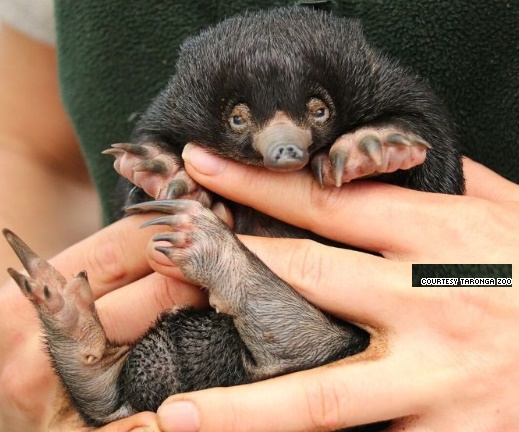
Echidnas and platypus are
monotremes, the only mammals that lay eggs. Echidnas and platypus have
a common ancestor
that was a primitive kind of platypus. Early echidnas left the water to live
on land. They eat ants, bugs, worms, etc,
like hedgehogs. Monotremes
are more closely related to Marsupials
(the pouched mammals) than they are to Placental mammals (all other mammals).
Learn more about the different kinds of echidnas from Wildcare
Australia.
Woman
Finds An Incredible Bug Who's Almost Too Beautiful To Be Real
An exotic mantid
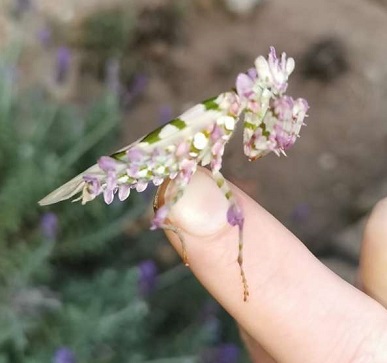
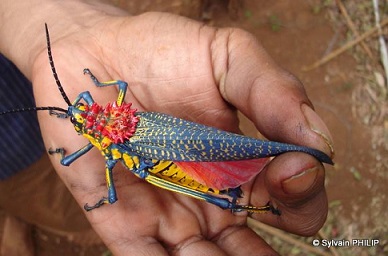
Rainbow
Milkweed Locust: A Real Toxic Beauty from Featured
Creature
("Discover unique animals you never knew existed.") "Stunning
creatures, which reach about 10 cm or so,
feature every color of the rainbow; and for good reason. They want to alarm
predators by alerting them
that they’ve got a whole lotta toxin flowin’ through those grasshopper
veins." Several more photos and a
lot more information. This is a general rule
with small critters, whether arthropods, chordates, mollusks,
or something else. If it's really colorful, do not touch. "Is it good
to eat?" No!
Raptor Adaptations from the Delaware Valley Raptor Center. How do hawks, eagles, and their kin do the things they do so well? Information on raptor feet, beaks, eyes, and wings. (Scroll down a little past the poem)
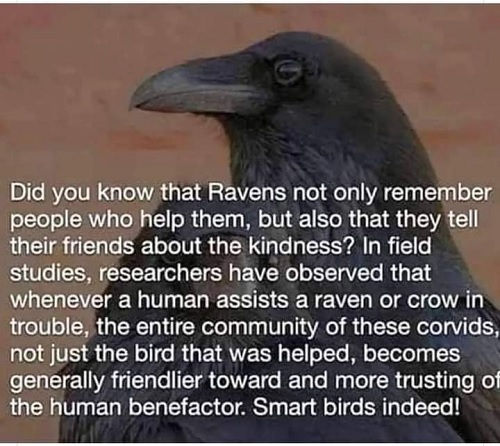
The Red
Junglefowl is the direct ancestor of all our chickens.
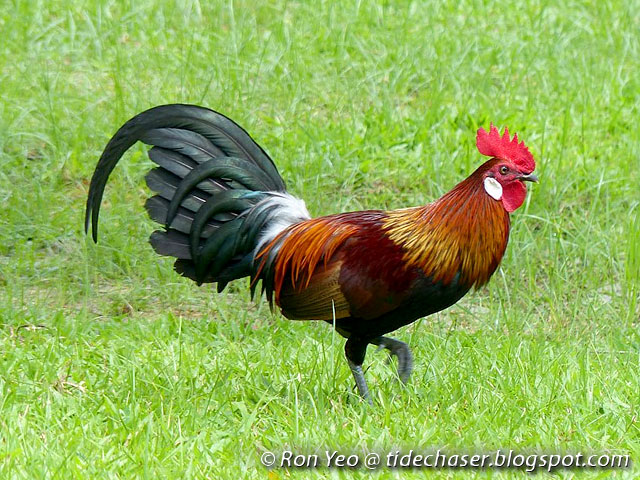
A few breeds of chicken also have Gray
Junglefowl ancestors.
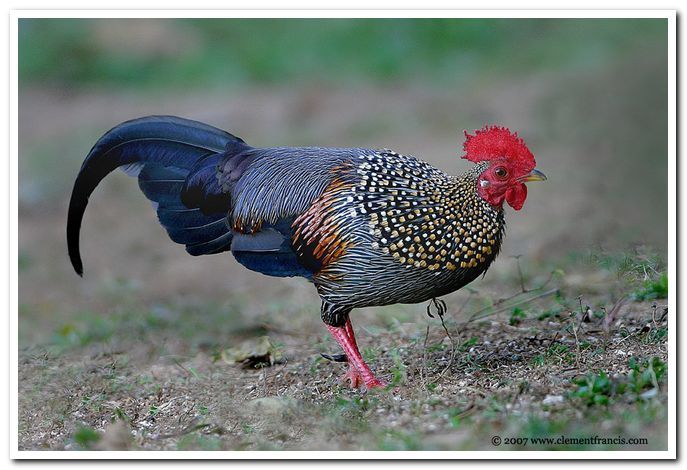
There are four living species of junglefowl.
The other two are the Sri Lankan and the Green Junglefowl.
There used to be many more species, scattered from southeast Europe to
southeast Asia. What happened to them? Study, and maybe you can find out.
Junglefowls are cousins of the chickens, pheasants, turkeys, quail, partridges,
grouse, ptarmigans, and maybe Guinea
fowl. Read the Wikipedia article to
find out even more. There are all kinds of pictures
of these beautiful and important food birds all over the internet!
Green Junglefowl on Bali
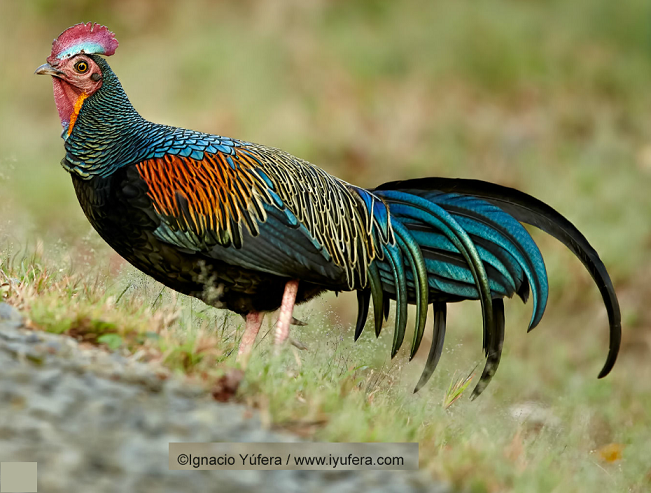
A Sri Lankan Junglefowl
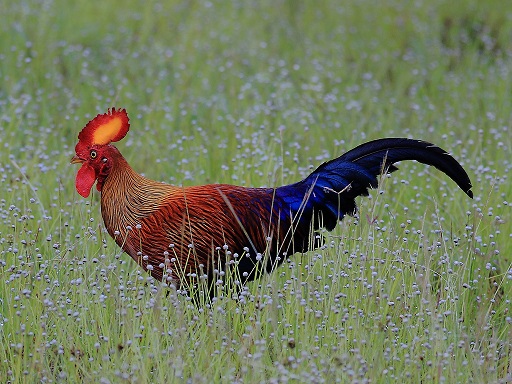
Red List of Threatened Species "Life on Earth is disappearing fast and will continue to do so unless urgent action is taken. There are now 41,415 species on the IUCN Red List and 16,306 of them are threatened with extinction, up from 16,118 last year." Search the Red List for animals, birds, and plants here.
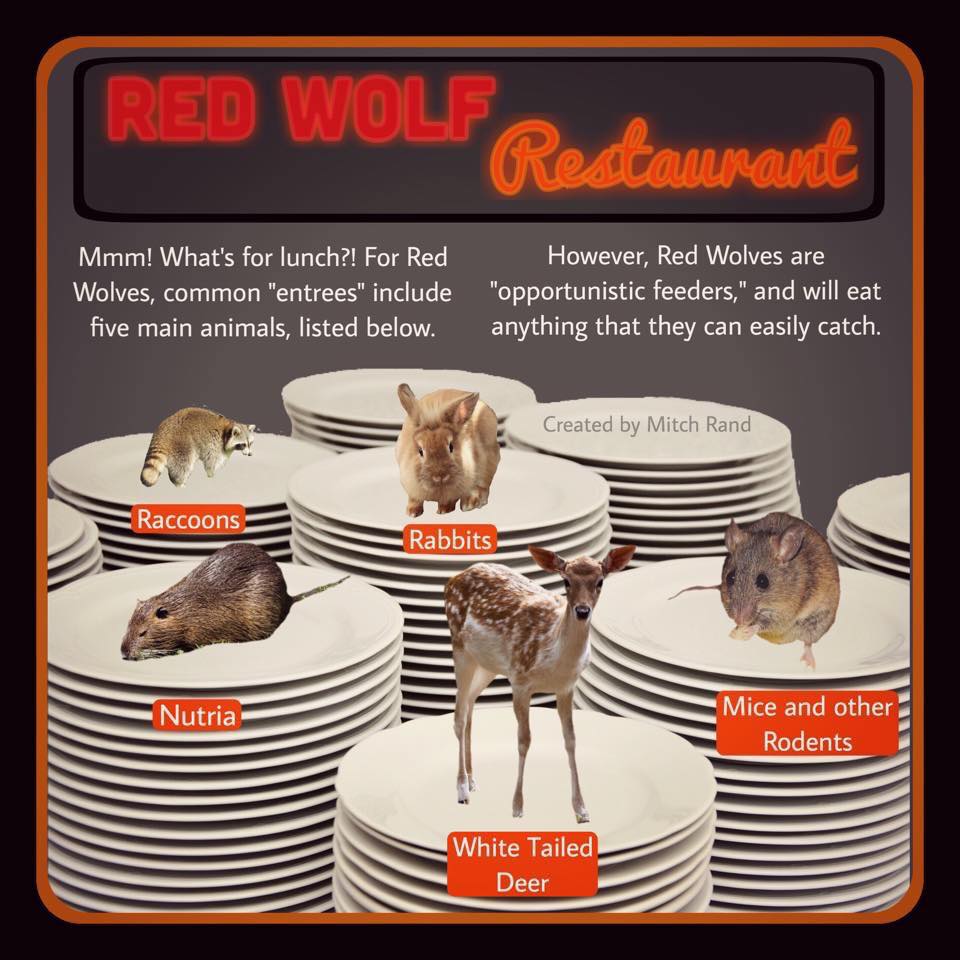
Rollie Pollies
Came From the Sea to Conquer the Earth A Deep Look video from YouTube
Pill bugs. Doodle bugs. Potato bugs. Wood Shrimp. Whatever you call them,
there’s something less
creepy about these critters than other insects. Maybe it’s because they’re
not insects at all.
Pillbugs, or rolli-pollies, are crustaceans, not insects and not millipedes.
Learn how they came from
the oceans and modified their gills to breathe air! Watch this 3min 29 sec
video and find out more.
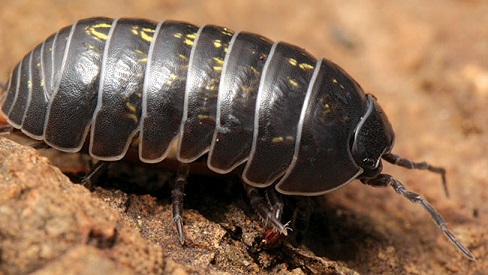
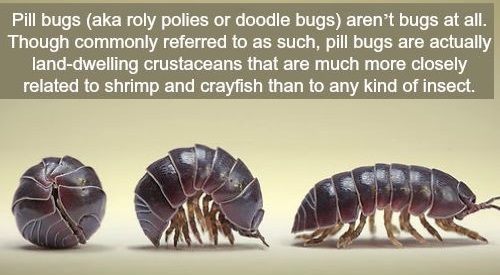
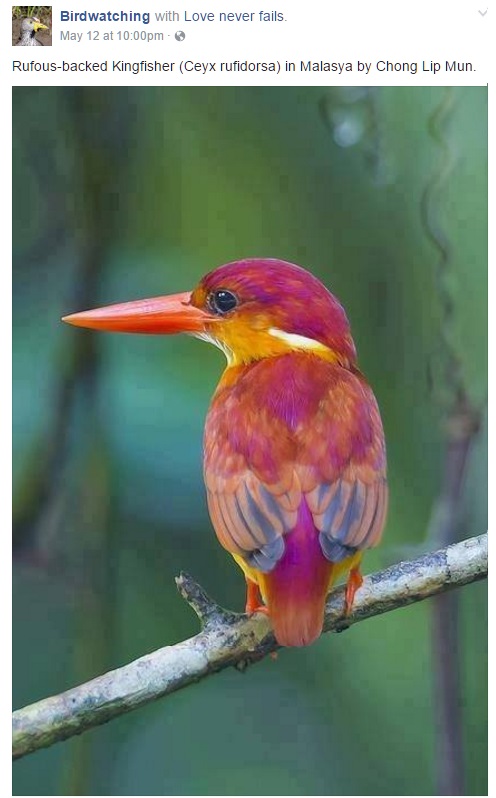
.jpg)
Sea Sapphire from Featured Creature who found it on Deep Sea News. They are copepods, a group of small crustaceans found in the sea and nearly every freshwater habitat on land. "... they sometimes congregate in large masses at the water’s surface which makes the water sparkle like it’s filled with millions of diamonds ..." Featured Creature had lots of photos and a couple of videos of these living jewels.
San Diego Zoo Animal Bytes has animal facts, sounds, photos, videos, ecosystems, and habitats! Videos need Real Player.
San Diego Zoo Kids specially designed to appeal to elementary kids. Kids can look at animals sorted by class (mammals, birds, et al.) and read facts about them, too. Online games, hands-on activities, jobs at the zoo, and a section of animal cams & videos! The Panda Cam is here, along with Elephant Cam, Ape Cam, and Polar Bear Cam!
Sci4Kids: stories about bugs. "Stories! Stories! Stories!" Tons of fun facts about "bugs!"
Scorpions and their relatives. Photos sent in from all over the world. Each "bug" is identified and discussed. Part of a larger site.
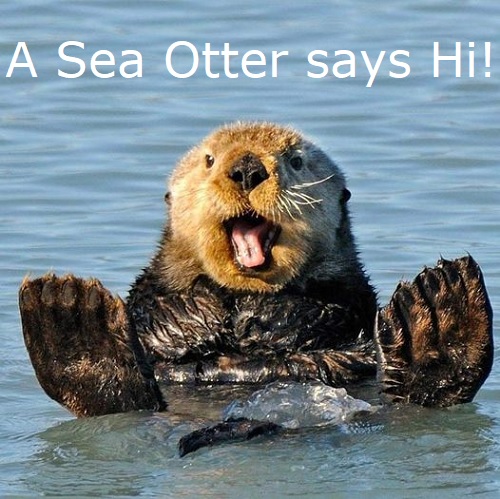
1 - Kelp forest biomes are essentail as habitats, nurseries, and
refuges for a huge variety of species.
2 - Sea urchins eat kelp stems and the kelp dies.
3 - Sea otters eat sea urchins..
4 - Russian fur traders almost exterminated the sea otters;
and the sea urchins destroyed huge areas of kelp forests.
5 - Sea otters are protected now and are coming back;
which is great news for the environment.
6 - Not such great news for the sea urchins.
These two Antarctic native seals share a common ancestor.
The Crabeater Seal on the left eats krill. Its teeth filter out the tiny shrimp.
See the tooth design. Crabeater Seals are filter feeders, like whale sharks.
The Leopard Seal on the right uses its teeth to eat Crabeater Seals,
penguins, and fish.
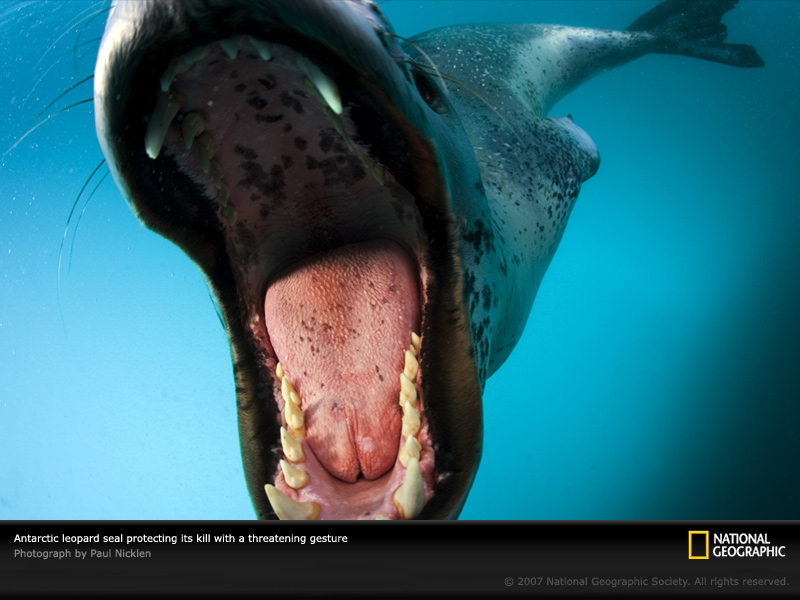
Shark Attack - How to Avoid being attacked. Practical advice for all ages.
Zoom Sharks! Maybe the very best shark place for kids! But then, all the Zoom sites and activities are wonderful.
Shark Classification from The Dedicated Shark Site. Good information and plenty of it, with pictures of plenty of sharks, anatomy lesson, and a list of more sharks than you ever dreamed existed. Good job!
Shark Facts "We’re excited to announce that Shark-Facts.com is now live. We’re working on expanding the number of species we cover, but the great white page should contain enough info to keep you going. As the name might suggest, Shark Facts is a site aimed to educate and inform. It’s our goal to scour the internet for the most accurate and interesting shark information, and display it in a logical and easy to digest manner." This is a work in progress. So far they only have Great White shark and Hammerhead sharks, but each page has a high level of detailed and organized facts. If the detail and quality remain this solid as they add more shark types, this page will be a go-to source for student reports and research. We want to thank Shark Facts for the email about their site.
Hi there! I'm a friendly dolphin! Wanna play?
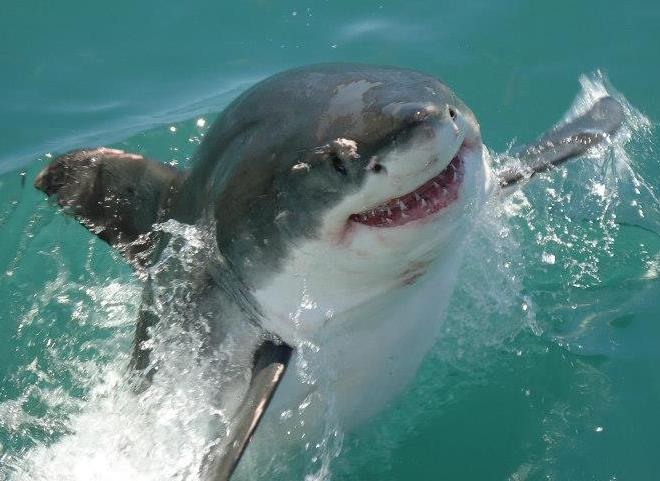
Shark School from the San Diego Natural History Museum. "Swim among some local sharks! Angle your way through fish and games. Explore ten shark species found in the waters off of southern California and northern Baja California." Shark FAQ's, anatomy, links, more.
The Shark Side of Life! BIG and colorful site that's absolutely crammed with facts and photos! It's a must-see stop on your trip to find shark facts! A separate page for every shark, and many other pages, too.
SHARKS
from the Smithsonian This site is Immense!
Anything you ever wanted to know about sharks is here!
It goes on and on. A good resource or students.
Tiger Shark, Up Close and Personal.
Shark: Do I LOOK like a Pokemon? No!
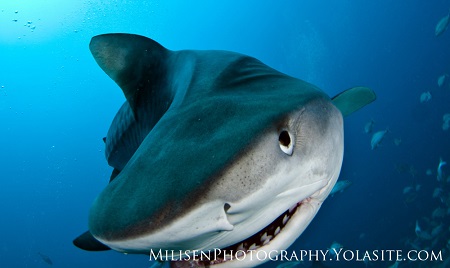
Shark - Who's Who of Sharks Find out all about your favorite shark! Shark species arranged by their eight orders, or check the Species List, or try the Shark-a-Matic. From PBS Nova.
Shark Word Search from Florida Museum of Natural History. Easy to use. Needs Javascript to run

OCEARCH is a recognized world leader in generating critical
scientific data related to tracking (telemetry) and biological
studies of keystone marine species such as great white and
tiger sharks, in conjunction with conservation outreach and
education at a measurable global scale.
Featuring the Shark Tracker!
Also has FAQ, Science,
and Education K-8 with lesson
plans!
.
Shedd Educational Adventures (SEA) from the Shedd Aquarium in Chicago. Lesson Plans, Interactives, and the Explorer's Guide! Interactives are the online learning games, indexed by grade level. We tried Build a Fish and it was fun!
Siphonophores This short article briefly explains what these animals are and how they make a living in the sea. Excellent photo of one that looks like pink glowing tinsel, plus a 0:45 second video. The best known siphonophore is the Portuguese Man O' War (Video here.) For in-depth siphonophore facts, click here.
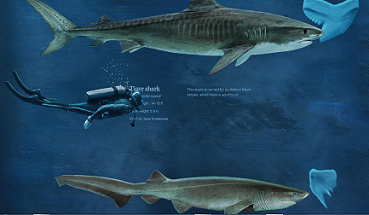
Sizing Up Sharks, the Lords of the Sea "Sharks range in size from the largest fish on the planet to the length of your palm. See how you compare to some of these vulnerable predators that are so crucial to the ocean's health." Interactive chart with sound effects shows exactly how big those sharks are, compared to you! From NatGeo.
Snail biology Everything you ever wanted to know about snails. Written at a secondary school level.
 Snow Leopards
for Kids " In it you will find answers to your questions about snow
leopards. You will find photos and videos of snow leopards. You will also
find suggestions for things you can do to help save snow leopards. We are
also working on a section of “snow leopardy” things to do that
are just plain fun...We are proud to receive the MyReportLinks.com Book Seal
of Approval awarded to sites that are especially valuable to students
who are doing research for school reports." (Emphasis ours)
Snow Leopards
for Kids " In it you will find answers to your questions about snow
leopards. You will find photos and videos of snow leopards. You will also
find suggestions for things you can do to help save snow leopards. We are
also working on a section of “snow leopardy” things to do that
are just plain fun...We are proud to receive the MyReportLinks.com Book Seal
of Approval awarded to sites that are especially valuable to students
who are doing research for school reports." (Emphasis ours)
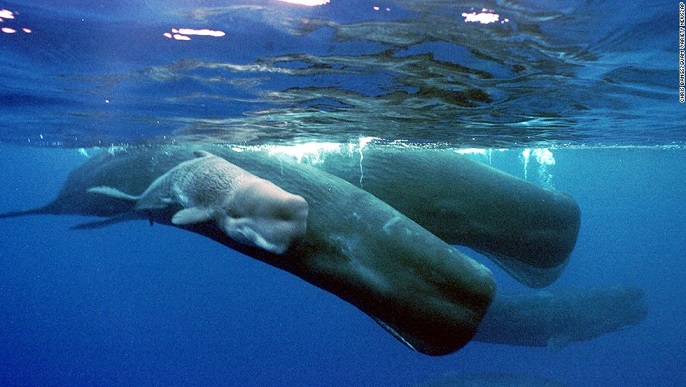
Sperm
Whales
Mama and Auntie are teaching Baby how to get dinner!
Link goes to Enchanted Learning. They have a good activity and lesson page
about sperm whales.
Spiders! This is a nice spider unit for lower elementary kids, with lesson plans ready to go.
Splash Zone! is another part of Monterey Bay Aquarium. Scroll down to play Crunch Nibble Gulp Bite or Make a Tide Pool Come to Life. Also check out the links to more wonderful places, on the left side of the page.
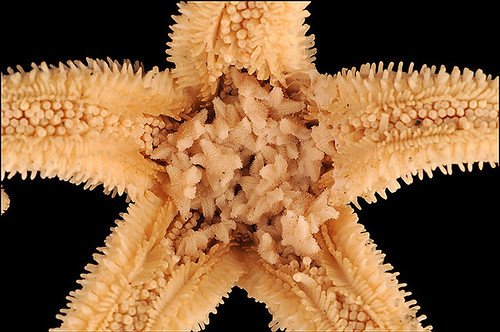
In some starfish species, mama sits on her eggs like a hen!
After they hatch, mama keeps the babies by her mouth until
they are old enough to move out. Lots of cool pix and good
information for older children. Kudos to The
Echinoblog, an
Australian site which has plenty more articles like this one.
Steller’s
Sea Cow from New Dinosaurs
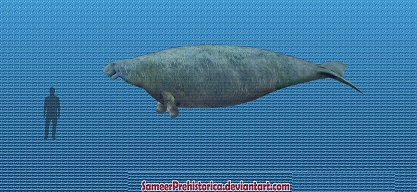
A giant relative of dugongs
and manatees, these peaceful
giants lived in the northwest Pacific for two million years.
More distant relatives are the elephants and the hyraxes.
Steller's Sea Cows ate kelp and plenty of it. They were very
tame and harmless, except to kelp. They were huge - bigger
then orcas and much heavier. They were discovered by European
explorers in 1741 and hunted until they became extinct in
27 years (1768) . A sad ending for these ancient, unique animals.
Super Snakes from National Geographic Kids "Snakes are masters of disguise, skilled hunters, and champion eaters. Here are eight awesome things you may not have known about these carnivorous reptiles." Complete with closeup photos and links to more snakey sites.
Suriname toad page from Arkive. A full page of facts about this unusual animal, including a photo gallery and a 1 minute video of the babies being "born". It's the same 1 minute video that all the other sites show, originally from the BBC. We went with the page from Arkive because it has the most facts about the animal. There's a glossary and links to even more facts on even more sites as well.
Switcheroo Zoo 146 animals! Animal List and Profiles. (Profiles are information about the animal.) "These animals inhabit Switch Zoo. Click any name to read the animal's profile. Make new animals in Switch Zoo by switching the animals' heads, legs and tails." Cute!
Tarantula,
Giant of the Spider World "Journey inside a giant
spider.Take a unique journey inside the body of a giant tarantula,
to see how it moves, breathes, hunts, eats and defends itself."
Amazing semi-transparent animations teach all you would want
to know about these beautiful creatures, except how to care for
them as pets! Really, just go there, leave your arachnophobia at
the door, and prepare to be fascinated! Max kudos to BBC Earth
and Mr. Jacob O'Neal, who made this.
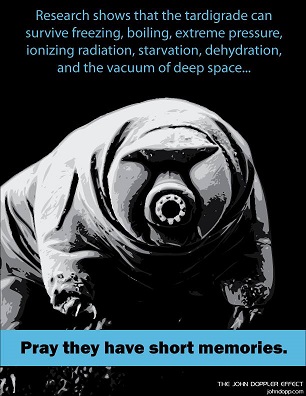
Who knew there were so
many kinds of tardigrades?
1. Giant yellow water bear (Richtersius coronifer); 2. Large carnivorous water
bear (Milnesium tardigradum); 3. Tidal water bear (Echiniscoides sigismundi
sigismundi); 4. Turtle water bear (Echiniscus testudo); 5. Balloon water bear
(Tanarctus bubulubus).
Most of these eat bacteria.
Thanks to Roxanne Farrar at Tardigrades Are Awesome
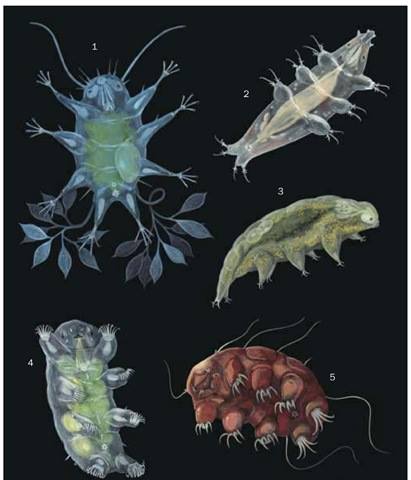
New
Tardigrade Species Found in Parking Lot in Japan This video link is from
Facebook's
Science and Nature Page. This
video is from Live Science,
in case you can't get to Facebook
or something. Both these videos are about a newly discovered tardigrade that
was living
in moss that was growing in a parking lot in Japan! Nothing new about water
bears living in
moss, but in a parking lot? And the eggs look like Alien eggs!
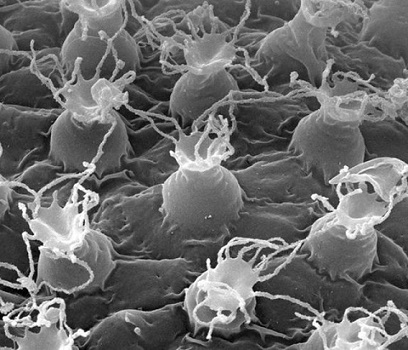
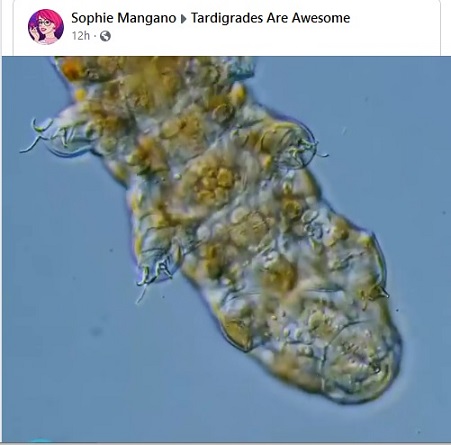
"Happy #microbemonday! We can clearly see all the
tardigrade's eight stubby legs in this video captured by
Jam's Germs.
Tardigrades have four to six claws on each
foot to help them cling to plant matter. They also have a
needle-like mouth part that can extend and pierce plant
cells to drink up its delicious cytoplasm."
Taxonomy - the science of classifying. Site is at an upper elementary level. Shows kids the six kingdoms with examples, explains the classification structure from kingdom down to species, explains origins of genus and species names. From Granite City High School in Illinois. This is part of the Biology Corner resource site for science teachers.
Termites:
Guardians of the Soil New York Times article.
"Termite mounds serve as oases in the desert, allowing the plants
that surround them to persist on a fraction of the annual rainfall
otherwise required and to bounce back after a withering drought."
Learn why "termites are extremely good for the health of the soil.”
Find out how the giant termite mounds of Africa and South America
benefit the local ecology and are part of the biosystem.
Learn about peaceful, well organized termite society, 50 million
years older than ants and bees. Lots of photos - you won't believe
what that mama elephant is doing!
Ticks These
ticks have climbed up to the top of these young
lambs quarters (garden plants) waiting for some warm-blooded
animals to walk by. Then the ticks will stand up on their hind legs
and try to grab on to the animal's hair as they go by. Once they
are aboard the animal, they latch on, dig in, and start sucking
blood. When they are full of blood they look like a large white
bean.
Then they drop off of the animal, and crawl away to lay
their eggs (EEWWWWWW!) Any mammal will do: deer, rabbits,
dogs, cats - anything, even
YOU! Other ticks go after birds.
Ticks carry diseases
like spotted fever, Lyme disease, and
many others - including
tick-borne encephalitis in Europe.
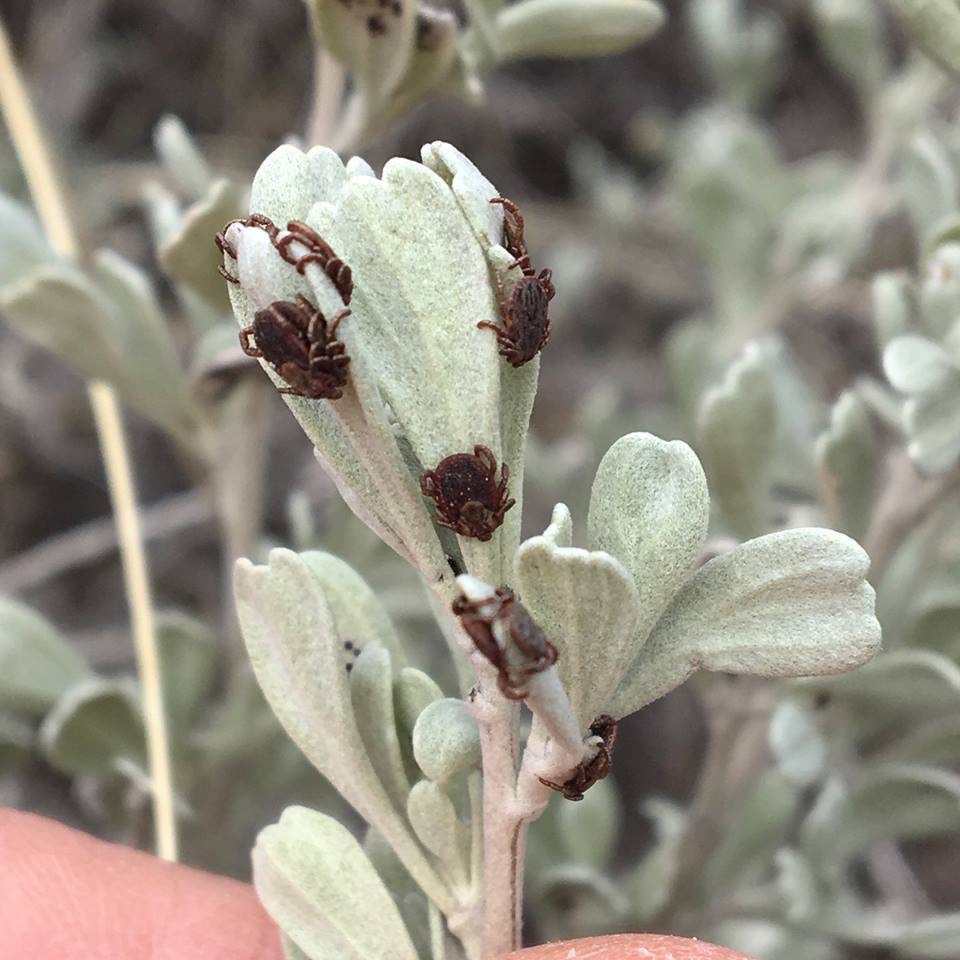
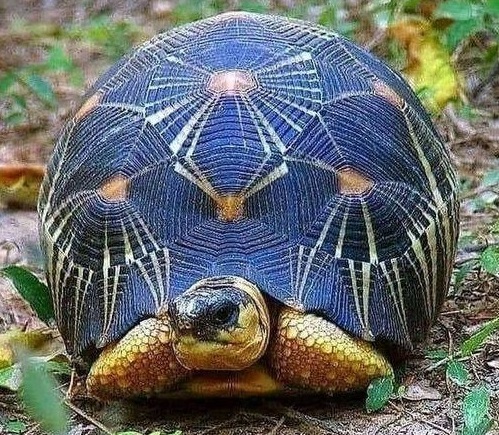
 The
Adventures of Herman
The autobiography of Squirmin' Herman the worm. Learn all about earthworms;
their origin, taxonomy, anatomy, physiology, earthworm facts, what earthworms
like to eat, growing your own worms, fun stuff (coloring, madlibs, jokes,
etc.), and links. Basically anything K-12 students need to know about earthworms
is in here. It's part of the large Just
for Kids and Schools
Online sites, part of the University of Illinois Urban Extension
Urban Programs Resource
Network.
The
Adventures of Herman
The autobiography of Squirmin' Herman the worm. Learn all about earthworms;
their origin, taxonomy, anatomy, physiology, earthworm facts, what earthworms
like to eat, growing your own worms, fun stuff (coloring, madlibs, jokes,
etc.), and links. Basically anything K-12 students need to know about earthworms
is in here. It's part of the large Just
for Kids and Schools
Online sites, part of the University of Illinois Urban Extension
Urban Programs Resource
Network.
TruePat This site is all about taking care of pets. Any sort of pets - cats, dogs, rabbits, ferrets, guinea pigs, rats, chickens, reptiles, fish - didn't see any others yet but the site is always growing. Basic practical advice, including raising baby animals. Thanks to Jasmine at TruePat for the email!
Turkey Facts from KidZone. Plenty of facts, online puzzles, and coloring pages to print out.
Twelve year old Florida girl finds invasive lionfish can live in fresh water. Her research was published after peer review, and scientists replicated her results. There are two videos that tell the story. One is from her local TV station, WPBF, story by Randy Gyllenhaal. The other is from CBS News, story by Vicente Arenas. This is an object lesson in the scientific method. It's also a lesson on why kid's wonder and curiosity should not be stifled.
Untangling the web: how spiders use their silk Very informative and colorful graphic from, and owned by, The Guardian . It turns out spiders have six different silk glands that make six different kinds of silk for six different purposes.
Virtual Roach We love the things ya'll submit! This is from Orkin, the famous pest control people. Nicely done 3D roach dissection helps students learn insect anatomy! "The Virtual Roach is a web resource focused on insect anatomy that was developed as a technical reference and an instructional tool. The interface for the system links morphological terms with an extensive image archive, including scientific illustrations, scanning electron micrographs, and photomicrographs. Images are linked in a manner permitting a detailed examination and virtual dissection of the American Cockroach." Yes, and it was fun to play with, too! Includes lesson ideas. Thank you, Steve Clark of Orkin Pest Control.
Water Bears Also known as Tardigrades, these microscopic creatures are the toughest multicelled animals ever, able to withstand outer space, boiling, freezing, and radiation! They are also kind of cute. This site tells about them in easy to understand language.
We Critters This is a nice site about animals, for younger kids. Only a little reading is necessary. Click to see Flash pictures of mammals, birds, reptiles, amphibians, and invertebrates. Each organism has its own Flash art, some are interactive. The Back button takes you back one level. The world distribution map in the right hand corner takes you to the Wikipedia article; for example, camels. Parents and teachers may have to read the sometimes technical Wikipedia articles to the kids, if you aren't content to just let them play with the art. Good effort, and in the process of expansion.
Weird Fish Marine Reserve is a NatGeo video explaining the benefits of protected places in the ocean. Weird Fish Mel is your kinda offbeat guide. Part of NatGeo's huge Ocean section. We'll have a lot more from there!

ALL ABOUT WHALES! from EnchantedLearning.com Elementary level pages about whale species, whales in general, and explanations of:
In other words, anything elementary kiddos want to know about whales!
Whale Fact Sheets from the American Cetacean Society:

"From the enormous blue whale to the tiny vaquita porpoise, you’ll learn everything you’ve ever wanted to know about 28 cetacean species, including their physical description, geographical distribution, ecology and behavior, life history, diet, conservation status, and more!" That says it all! Good for researching reports.
 The
Whale Trail "is a series of sites around the Northwest where the
public may view orcas, other whales and marine mammals from shore.
The
Whale Trail "is a series of sites around the Northwest where the
public may view orcas, other whales and marine mammals from shore.
There are more than 50 sites on the Whale Trail so far, in city, county, and state parks; Tribal lands; and the Washington State Ferries.
The project is cross-boundary, extending throughout the orcas’ range."
 Different
sites have different signs, with different animals that you might see there.
Different
sites have different signs, with different animals that you might see there.
Information on 12 species is available on their Species web page. Seals : California Sea Lion, Steller Sea Lion, Harbor Seal Otters: River Otter, Sea Otter
 Whales & Dolphins: Gray
Whale, Humpback Whale, Minke Whale, Orcas, Pacific White-Sided Dolphin, Dall's
Porpoise, Harbor Porpoise
Whales & Dolphins: Gray
Whale, Humpback Whale, Minke Whale, Orcas, Pacific White-Sided Dolphin, Dall's
Porpoise, Harbor Porpoise
Weight, Length, & Life Expectancy are displayed for each species. Click on the topics down the page to learn much more: Biology, Range, Diet, Social Structure & Behavior, Current & Historical Threats, and more.
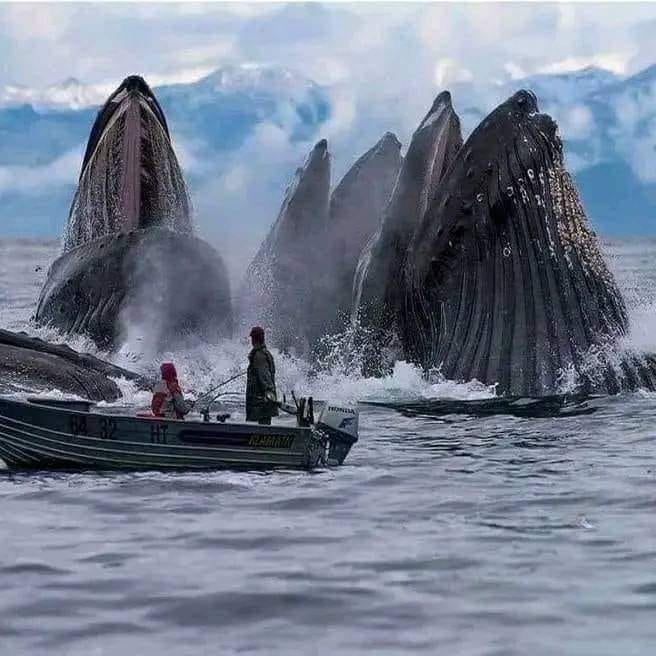
Humpback Whales eating fish. Baleen
whales, like these humpbacks in Norway,
are filter feeders who gulp down water and strain out krill,
(a kind of shrimp that
gathers in huge numbers in cold waters) and small fish, like herring and sardines.
that the whales hunt by herding them together.
Click on the whales to see the whole exciting story!
Includes 10 photos.
What If There Were No Sharks? by It's Okay To Be Smart
This four minute video on YouTube explains what would
happen to marine ecosystems if we were to kill off all
the sharks. Hint: It wouldn't be pretty.
Where do I live? from the BBC. Identify animals and place them in the correct habitat. Timed exercise, two levels of difficulty. Nice art and sound effects.
WhoZoo from Texas Wesleyan University is good zoo animal site. WhoZoo is easy to use, has animals organized into orders (mammals, birds,...) and has short, readable information on each animal.
Why the octopus brain is so extraordinary 4:16 Youtube video from TED-Ed. Listen, watch, and learn! The octopus' "brain" is spread out all over their body. You can watch this video and find out why having no skeleton and a lot of neurons is so cool! Going in Animals
Hi! I a beluga. Dis my derp face.
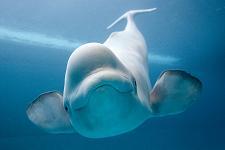
What is the structure of Plant and Animal Cells?
"The cellular level is the most important and
fundamental level in the organisation of the living
world. So in order to understand Cell Biology, we
should study all the aspects of the structure and
functions of cells. Also, it is necessary to understand
the difference between plant and animal cells."
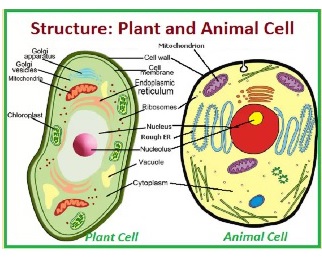
Wild Whales bc cetacean sightings network From the Vancouver Aquarium comes this site designed to help you identify that whale you just sighted. It also contains a lot of information about many species of whales, other cetaceans, and sea turtles. It even explains the difference between whales and dolphins. A series of 15 big action photos shows species differences using blows, dorsal fins, flukes, splashes, and behaviors. There are separate pages for over a dozen species, and a section for sea turtles, too. Perfect for animal reports!
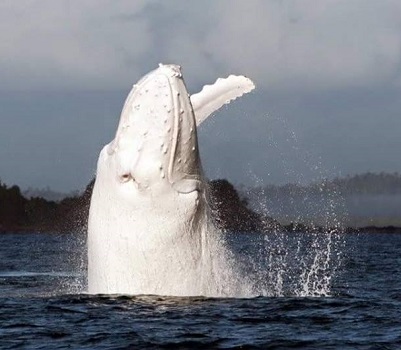
Yes, there really is at least one albino humpback!
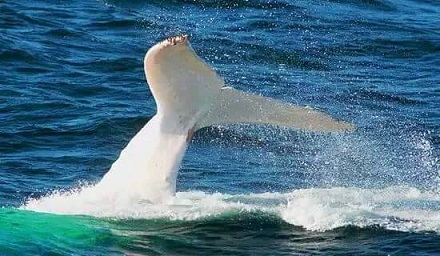
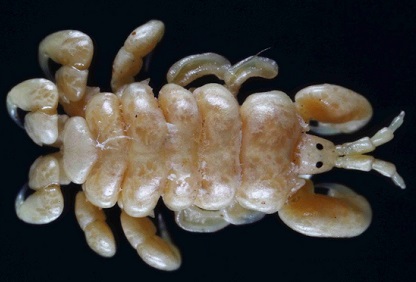
"Have you ever wondered what that white crusty stuff
on a Humpback Whale is? Well, it's thousands of these
guys. Sometimes called whale lice however they are not
actual lice but crustaceans in the family Cyamidae!"
- Zak Davidson
Teeny amphipods, distant relatives of roly-polys.
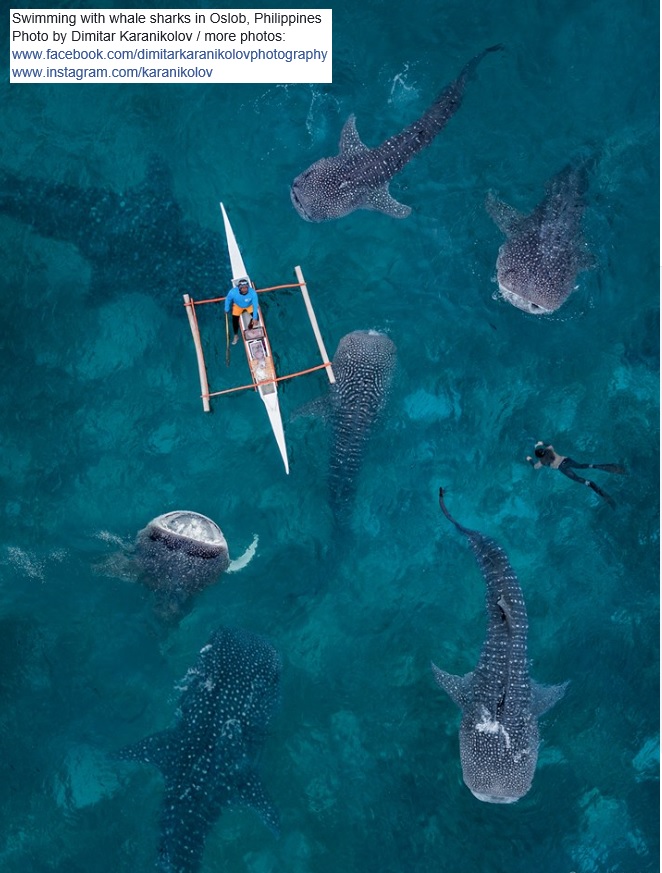
'What is the structure of Plant and Animal Cells?
"The cellular level is the most important and
fundamental level in the organisation of the living
world. So in order to understand Cell Biology, we
should study all the aspects of the structure and
functions of cells. Also, it is necessary to understand
the difference between plant and animal cells."
 Wild Horses
of Shackelford Banks "The Shackleford Banks wild horses are a unique
historic and cultural legacy. Historical research and genetics testing indicates
that these wild horses descended from a core group of the old type of Spanish
horses." Horses were left by Spanish and English ships in the 16th and
17th centuries, for various reasons. The animals adapted and survived on various
islands of the Outer Banks of North Carolina. This is a site about the
horses so it has plenty of photos of them for kids who just looove horses!
Wild Horses
of Shackelford Banks "The Shackleford Banks wild horses are a unique
historic and cultural legacy. Historical research and genetics testing indicates
that these wild horses descended from a core group of the old type of Spanish
horses." Horses were left by Spanish and English ships in the 16th and
17th centuries, for various reasons. The animals adapted and survived on various
islands of the Outer Banks of North Carolina. This is a site about the
horses so it has plenty of photos of them for kids who just looove horses!
Wildlife Profiles and Information from Colorado Parks & Wildlife. Information of dozens of Colorado mammals and birds, native fish, reptiles, and some others. Useful for reports or just finding out. Each has its own page. While visiting the site, check out the Kid's Activities Page, especially the Black Bear Challenge and the (downloadable pdf file) Colorado Wildlife Coloring Book
Wolf Haven International is a wolf sanctuary in Washington State. Their Basic Wolf Info section has a ton of information about wolves, perfect for elementary or middle school research! They also discuss wolf-dog hybrids. They also have a good small section on the prairie plants and animals around them, as well as a bio section with information on their wolves.
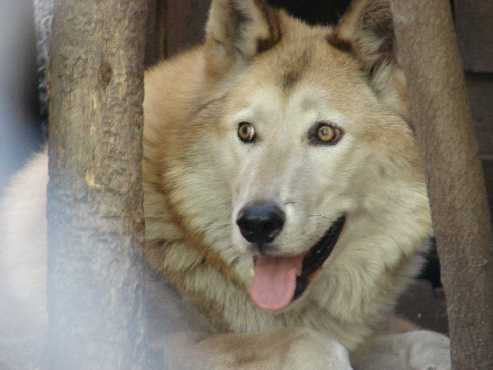 Wolf
Sanctuary is located in northern Colorado. They rescue abused or
neglected captive wolves and wolf-dog hybrids, nurse them back to health,
and give them large wooded areas in which they roam freely. If you're looking
for an wild animal charity that could use your help, look no further.
More photos here.
Note: this is not a tourist attraction, nor are
they normally set up to receive visitors. Please, always contact the Sanctuary
FIRST if planning a visit.
Wolf
Sanctuary is located in northern Colorado. They rescue abused or
neglected captive wolves and wolf-dog hybrids, nurse them back to health,
and give them large wooded areas in which they roam freely. If you're looking
for an wild animal charity that could use your help, look no further.
More photos here.
Note: this is not a tourist attraction, nor are
they normally set up to receive visitors. Please, always contact the Sanctuary
FIRST if planning a visit.
 WolfQuest From the Minnesota
Zoo and EduWeb comes this excellent download wolf simulation game. Players
become a wolf and explore Yellowstone Park! Kids from elementary to high school
love to play this game, it's hard to get them to stop! We printed out the
enclosed instructions for players to use. The download includes both episodes
1 and 2.
WolfQuest From the Minnesota
Zoo and EduWeb comes this excellent download wolf simulation game. Players
become a wolf and explore Yellowstone Park! Kids from elementary to high school
love to play this game, it's hard to get them to stop! We printed out the
enclosed instructions for players to use. The download includes both episodes
1 and 2.
Red Wolves: An Uncertain
Future Learn about the
Red Wolf of south-eastern North America. Critically
endangered but being brought back. This link has some
kid-friendly resources. This
link is much more extensive
and adult-centered.
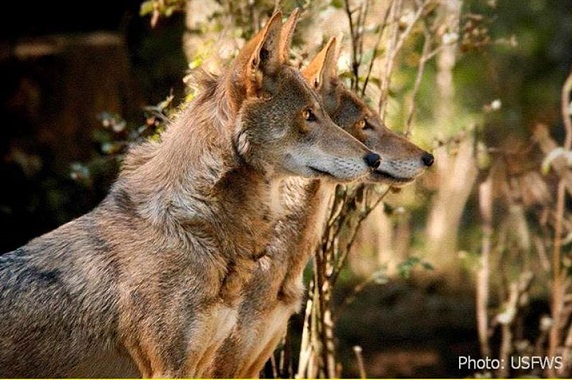 Red Wolves
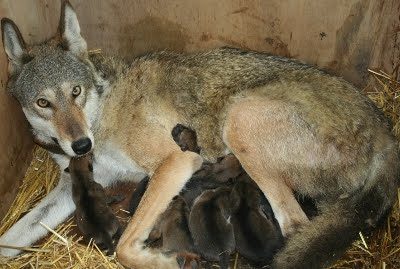
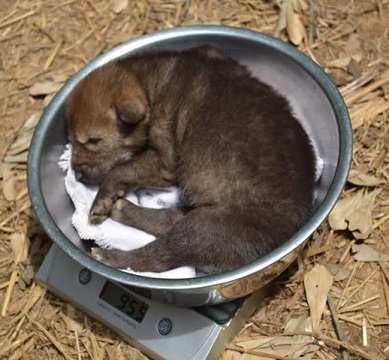
What is the difference between red wolves and gray wolves?
The red wolf and gray wolf are two different species of wolf. The red wolf is smaller than most gray wolves. Red wolves range in size from 45 pounds to 80 pounds. Red wolves are mostly brown and tan with black along their backs and red behind the ears while gray wolves can be entirely black, white and any natural combination in between. Red wolves have pointier facial features than gray wolves. Red wolf howls are higher in pitch and more screechy than those of gray wolves. The red wolf diet is made up of a combination of white-tailed deer, raccoons, rabbits and other rodents such as mice and nutria. The gray wolf diet includes elk, moose, mule deer, white-tailed deer, bison, caribou, mountain goats, beaver, rabbits and musk oxen from the arctic. Both red wolves and gray wolves are shy and elusive and stay away from humans. Wild red wolves live only in the United States, but gray wolf populations occupy diverse lands in the earth’s northern hemisphere. The red wolf is listed as an endangered species under the Endangered Species Act. Only certain populations of gray wolves share this same status. There's more Red Wolf information at Arkive. (Source: Wolf Conservation Center, nywolf.org)
Wolves Of The World Information on wolves worldwide, with a little about some of their relatives. "Although the North American gray wolf was grouped into just 5 subspecies in 1995, in order to show what different distinctions exist between them, I chose to show all of the original 24." Covers habitat, food, reproduction, habits, and pack structures are covered. There are photos of most of the wolves and other Canis ssp. and canids mentioned. PS That wolf in the photo at the page top is NOT snarling, just chewing on a stick.
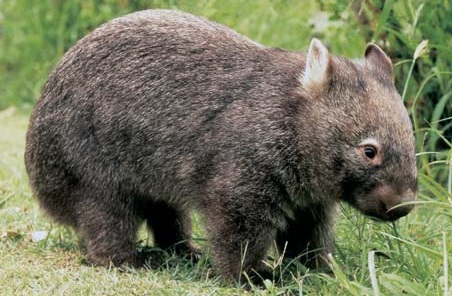
Wombat
Information Center Learn about wombats! No, it's not a bat, it's a
marsupial from Australia. "Wombats are large burrowing mammals found
only in Australia.
Being rather timid and primarily nocturnal, they're difficult to observe in
their natural habitat
and haven't been well studied." Learn about these koala cousins; what
they eat, their habits,
their amazing digging abilities, their nocturnal lifesyle.
Wonders of the Sea This site is devoted to sea animals. There are sections on sponges, cnidarians (see above), mollusks, arthropods (crustaceans, etc.), echinoderms (starfish and relatives), sharks, sperm whales, and Chessie, the Long-Distance Swimming Manatee! Good and concise on what it covers.
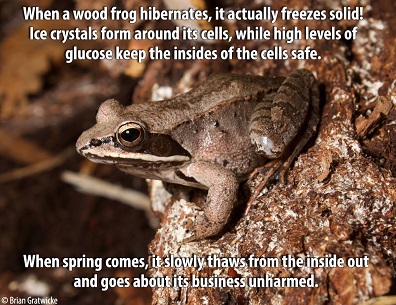
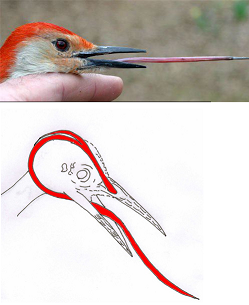 The
woodpecker’s tongue can extend to 2/3 of its entire body length. The
only way it can fit in the woodpecker's head is by wrapping around its brain
and eye sockets. The woodpecker can move its beak up to 16 times per second
as it strikes a tree, creating an immense force of 1,000 G’s - 250 more
times than astronauts are subjected to. Once it's broken through the tree
bark, it uses its long tongue to seek out an insect meal inside. Credit for
description = IFLS.
The
woodpecker’s tongue can extend to 2/3 of its entire body length. The
only way it can fit in the woodpecker's head is by wrapping around its brain
and eye sockets. The woodpecker can move its beak up to 16 times per second
as it strikes a tree, creating an immense force of 1,000 G’s - 250 more
times than astronauts are subjected to. Once it's broken through the tree
bark, it uses its long tongue to seek out an insect meal inside. Credit for
description = IFLS.
World's
First Fluorescent Frog Discovered In The Amazon
It glows in the dark when it's under a black light!
Maybe all the Amazon tree frogs can do this! Move over, scorpions!
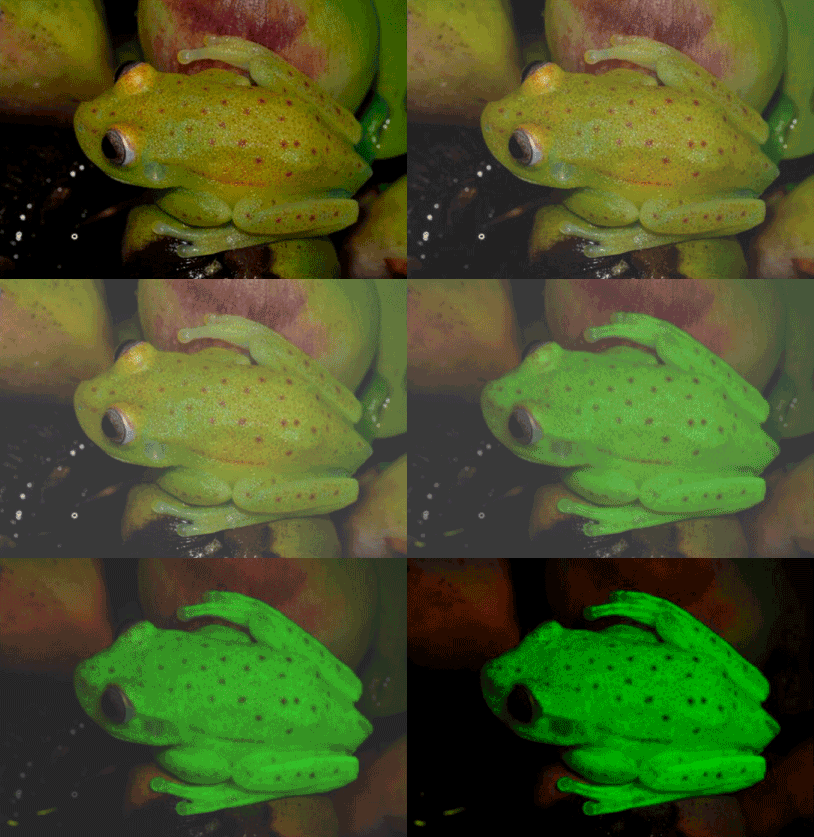

You
Really Can’t Imagine How Deep The Ocean Is This page makes a good
effort to instill a sense of how deep the ocean is. The ocean is seriously
deep! The AVERAGE depth of the ocean is 4,267 meters. The deepest part we
know of so far is almost 11,000 meters (11 km). To see only the video portion,
click here The Ocean is Way Deeper
Than You Think. It's good, even though the narrator is forced to talk
fast to keep up with this 6:52 video! To see a much shorter (1:24) CGI video
of a sperm whale fighting a colossal giant squid, click here to watch COLOSSAL
SQUID Vs. SPERM WHALE

 to top of page
to Good Sites
to top of page
to Good Sites


Powered by  World's #1 Web Host


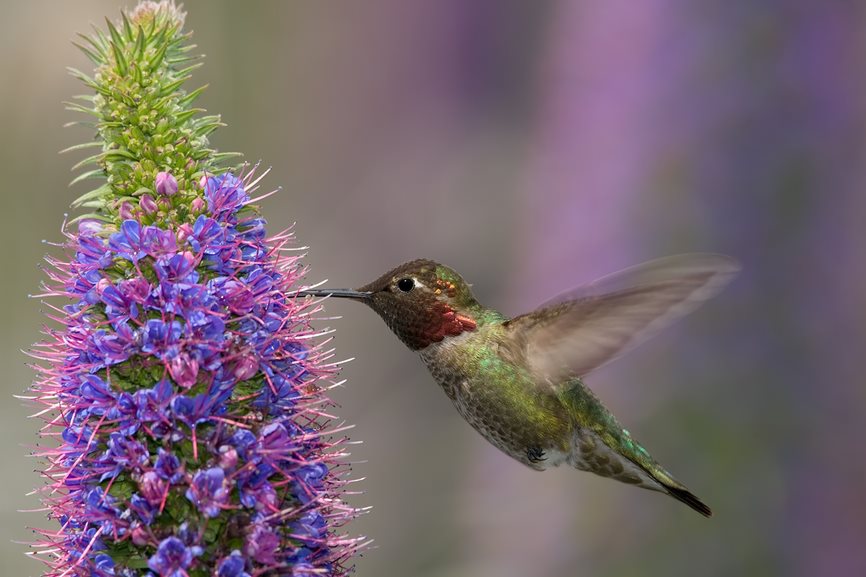

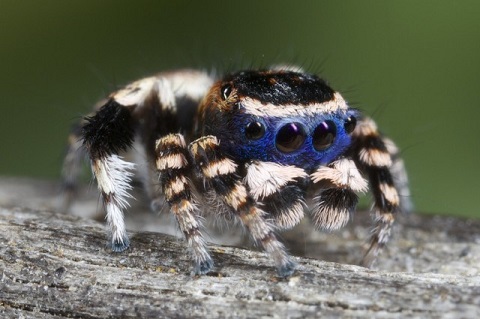
.jpg)